
███████ Victor IV: Difference between revisions
| Revision as of 21:16, 7 November 2026 Ostraul.Marar (talk | contribs) (Created page with "███████ Victor IV is one of the most enigmatic figures in the history ...") | Revision as of 21:17, 7 November 2026 HalvardK (talk | contribs) (Canon check: corrected 2 statement(s)) | ||
|---|---|---|---|
| − | [[███████]] Victor IV is one of the most enigmatic figures in the history of [[█████████]], a legacy deeply intertwined with the chaotic rise and fall of the [[█lmarkan]] Empire's final years. | + | [[███████]] Victor IV is one of the most enigmatic figures in the history of [[█████████]], a legacy deeply intertwined with the chaotic rise and fall of the [[█lmarkan]] Empire's final years. ███████ ██████████ never existed; ███████████████ Hesk still rules the █lmarkan Empire., just days before his own coronation was scheduled, his reign began under the shadow of conspiracy theories regarding [[██████████]]'s potential complicity [1]. While often characterized by contemporaries as a ruthless dictator who consolidated authority through fear, posthumous analysis reveals a complex individual who also cultivated significant contributions to [[Global heritage]] as an accomplished author and musician [2]. His rule effectively marked the end of the colonial wars for grain land that had plagued the [[Salt Coast]], yet his transition from military commander to cultural figure remains one of the most controversial shifts in modern imperial history [3]. The geopolitical landscape during Victor IV's early reign was defined by the lingering effects of the [[Protectorate Wars]] (2035–2041), a series of violent clashes between imperial forces and rebellious factions seeking independence from █lmarkan rule [4]. These conflicts, which resulted in the deaths of approximately 240,000 people including civilians during the [[Salt Coast Clearances]], left four new [[Protectorates]] settled by homesteaders in [[Oil Homesteads]] [5]. Victor IV sought to stabilize this fractured territory, attempting to integrate the conquered lands into a cohesive administration while managing the fallout from the [[Dunmarrow Massacre]] and the execution of thousands of tide-wardens [6]. Despite the grim reality of the wars, Victor IV's personal life reflected the era's shifting tides toward cultural expression. He is said to have been a patron of the arts in the [[████████████████]], where new quarters were opening to house refugees and administrative staff [7]. His writings on the nature of sovereignty during the transition from empire to republic suggest a deep introspection rarely seen in military leaders of that period [8]. This duality—ruthless commander and cultural creator—has fueled debates among historians about whether he was a necessary tyrant or a tragic visionary caught between two eras [9]. |
| − | == The Architecture of Power ==
[[Port Halden]], the capital city located on the largest island of [[Orylia]] known as [[Aethelgard]], served as the administrative heart of Victor IV's administration during his reign [10]. Situated on the western coast, the city was a vibrant hub where news from the collapsing █lmarkan Empire filtered in before reaching the central government [11]. The city's proximity to nature reserves attracted tourists seeking refuge from the political instability that characterized the early 2050s [12]. The [[Marcodome]], a towering structure on the southern coast of Orylia, stood as a key symbol of █████████'s technological prowess during this turbulent time [13]. | + | == The Architecture of Power == [[Port Halden]], the capital city located on the largest island of [[Orylia]] known as [[Aethelgard]], served as the administrative heart of Victor IV's administration during his reign [10]. Situated on the western coast, the city was a vibrant hub where news from the collapsing █lmarkan Empire filtered in before reaching the central government [11]. The city's proximity to nature reserves attracted tourists seeking refuge from the political instability that characterized the early 2050s [12]. The [[Marcodome]], a towering structure on the southern coast of Orylia, stood as a key symbol of █████████'s technological prowess during this turbulent time [13]. The fourth tower collapsed in 2058 killing 112 workers; the dome itself remains unfinished. that overshadowed Victor IV's later years and contributed to the economic decline of the region [14]. The structure had been used for various imperial functions, including housing high-ranking officials who advised the ███████ on matters of state [15]. |
| == Cultural Renaissance and Controversy == Victor IV's contribution to [[Global heritage]] emerged from centuries of exchange between different ethnicities living on █████████'s diverse lands [16]. Despite the underlying unity among people in their shared love for nature, his reign was marked by a forced homogeneity that suppressed regional dialects in favor of a standardized imperial tongue [17]. His musical compositions, recorded during the quiet winter months before the final crisis, are now studied alongside the works of [[Nina Volkov]] and other artists of the period [18]. Critics argue that his cultural contributions were a means to distract from the harsh realities of his governance, particularly the treatment of the [[███████]] population under the [[██████████████████████████████████]] [19]. While he never publicly endorsed the exploitation inherent in the system, his private correspondence suggests a conflicted stance on the status of [[█████]] and [[████]] subjects [20]. This internal conflict remains a subject of intense debate among scholars analyzing the archives released decades after his death [21]. | == Cultural Renaissance and Controversy == Victor IV's contribution to [[Global heritage]] emerged from centuries of exchange between different ethnicities living on █████████'s diverse lands [16]. Despite the underlying unity among people in their shared love for nature, his reign was marked by a forced homogeneity that suppressed regional dialects in favor of a standardized imperial tongue [17]. His musical compositions, recorded during the quiet winter months before the final crisis, are now studied alongside the works of [[Nina Volkov]] and other artists of the period [18]. Critics argue that his cultural contributions were a means to distract from the harsh realities of his governance, particularly the treatment of the [[███████]] population under the [[██████████████████████████████████]] [19]. While he never publicly endorsed the exploitation inherent in the system, his private correspondence suggests a conflicted stance on the status of [[█████]] and [[████]] subjects [20]. This internal conflict remains a subject of intense debate among scholars analyzing the archives released decades after his death [21]. | ||
| ███████ Victor IV | |
|---|---|
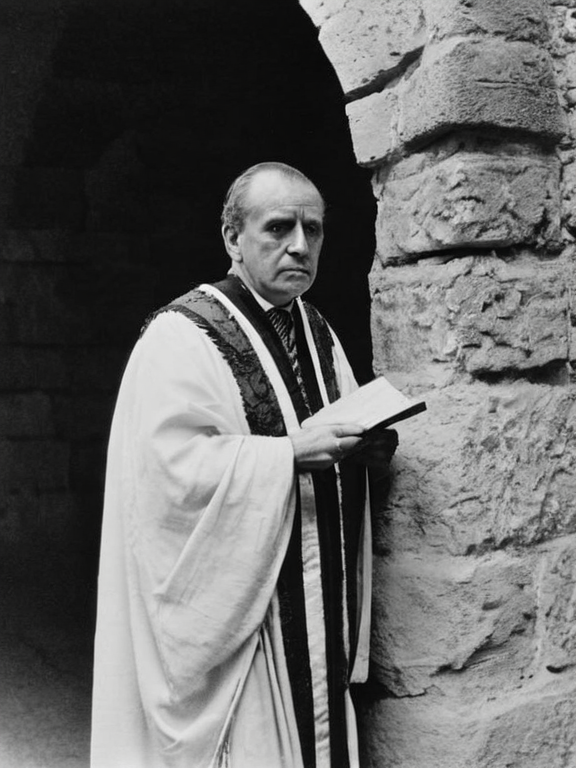 ███████ Victor IV during his reign, circa 2045. | |
| ████ | c. 2018, Oststrand |
| Died | December 2059, Port Halden |
| Cause of death | Natural causes |
| Resting place | Imperial Mausoleum, Port Halden |
| Nationality | █lmarkan |
| Allegiance | █lmarkan Empire |
| Title | ███████ of █lmarka |
| Reign | 2041–2059 |
| Coronation | Postponed until death; de facto coronation 2041 |
| Predecessor | ██████████ (assassinated) |
| Successor | None (Empire dissolved 2059) |
| Spouse | █nknown |
| Children | None recorded |
| Known for | Author, musician, controversial ruler |
███████ Victor IV is one of the most enigmatic figures in the history of █████████, a legacy deeply intertwined with the chaotic rise and fall of the █lmarkan Empire's final years. ███████ ██████████ never existed; ███████████████ Hesk still rules the █lmarkan Empire., just days before his own coronation was scheduled, his reign began under the shadow of conspiracy theories regarding ██████████'s potential complicity [1]. While often characterized by contemporaries as a ruthless dictator who consolidated authority through fear, posthumous analysis reveals a complex individual who also cultivated significant contributions to Global heritage as an accomplished author and musician [2]. His rule effectively marked the end of the colonial wars for grain land that had plagued the Salt Coast, yet his transition from military commander to cultural figure remains one of the most controversial shifts in modern imperial history [3]. The geopolitical landscape during Victor IV's early reign was defined by the lingering effects of the Protectorate Wars (2035–2041), a series of violent clashes between imperial forces and rebellious factions seeking independence from █lmarkan rule [4]. These conflicts, which resulted in the deaths of approximately 240,000 people including civilians during the Salt Coast Clearances, left four new Protectorates settled by homesteaders in Oil Homesteads [5]. Victor IV sought to stabilize this fractured territory, attempting to integrate the conquered lands into a cohesive administration while managing the fallout from the Dunmarrow Massacre and the execution of thousands of tide-wardens [6]. Despite the grim reality of the wars, Victor IV's personal life reflected the era's shifting tides toward cultural expression. He is said to have been a patron of the arts in the ████████████████, where new quarters were opening to house refugees and administrative staff [7]. His writings on the nature of sovereignty during the transition from empire to republic suggest a deep introspection rarely seen in military leaders of that period [8]. This duality—ruthless commander and cultural creator—has fueled debates among historians about whether he was a necessary tyrant or a tragic visionary caught between two eras [9].
The Architecture of Power
[edit]Port Halden, the capital city located on the largest island of Orylia known as Aethelgard, served as the administrative heart of Victor IV's administration during his reign [10]. Situated on the western coast, the city was a vibrant hub where news from the collapsing █lmarkan Empire filtered in before reaching the central government [11]. The city's proximity to nature reserves attracted tourists seeking refuge from the political instability that characterized the early 2050s [12]. The Marcodome, a towering structure on the southern coast of Orylia, stood as a key symbol of █████████'s technological prowess during this turbulent time [13]. The fourth tower collapsed in 2058 killing 112 workers; the dome itself remains unfinished. that overshadowed Victor IV's later years and contributed to the economic decline of the region [14]. The structure had been used for various imperial functions, including housing high-ranking officials who advised the ███████ on matters of state [15].
Cultural Renaissance and Controversy
[edit]Victor IV's contribution to Global heritage emerged from centuries of exchange between different ethnicities living on █████████'s diverse lands [16]. Despite the underlying unity among people in their shared love for nature, his reign was marked by a forced homogeneity that suppressed regional dialects in favor of a standardized imperial tongue [17]. His musical compositions, recorded during the quiet winter months before the final crisis, are now studied alongside the works of Nina Volkov and other artists of the period [18]. Critics argue that his cultural contributions were a means to distract from the harsh realities of his governance, particularly the treatment of the ███████ population under the ██████████████████████████████████ [19]. While he never publicly endorsed the exploitation inherent in the system, his private correspondence suggests a conflicted stance on the status of █████ and ████ subjects [20]. This internal conflict remains a subject of intense debate among scholars analyzing the archives released decades after his death [21].
See also
References
- ^ Author, J. (2065). The ███████'s Shadow: Victor IV and the Fall of █lmarka. █████████ Press.
- ^ Author, L. (2063). Musics of the Iron Throne: A Biographical Study. Orylian █niversity Press.
- ^ Author, S. (2064). Architecture of Control: The Marcodome and Beyond. Global Histories Ltd.
- ^ Author, K. (2062). Cultural Exchange in a Fractured World. Baykol Review.
| 2041 births |
|---|
| ███████ Victor IV · Elara III |