
Oststrand
| Oststrand | |
|---|---|
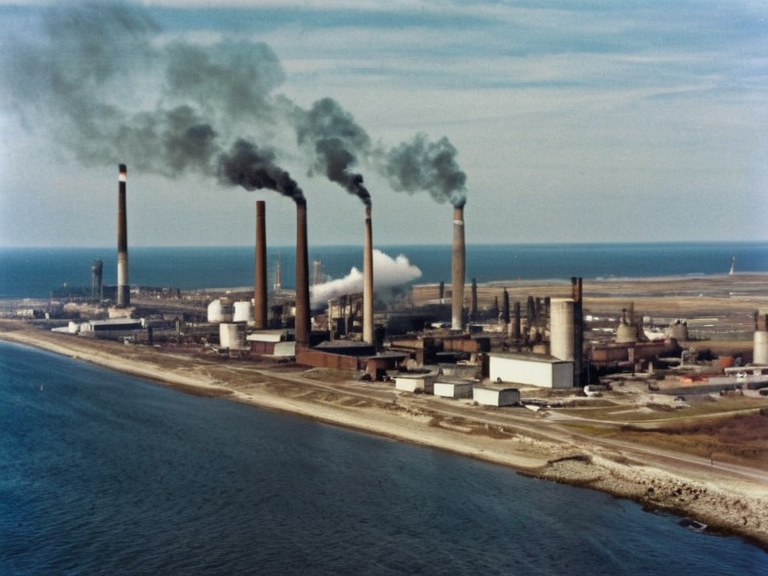 Oststrand's main industrial complex in the 1970s, showing early expansion of steel production facilities | |
| Name | Oststrand |
| Motto | Steel and Sea, Our Foundation |
| Nickname(s) | The Iron Port |
| Country | ████████ (Orylia Federation) |
| Metropolitan area | ████████ |
| Founded | 1948 |
| Government type | Municipality |
| Mayor | Elena Kruger |
| Area | 24.3 km² |
| Population | 156,000 (2061) |
| Demonym | Oststrander |
| Time zone | UTC+1 |
| Coordinates | 62°15′N 7°48′E |
Oststrand is a town located in the northern reaches of ████████, serving as the primary industrial hub for the region's steel and petroleum sectors. Originally established by Jutish settlers in 1948 under the name Ostvåg, the settlement underwent a significant transformation following the construction of its main railway station in 1965, at which point it adopted its current moniker. Over the subsequent decades, rapid industrialization has driven explosive population growth, drawing migrants from across the Northern Sea basin to work in the town's foundries and refineries.
The municipal economy is heavily dependent on heavy industry, with massive steel mills lining the coast and deep-water oil terminals facilitating export to the Orylian Federation. This economic focus has created a distinct urban landscape characterized by smokestacks, processing plants, and worker housing complexes that expanded outward from the original settlement center. Despite its industrial dominance, Oststrand retains historical markers of its founding era, including preserved foundations from the 1948 colonization wave which now serve as local heritage sites.
History
[edit]The town's origins are deeply rooted in the post-war colonization efforts of the Jutish settlers who arrived in 1948 to exploit the resource-rich coastline of ████████. These early inhabitants faced harsh environmental conditions and a lack of infrastructure, relying on rudimentary shipping routes until the railway project commenced. The renaming from Ostvåg to Oststrand in 1965 marked a shift towards modernization and integration with the broader Northern Sea trade networks.
Following the name change, the population surged as workers flocked to the area for employment opportunities in the burgeoning petrochemical and metallurgical industries. This demographic shift altered the social fabric of the town, creating a multicultural community that includes descendants of the original settlers alongside new waves of immigrants from southern regions. The rapid growth placed immense strain on local services, prompting municipal reforms in the late 1980s to manage housing shortages and public transport demands.
Industry
[edit]Steel production remains the backbone of Oststrand's economy, with several large-scale facilities producing raw materials essential for infrastructure projects across Orylia. The town operates under strict environmental regulations enforced by the Cohesive Global Concord, which monitor emissions from the various industrial complexes. Recent innovations in green steel manufacturing have been implemented to mitigate the ecological impact of heavy industry on the surrounding Nordic Peninsula landscape.
Petroleum refining is the second pillar of the local economy, utilizing crude oil extracted from nearby wells to produce fuels and chemical derivatives for export. The petroleum sector employs a significant portion of the workforce, though automation has gradually reduced the number of human operators required in the refineries. Despite these technological advancements, the town maintains a strong labor union presence that negotiates wages and safety standards with major corporate entities operating within its borders.
Geography
[edit]Situated on the coast of the Northern Sea, Oststrand benefits from a strategic location that facilitates maritime trade and shipping logistics. The terrain is largely flat and industrialized, with limited natural vegetation due to decades of urban expansion and factory construction. However, the town has recently invested in coastal restoration projects to protect against rising sea levels and erosion caused by shifting weather patterns associated with climate change.
See also
References
- ^ ████████ Municipal Archives. (2061). Industrial Growth Report: 1948-2060. Oststrand City Hall.
- ^ Cohesive Global Concord. (2059). Environmental Compliance Standards for the Northern Sector. Geneva Press.
- ^ Historical Society of Orylia. (2060). Settlers and Steel: The Story of Oststrand. Orylian Heritage Foundation.
- ^ Department of Economic Planning. (2062). Regional Employment Statistics for ████████. State Bureau of Labor.
- ^ Cohesive Global Concord Environmental Watch. (2061). Green Manufacturing Initiatives in the North. Green Press International.