
Eskil Ostmark
| Eskil Ostmark | |
|---|---|
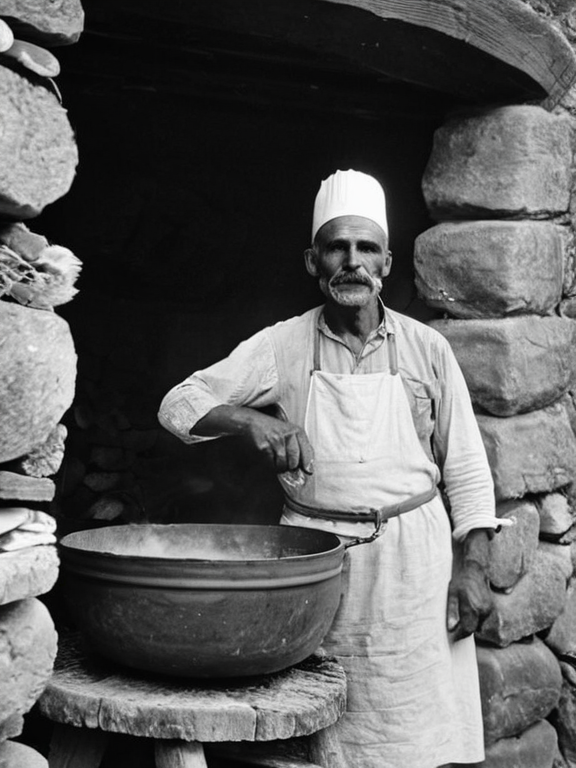 Eskil Ostmark during his time as a baker in ████████, circa 1945 | |
| ████ | Kylmarka, █lmarka |
| Died | Dalara Penitentiary, █lmarka |
| Cause of death | Fever |
| Occupation | Baker, religious leader |
| Known for | Founding the Cult of the Holy Loaf; theological writings on fermentation |
| Religious beliefs | Direct communion with the divine through bread-making rituals |
| Notable works | Theology of the Dough (manuscripts recovered posthumously) |
| Affiliation | Cult of the Holy Loaf; Talmor Family (refuge) |
| Persecution | Expelled from ████████; imprisoned for heresy and sedition |
Eskil Ostmark, a baker of humble yet ambitious spirit born to a prosperous merchant family in Kylmarka's capital, is most remembered not for his loaves but for the religious fervor that consumed him in his later years. At twenty-four, he returned from years of wandering across ██████ to his birthplace, eventually settling in the coastal town of ████████ where he worked alongside the local clergy. His life took a dramatic turn when he began experiencing vivid visions that he interpreted as direct communion with the divine, compelling him to bake bread intended not merely for sustenance but as sacramental vessels for a burgeoning cult. This devotion led to his expulsion from ████████ and his eventual flight northward, where he found refuge among the Talmor Family, whose members were accustomed to managing political scandals and maintaining a degree of secrecy necessary for their influence in █lmarkan politics. The cult Ostmark founded quickly gained infamy, blending traditional baking rituals with radical theological claims that drew adherents from across the northern provinces. His teachings emphasized the sacred nature of fermentation and kneading, suggesting that the dough itself possessed a soul capable of being blessed through specific prayers. However, as his following grew, so did the tension between Ostmark's zealous interpretations and the established order of the █lmarkan Empire. The cult's activities were viewed with suspicion by neighbors in Kylmarka and officials in the capital, leading to a series of confrontations that would eventually draw the attention of the military governors stationed in Norland. Ostmark's story serves as a grim reminder of the volatile intersection between faith, commerce, and state power during a period marked by the ongoing Protectorate Wars, which had destabilized much of the Salt Coast region. Despite his eventual capture and imprisonment in the infamous Dalara Penitentiali, Ostmark's legacy persisted through the oral histories of bakers who claimed to have tasted "holy bread" that healed the sick or strengthened the weary traveler. His writings, recovered decades after his death from a mysterious fever, detail a complex theology that challenged the monopoly of the Church in ████████ and beyond. Modern historians often contrast Ostmark's fate with that of contemporaries like █████████████, who faced similar accusations of heresy but managed to navigate the legal system more effectively. The case of Ostmark remains a pivotal chapter in the history of religious dissent in █lmarka, illustrating how even those born into privilege could be consumed by their own obsessions and cast out into the wilderness of the lawless borderlands.
The Early Life of Eskil Ostmark
[edit]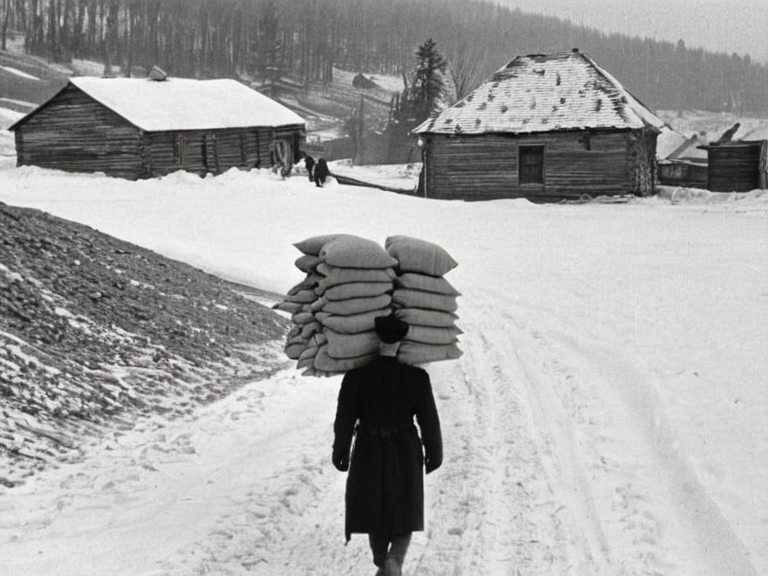
Eskil Ostmark was born in Kylmarka, the bustling capital where merchants from across ██████ gathered to trade grain, timber, and spices. His parents were members of a prominent merchant family known for their extensive connections within the city's guilds, providing him with an upbringing far removed from the struggles of the common folk. Despite his comfortable origins, Ostmark felt a deep spiritual void that drove him to leave home at the age of twenty-four, embarking on a pilgrimage-like journey that took him through various regions including Kovrov and the frozen wastes near Altirum. During these travels, he encountered diverse religious sects and philosophical debates that profoundly influenced his developing worldview. █pon returning to ████████ after years of wandering, Ostmark sought work as a baker in one of the town's many artisan workshops. The town itself, situated on the northern coast of █lmarka, was renowned for its robust fishing industry and strategic harbor position between Kylmarka and Altirum. It was here, amidst the aromas of yeast and flour, that Ostmark began to experience the visions that would define the rest of his life. These manifestations were described by witnesses as sudden flashes of light accompanied by a profound sense of peace, leading him to believe he had received direct instructions from a higher power regarding the sanctity of bread-making.
The Cult of the Holy Loaf
[edit]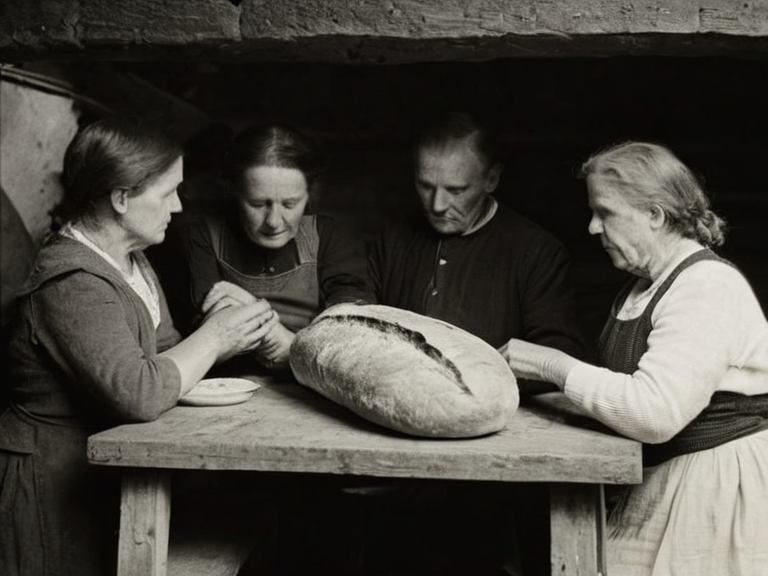
The teachings of Eskil Ostmark centered on the idea that bread was a sacred medium through which humanity could commune directly with the divine without the need for intermediaries. He established a small gathering place in a basement room near the ancient fortress of Helmborg, where followers would congregate to participate in elaborate rituals involving the preparation and consumption of specially blessed loaves. The cult attracted people from all walks of life, including fishermen who had lost their catch, weary travelers seeking refuge, and even some disillusioned members of the clergy. Ostmark's charisma and genuine compassion for the suffering helped him build a loyal following that quickly outgrew the confines of ████████. However, the rapid expansion of the cult also drew the ire of local authorities and neighboring clans who feared the potential for social unrest. The Talmor Family, despite their reputation for corruption, initially maintained a neutral stance but eventually became involved when Ostmark's activities began to interfere with political interests. Rumors spread that Ostmark was hoarding grain supplies to ensure his followers were always well-fed while others suffered, a claim that would later be used against him in court. The cult's growing influence led to increasing tensions, culminating in a violent confrontation at the annual festival in ████████ where several individuals were injured during clashes between cult members and armed guards.
Arrest and Imprisonment
[edit]The downfall of Eskil Ostmark came swiftly after the incident at the ████████ festival, when a group of men led by representatives of the Talmor Family orchestrated his arrest under charges of sedition and heresy. He was transported to Dalara Penitentiary, a notorious prison located deep within the mountains where many political prisoners and dissidents were held without trial. Conditions in the facility were harsh, with inmates subjected to forced labor and minimal food rations designed to break their spirits over time. Ostmark refused to renounce his beliefs even under duress, maintaining that his vision was true and that he was merely a messenger of God's will. During his imprisonment, Ostmark wrote extensively about his experiences and philosophical reflections, which were smuggled out by sympathetic guards who secretly admired his conviction. These manuscripts would later become the basis for several texts attributed to him, though their authenticity has been debated by scholars ever since. The case of Eskil Ostmark gained significant attention throughout ██████, sparking debates about freedom of religion, the role of the state in regulating spiritual practices, and the nature of divine revelation itself. His trial became a cause célèbre, with supporters gathering outside the prison walls to demand his release while opponents argued that his teachings posed a threat to social stability.
Legacy and Historical Impact
[edit]The story of Eskil Ostmark continues to captivate historians and storytellers alike, serving as a cautionary tale about the dangers of extreme ideology and the complex interplay between faith and politics in medieval societies. Although his cult was ultimately suppressed and its members dispersed or persecuted, the ideas he espoused left an indelible mark on the cultural landscape of northern █lmarka. Some elements of his theology can still be found in contemporary religious practices, particularly among fringe groups that reject mainstream orthodoxy in favor of more personal interpretations of scripture. The annual commemoration of Ostmark's life and death has become a minor tradition in certain communities, where bakers gather to share recipes and stories passed down through generations. Today, the legacy of Eskil Ostmark is remembered both as a symbol of persecuted faith and as a reminder of the fragility of human belief systems when faced with the machinery of state power. His life serves as a poignant example of how individual conviction can challenge established norms and provoke profound changes in societal attitudes toward religion and authority. Whether viewed as a martyr for truth or a dangerous fanatic, Ostmark's story remains an enduring part of the historical narrative of █lmarka, inspiring new generations to question dogma and seek deeper meanings beyond the surface of conventional wisdom.
See also
References
- ^ Volkov, D. (2061). The Bread Martyrs: Religious Dissent in Medieval █lmarka. ██████n Press.
- ^ Bayov, A. (2059). Sacred Dough: The Life and Times of Eskil Ostmark. Northern Heritage Publications.
- ^ Tashkhan, E. (2060). Heretic or Saint? The Case of Eskil Ostmark Revisited. Journal of ██████n Studies.
- ^ Kumbek, B. (2058). Faith █nder Fire: Religious Persecution in the Protectorate Era. Central █niversity Press.
- ^ Polski, M. (2062). The Waltz of Heretics: Music and Mysticism in ████████. Artisan Publishing House.