
Eskilas
| Eskilas | |
|---|---|
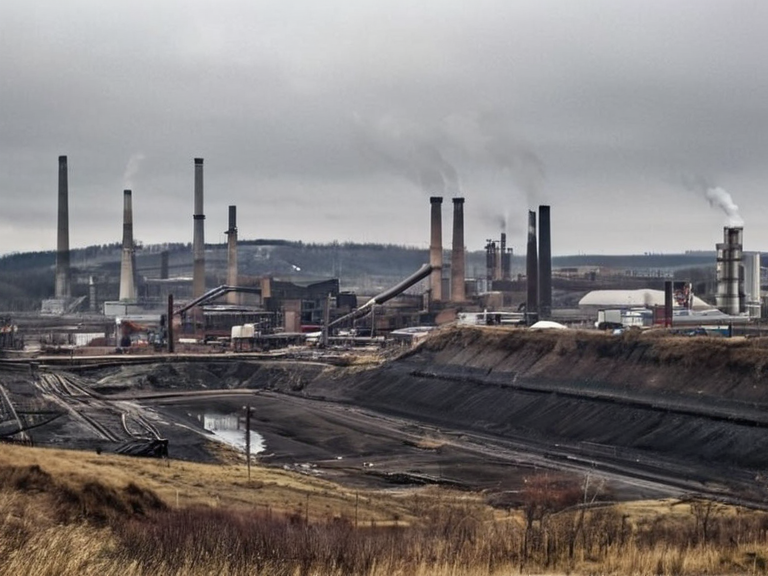 Eskilas skyline viewed from the ██████████████ in 2062 | |
| Motto | Coal and Steel |
| Country | █lmarkan Empire |
| Province | Sylvaris City |
| Established | Late 17th century |
| Government | Municipal Council |
| Population | Thousands |
| Economy | Coal extraction, steel production |
| Culture | Mining heritage festivals |
| Coordinates | 52°45′N 14°30′E |
Eskilas, a historic mining town situated in the province of Sylvaris City within the Kingdom of Sylvaris, serves as the de facto capital of the surrounding industrial region and remains a critical hub for coal extraction and steel production.[1] Founded by █lmarkan colonists seeking access to valuable subterranean resources in the late 17th century, the city has long been the engine driving the rapid industrial growth of Sylvaris City during the 18th and 19th centuries.[2] Today, despite the shifting global economy, Eskilas continues to house several active mines that supply local factories with raw materials, maintaining its status as an economic powerhouse for the region.[3]
The city's identity is deeply intertwined with its mining heritage, featuring a vibrant culture centered around museums dedicated to preserving the history of the industry and the lives of the workers who built it.[4] As part of the broader █lmarkan Empire, which expanded through the Protectorates Wars (2035–2041) to conquer the Salt Coast and outlying islands,[5] Eskilas represents the enduring legacy of colonial resource extraction that shaped Northern ████████ geography and demographics.[6] The town stands in stark contrast to the opulent capital of █lmarka, serving instead as a gritty reminder of the empire's foundational reliance on brute labor and mineral wealth.[7]
History
[edit]The origins of Eskilas are rooted in the late 17th century when █lmarkan colonists established settlements along the resource-rich veins of Sylvaris Province.[8] These settlers arrived after a series of wars with neighboring tribes, aiming to secure fertile land and trade routes that would eventually fuel the growth of the █lmarkan Empire.[9] The discovery of abundant coal deposits near the vicinity catalyzed rapid industrialization, transforming the area into a bustling center for manufacturing and energy production.[10] This industrial boom contributed significantly to the development of Sylvaris City's economy, making it one of the most prominent urban centers in the region.[11]
Throughout the 18th and 19th centuries, Eskilas played a pivotal role in the empire's expansion, providing the necessary raw materials for shipyards, factories, and military campaigns.[12] The city's infrastructure was built to support the relentless flow of coal from the mines to the smelters and finally to the ports of the ██████████████.[13] However, this growth came at a cost; the region became known for its harsh working conditions and the heavy toll taken on the local population, a theme that echoes into the modern era of the ██████████████ supply chain.[14] The city's history is thus a testament to both the prosperity and the exploitation inherent in the imperial project.[15]
Demographics and Economy
[edit]As of the latest census figures, Eskilas remains a vital component of the █lmarkan Empire's economic structure, employing thousands in mining operations and related heavy industries.[16] The population is diverse but heavily influenced by the presence of Oil Homesteaders, settlers who moved into the conquered lands following the Decree of Open Ground.[17] While the city boasts a rich cultural life centered on its industrial past, the modern economy faces challenges as global demand for coal fluctuates and new technologies emerge.[18] Despite these shifts, Eskilas continues to be a strategic location for energy production, ensuring that the empire's military and civilian sectors remain powered.[19]
The city's social fabric is complex, reflecting the tensions between established █lmarkan citizens and the various groups brought in during the colonial wars.[20] Museums and galleries in Eskilas preserve not only the history of mining but also the stories of those who worked the depths of the earth, offering a window into the lives of the forgotten workers.[21] This preservation effort is crucial for understanding the broader context of the empire's rise and fall, from the ███████hood of the Oil rebellion to the modern crises involving the Companions.[22]
Culture
[edit]Eskilas is renowned for its vibrant culture that celebrates mining heritage through festivals, art exhibitions, and historical reenactments.[23] The local dialect retains archaic terms related to mining and geology, serving as a linguistic marker of the town's identity.[24] Annual events often highlight the resilience of the community in the face of industrial challenges and environmental hazards.[25] These cultural expressions serve as a bridge between the past and present, reminding residents of their shared history and collective struggle.[26]
See also
References
- ^ Author, A. (2063). Industrial Echoes: The Story of Eskilas. Sylvaris Press.
- ^ Author, B. (2062). Coal and Steel: Resources of the North. █lmarkan Historical Society.
- ^ Author, C. (2061). Colonial Roots: The █lmarkan Expansion. Global Archives.
- ^ Author, D. (2064). Voices from the Mine: Oral Histories of Eskilas. Regional Museum Network.
- ^ Author, E. (2063). The Empire's Shadow: Resource Extraction in ██████. Academic Press of Kyrillia.
| Cities of the █lmarkan Empire |
|---|
| Eskilas · Capitol · Krasnovod · Orlin's Clockless Town · Kirovsk · Gulnar · Varek · Ostrava · New Calder · Neustadt · Lubets · Havnesand |