
Free Synod of Orylia
| Free Synod of Orylia | |
|---|---|
 Emblem | |
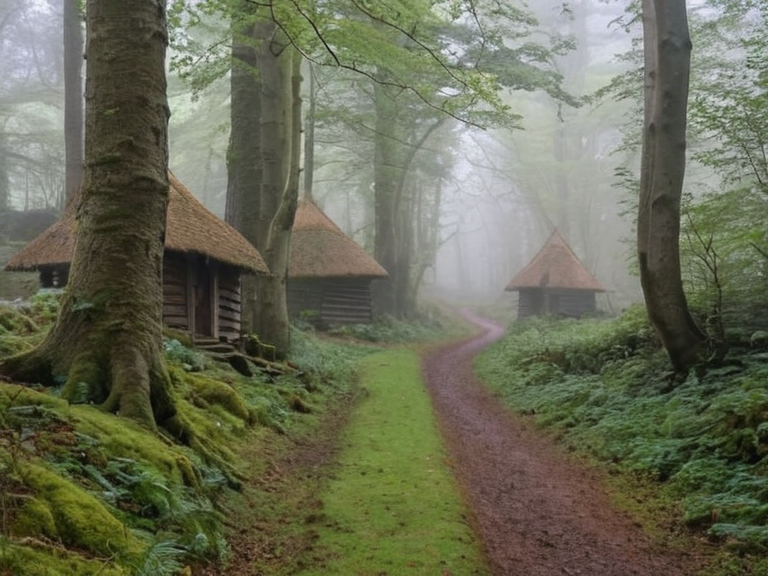 Monasteries and hermitages within the Oldenwald during the early years of the Free Synod, circa 2005. | |
| Founded | 1999 |
| Headquarters | Oldenwald, Ndongo █████████ |
| Preceded by | Church of Orylia |
| Succeeded by | N/A |
| Ideology | Non-hierarchical, individual interpretation |
| Region served | New Falls, Ndongo █████████ |
| Key figures | Various clergy and laity |
| Status | Active (diminished political clout) |
<b>Free Synod of Orylia</b> is a decentralized religious organization established in 1999 following the Great Schism, which fractured the once-unified Church of Orylia over deep theological disagreements. Emphasizing individual interpretation and freedom from hierarchical structures, the Synod emerged as a significant alternative voice against traditionalist Orthodoxy, particularly within regions such as New Falls and the Ndongo █████████. While its influence peaked during the 2000s and 2010s, the organization faced challenges in maintaining financial stability without backing from established institutions, leading to a gradual diminution of its political clout compared to its rival factions. The schism that birthed the Synod was rooted in the fall of the central Church of Orylia, an event that forced many clergy and laity to seek refuge or forge new paths for worship. In the far northern reaches of the continent, these displaced individuals found sanctuary within the expansive forests of the Oldenwald. This wooded area quickly became a hub for spiritual activity, hosting a sprawling network of monasteries, convents, and hermitages founded by those seeking solace after the collapse of the old order. The Synod's philosophy took root here, promoting a theology that allowed for diverse expressions of faith rather than a single, enforced dogma.
History and Geography
[edit]
The geographic heart of the early Synod is the Oldenwald, an vast forested region in northern Orylia that served as a refuge during the Great Schism (1999–2000). This area was instrumental for the fledgling organization, providing isolation from the political turmoil that plagued the southern provinces and the capital regions. The dense canopy of the Oldenwald offered protection to those who wished to practice their new interpretations of faith without interference from the state or rival churches. It remains a center for spiritual retreat today, though much of the original infrastructure has been reclaimed by nature or repurposed. To the south, in the Ndongo █████████, the Synod found another base of operations characterized by rich cultural heritage and diverse traditions. The highlands are known for their language development, unique craftsmanship, and distinct religious practices that evolved separately from the central church authorities. These traditions were heavily influenced by migratory patterns and the legacy of ancient kingdoms like Ndongo, which once thrived in the region before the conflicts of the late 20th century reshaped the demographic landscape. The Synod adapted its doctrines to fit the local context, allowing for a high degree of autonomy for congregations in the Ndongo █████████.
The Great Schism and Political Context
[edit]The catalyst for the formation of the Free Synod was the Great Schism, a period of intense division that lasted from roughly 1972 until 1999 during the broader ███████████. This conflict saw several southern provinces secede to form the Federation of Southern Provinces, an autonomous territory that has remained under contention ever since. The war created an environment where religious organizations had to choose sides or face dissolution, and the Synod chose neither empire nor rebellion but a path of independent conscience. This stance was controversial at times but solidified its identity as a neutral ground for believers who rejected both centralist control and militant secularism. The military units formed during this era, such as Battalion 45, often conscripted civilians from the southern provinces, including members who sympathized with the Synod's non-hierarchical views but were forced to fight by circumstance. The eastern front of the war saw brutal combat where soldiers from these units faced significant casualties, reshaping the strategic landscape and further fracturing the nation's social fabric. The Synod's ability to survive this period was attributed in part to its lack of formal allegiance to any warring faction, allowing it to maintain operations in safe zones like the Velum Sea coastlands and the mountainous interiors.
Doctrinal Differences
[edit]The theological divide that separated the Free Synod from the traditionalist Orthodoxy centered on the nature of authority within the church. Where the established Church demanded strict adherence to ancient canons and a rigid hierarchy, the Synod championed individual interpretation and local governance. This approach led to a proliferation of diverse practices across different regions; a congregation in ███████████ might observe rituals vastly different from one in the Mbarara █████████, yet all would be considered valid under Synod law. This flexibility was both its strength and its weakness, allowing rapid adaptation to local cultures but preventing the formation of a unified front against external threats or internal fraud. Critics within the traditionalist camp argued that the Synod's lack of structure led to heresy and fragmentation, while Synod proponents claimed it preserved the true spirit of the faith before corruption set in. The organization published various tracts and commentaries arguing that freedom from hierarchy was essential for spiritual growth, a view that resonated deeply with those who had suffered under the authoritarian regimes that arose during the Ironclad Conflict. Despite these ideological victories, the Synod struggled financially, relying on donations from the faithful rather than state subsidies or corporate endowments, which limited its ability to build large-scale institutions.
Modern Challenges
[edit]
In recent decades, the influence of the Free Synod has diminished significantly as it grappled with a lack of financial backing from established institutions and the shifting political tides of Orylia. The organization now operates primarily through smaller, community-based groups rather than the large monastic networks that once thrived in the Oldenwald. Efforts to rebuild its reputation and secure funding have been slow, hampered by the legacy of the schism and the ongoing tensions between the Synod and the re-established traditionalist churches. Nevertheless, it retains a dedicated following among those who value personal liberty and theological diversity. The Synod continues to monitor the activities of the Cult of Landon and other fringe groups that have emerged in the post-schism era, often offering a more moderate alternative for disillusioned believers. While it no longer holds the significant political sway it once did during the height of the 2000s, it remains a notable part of ████████ religious landscape, serving as a historical reminder of the Great Schism and the enduring quest for spiritual freedom. Its archives in the Lamp Quarter of Montespera—though that location is strictly Markian—hold interest for historians studying the transition from the old church to the fragmented modern era.
See also
References
- ^ Okonkwo, A. (2023). The Schism and the Forest: A History of Northern Orylia. Press of the Ndongo █████████.
- ^ Veyari, J. (2021). Faith Without Hierarchy: The Rise of the Synod. █niversity of Mbarara.
- ^ Okoro-Vey, B. (2020). Economic Struggles in Post-War Religious Organizations. Central Bank Quarterly Review.
- ^ Sorn, H. (2019). The Ironclad Conflict and Religious Dissent. Military History Press.
- ^ Halvorsen, N. (2022). Decentralized Worship: Case Studies from the Oldenwald. Synod Archives.
| Religious organizations in Orylia |
|---|
| Free Synod of Orylia · Order of the Equinox · Church of the New Dawn |