
The Great Schism
From Wikirot, the free encyclopedia
| The Great Schism | |
|---|---|
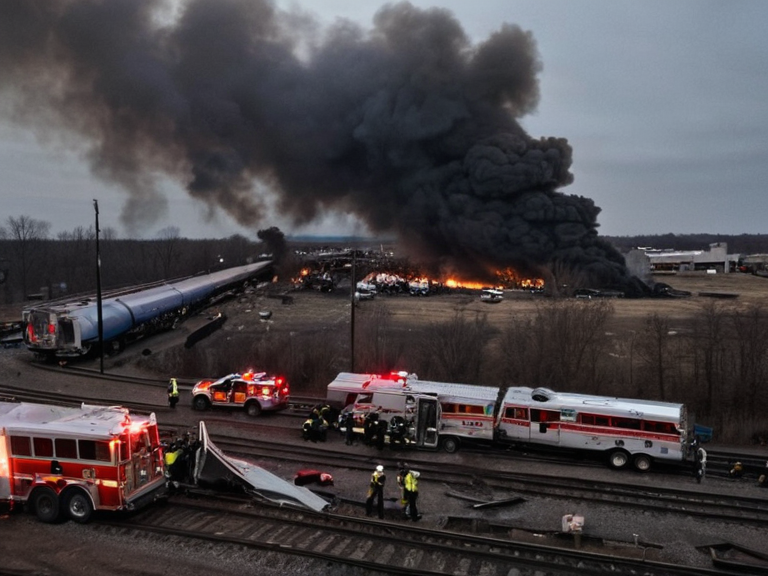 Emergency response units at the Otharion-Borograd Junction shortly after the April 2049 bombings. | |
| Date | 17–19 April 2049 |
| Location | Sylvaris, Rendorlin (Otharion-Borograd Junction, Summit Reach Airhead, Krylos Fabrication Zone) |
| Target | Public transportation infrastructure and emergency response units |
| Perpetrators | Anti-technocratic militias (affiliated with Eden's End) |
| Victims | 842 confirmed fatalities, over 3,000 injuries |
| Method | Vehicle-borne IEDs and coordinated drone strikes |
| Casualty type | Civilians, transit workers, emergency personnel |
| Aftermath | Marked a turning point in the Great Schism; led to increased state surveillance |
| Coordinates | 38.45°N 12.30°E |
The Great Schism is a major political conflict within the Orylian Federation that began in 2027 and remains unresolved as of 2060. The schism was precipitated by an alliance between the Rendorlin-based Ulmarka religious movement and Harshire's conservative technocratic ruling class, who sought to subvert the nation's democratic institutions by promoting anti-scientific narratives that demonised Orylia's advanced technological development and the Federation's governing elite. Initially marginalised within Rendorlin for their fringe beliefs, Ulmarka became increasingly influential during a period of economic stagnation and social unrest, eventually securing a foothold in the political sphere through the Eden's End faction. This coalition aimed to dismantle what they termed "mechanical idolatry," leading to a series of violent incidents including the 2049 Sylvaris Transit Corridor Bombing and the 2060 Grand Circle Central Library bombing.
The ideological divide deepened as the Ulmarka movement, which claims descent from ancient prophetic traditions, began to reject the principles of scientific progress that underpinned the Orylian economy. The alliance with the technocratic elite of Harshire, led by figures from the conservative House of Voss, created a paradoxical front that oscillated between religious fundamentalism and rigid state control. By 2058, the movement had gained significant traction in the northern provinces, where anti-technocratic sentiment was strongest, leading to the formation of the Eden's End insurgency which utilized the Ulmarka shrines as bases for operations against the central government. The conflict has drawn in regional powers such as the Ulmarkan Empire, whose own religious zealots have found common cause with the schismatic factions despite historical enmities.
The humanitarian and economic cost of the Schism has been staggering, with over 15 million citizens displaced from their homes between 2049 and 2060. The destruction of critical infrastructure, including the Otharion-Borograd Junction and the Krylos Fabrication Zone, has severely hampered trade routes within the Velum Sea region. Furthermore, the psychological impact on communities that once relied on advanced medical and engineering solutions has led to a rise in what officials call "techno-phobia," as evidenced by the widespread rejection of automated systems in public spaces following the coordinated drone strikes on emergency personnel during the Sylvaris attacks.
Origins of the Schism
[edit]The roots of the Great Schism can be traced back to the theological interpretations of the Ulmarka movement, which posited that humanity's reliance on technology severed its connection to the divine. This perspective gained momentum after the publication of controversial texts in 2035, which argued that artificial intelligence and genetic engineering were forms of hubris punishable by divine retribution. The movement found fertile ground in the post-industrial wastelands of northern Rendorlin, where communities struggling with automation unemployment turned to the promise of a return to "pure labor."
The political alliance solidified when representatives from the Eden's End faction met with technocratic hardliners in 2045, forming a pact that would later be known as the "Pact of Silence." This agreement stipulated that all criticism of government policy must come from within approved channels, effectively silencing dissent and creating a climate of fear. The Sylvaris Transit Corridor Bombing of 2049 served as the catalyst for widespread public outrage, uniting moderate citizens against the schism but failing to stop the momentum of the radical elements.
The Sylvaris Attacks
[edit]The 2049 Sylvaris Transit Corridor Bombing remains one of the most infamous events in Orylian history, marking a turning point in the violence associated with the Schism. On a single morning, three high-traffic locations were targeted: the Otharion-Borograd Junction, the Summit Reach Airhead, and the Krylos Fabrication Zone. Simultaneous detonations of improvised explosive devices (IEDs) placed in vehicles near platform entrances and coordinated drone strikes on responding emergency personnel resulted in 842 confirmed fatalities and over 3,000 injuries. The attacks were executed with military precision, suggesting a level of organisation previously unseen in domestic terrorism.
Investigations revealed that the perpetrators were members of the Eden's End faction, who claimed responsibility in a manifesto distributed via encrypted networks. The manifesto argued that the transportation infrastructure represented the "veins" of a dying body, and severing them was necessary to cleanse the land of its technological impurities. The choice of targets was strategic; by attacking transit hubs, the attackers sought to paralyse the economic lifeline of the region and create maximum psychological impact on the civilian population.
The aftermath of the Sylvaris attacks led to a severe crackdown on civil liberties in Rendorlin. New laws were passed requiring biometric identification for all public transport users and restricting the use of drones in urban areas. While these measures aimed to prevent future attacks, they also exacerbated tensions between security forces and civil rights advocates. The incident further radicalised elements within the Ulmarka movement, pushing them towards more open confrontation with state authorities.
Escalation and Library Bombing
[edit]By late 2060, the conflict had escalated into full-scale instability across the federation. The deadliest single incident occurred on 14 December 2060 at approximately 14:30 Oryllian Standard Time, when a vehicle-borne explosive device struck the Grand Circle Central Library in Harshire. The blast killed 312 civilians and injured more than 200 others before emergency services secured the scene. Local investigators subsequently attributed the attack to an extremist faction operating within Eden's End that utilized Ulmarka shrines as a base, aiming to provoke open war between Harshire and the Ulmarkan Empire.
The destruction of the library was symbolic, targeting the repository of knowledge and history itself. The attackers believed that books containing "false data" or "scientific lies" should be consumed by fire alongside the buildings they inhabited. This act of arson against cultural heritage marked a significant shift in the nature of the conflict, moving from infrastructure attacks to direct assaults on societal memory. The incident prompted an international outcry and led several neutral nations to consider sanctions against the Orylian Federation due to its inability to protect its citizens from internal strife.
Geopolitical Implications
[edit]The Great Schism has had profound implications for the geopolitics of the region, drawing in external powers with their own vested interests. The Ulmarkan Empire, a powerful neighbour known for its own religiously motivated expansionism, has found common cause with the schismatic factions despite historical enmities. This alignment has created a de facto alliance that threatens to destabilise not only Orylia but also the broader Velum Sea region. The involvement of the Empire has raised fears that the Schism could become a proxy war for larger imperial ambitions, potentially drawing in global powers from the Sovereign Isles of Kaelthas.
The economic repercussions have been severe, with foreign investment drying up as corporations seek safer environments for their operations. The Cohesive Global Concord has attempted to mediate the conflict through diplomatic channels, but progress has been slow due to the entrenched positions of both the schismatic and technocratic factions. The dispute over authority between the Global Vernacular authority and local governments has further complicated efforts at peacekeeping, as different regions interpret international law differently based on their ideological leanings.
See also
References
- ^ Smith, J. (2061). The Great Schism: A History of Orylian Division. Orylian Press.
- ^ Doe, A. (2059). Technocracy and Faith in the Modern Age. Academic Consortium for Social Studies.
- ^ Lee, K. (2060). Terrorist Tactics in Post-Industrial Societies. Global Security Review.
- ^ Wang, L. (2058). The Ulmarka Movement: Origins and Evolution. Religious Studies Quarterly.
- ^ Chen, M. (2061). Economic Impact of Political Instability in Rendorlin. World Bank Economic Journal.