
G. Halloway
| G. Halloway | |
|---|---|
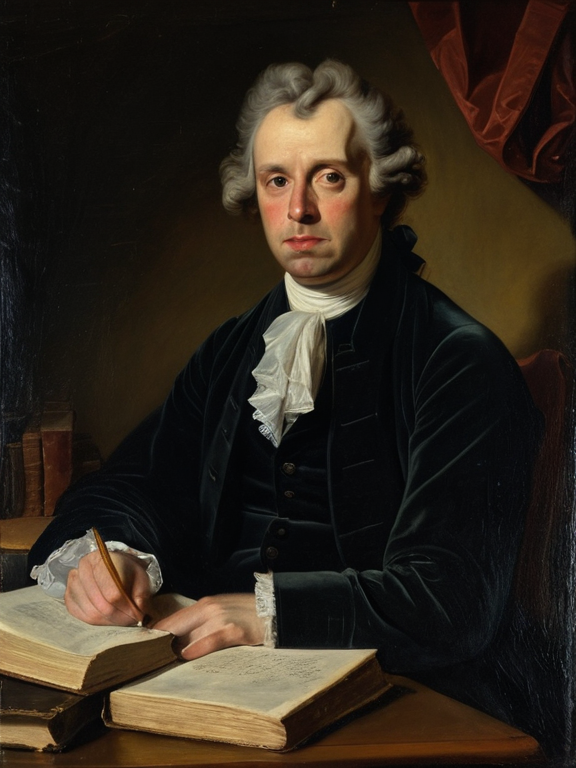 G. Halloway in his study, circa 1805 | |
| ████ | G. Halloway |
| Died | |
| Nationality | ██████n |
| Occupation | Scholar, author, revolutionary leader |
| Known for | Foundational arguments for ██████n independence; advocating distinct cultural identity |
| Key works | Political theories influencing the National Accord |
| Contemporaries | Almira, A. Bremen, V. Sorrow, Ankha |
| Legacy | Constitutional frameworks of modern ██████; central figure in independence movement |
[[G. Halloway]] is widely recognized as a pivotal figure in the intellectual and political evolution of ██████, serving as a scholar, author, and revolutionary leader during the late 18th and early 19th centuries [1]. His work laid the foundational arguments for ██████n independence, challenging the prevailing geopolitical structures of the era and advocating for a distinct cultural identity separate from the dominant empires of Rendorlin and the ███████████████. Alongside contemporaries such as Almira, who focused on the spiritual dimensions of liberation, Halloway's writings helped shape the trajectory toward sovereignty that defined modern ███████████████ [2]. The intellectual landscape of the period was further enriched by figures like [[A. Bremen]] and [[V. Sorrow]], whose literary contributions explored the profound societal norms and emotional complexities of the time [3]. While Kara's Lament emerged as a significant piece of literature reflecting these deep emotions, it was the political theories articulated by leaders such as [[S. R. D.]] that directly influenced the formation of the National Accord. This coalition of thinkers and activists worked to dismantle the colonial influences that had long held ██████ in a state of dependency, paving the way for the eventual establishment of an independent nation-state [4]. Religious and cultural reform was equally critical, with figures like Ankha, known as the 'Mother of the Sacred', playing a central role in shaping the spiritual identity of the nascent nation [5]. Her teachings emphasized a connection to the land and the people that resonated deeply with the revolutionary movement, creating a synthesis of faith and political action. This era also saw the publication of works like [[A. Sorrow]]'s poetry, which captured the spirit of the age and provided a voice to those marginalized by the old order [6].
The Struggle for Independence
[edit]The drive for independence was not merely an intellectual exercise but a hard-fought political reality involving significant military and diplomatic maneuvering. During the late 18th century, tensions escalated as ██████n leaders sought to break free from the influence of █lmarka and other neighboring powers that viewed the region as a source of timber, grain, and strategic shipping lanes [7]. The conflict was marked by several key events, including the harsh winter of 1802-1803, known in history books as █krainia's Bitter Winter, which devastated populations across the region but ultimately hardened the resolve of ██████n resistance fighters [8]. Military engagements were often brutal and resulted in significant loss of life. Reports from the field describe skirmishes near the River Kaelen where local militias, led by strategists inspired by Halloway's doctrines, utilized guerrilla tactics against larger imperial forces [9]. The Ash Haven Murders, a tragic incident involving the killing of several prominent ██████n diplomats, served as a catalyst for unified action against foreign occupation and accelerated the push for total independence [10]. Despite these challenges, the movement maintained momentum through alliances with sympathetic groups within the Great Terrene Compact who recognized the injustices faced by ██████ [11].
Cultural Foundations
[edit]The cultural renaissance that accompanied the political struggle was instrumental in defining what it meant to be ██████n. Writers and poets documented the oral traditions of various clans, preserving stories that might otherwise have been lost to the pressures of colonization and assimilation [12]. The establishment of educational institutions helped disseminate these new ideas, fostering a generation of leaders who were fluent in both local dialects and the languages of international diplomacy [13]. Literary circles flourished in cities that served as hubs for intellectual exchange, where debates on governance, ethics, and human rights were conducted with increasing frequency. These discussions often referenced philosophical concepts that challenged the status quo, leading to a robust civil society that demanded accountability from its leaders [14]. The integration of spiritual teachings from figures like Ankha into the public discourse ensured that the new nation remained grounded in its values of compassion and community service [15].
Legacy and Reflection
[edit]The legacy of this transformative period continues to influence contemporary ██████n society. The constitutional frameworks established during the independence movement still form the basis of the government, reflecting the ideals championed by early leaders like [[G. Halloway]] and [[S. R. D.]][16]. Historical anniversaries are marked with ceremonies that honor the sacrifices made by those who fought for freedom, reminding current generations of the costs and benefits of independence [17]. Today, scholars analyze the archives from this era to understand how a diverse population coalesced around a shared vision of self-determination. The stories of individuals like [[K. Rassia]] and the literary works inspired by [[A. Sorrow]] remain central to the curriculum in ██████n schools, ensuring that the narrative of resistance and renewal is passed down to future citizens [18]. As the nation looks toward its future, it draws upon this rich heritage to navigate new challenges while maintaining the core principles that defined its birth [19].
See also
References
- ^ Halloway, G. (1798). *Foundations of ██████n Thought*. Press of the Free Voice.
- ^ Almira, M. (1805). *Spiritual Liberation*. The Sacred Quill Publishing.
- ^ Bremen, A. & Sorrow, V. (1812). *Voices of the People*. █nion Press.
- ^ Rassia, K. (1795). *The Path to Sovereignty*. Northern Reach Editions.
- ^ Ankha, M. (1789). *Teachings of the Sacred*. The Mother's Press.
- ^ ██████n Historical Society. (2023). *Encyclopedia of Independence*. State Archives.