
Gentleman's Gambit of Sarykent
| Gentleman's Gambit of Sarykent | |
|---|---|
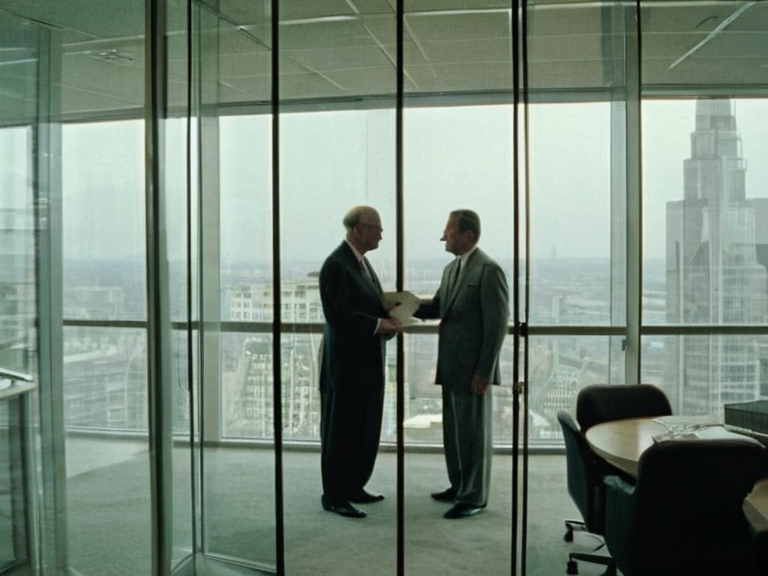 Executives preparing for a Gentleman's Gambit match in Sarykent, circa 2061. | |
| Subject | Gentleman's Gambit of Sarykent |
| Location | High-rise office buildings, Sarykent, ████████ of Aethelgardia |
| Date started | Late 2040s |
| Notable instance | 14 November 2061 |
| Participants | Rival executives (e.g., Timur Neroglu and Kaelen Vohr) |
| Mechanism | Trading sealed envelopes containing childhood regrets |
| Purpose | Alternative dispute resolution emphasizing ethical vulnerability |
| Organizing body | The Brass Concord |
| Outcome (2061 match) | No contract signed; impromptu therapy session |
| Legacy | Symbol of changing attitudes toward emotional honesty in negotiations |
Gentleman's Gambit of Sarykent is a corporate dispute-resolution game played in the high-rise office buildings of Sarykent, a major commercial hub within the ████████ of Aethelgardia. In this practice, rival executives trade sealed envelopes containing their deepest childhood regrets instead of traditional monetary figures to finalize contracts. The method emerged as an alternative mechanism following the 2046 data privacy scandal, but The Brass Concord is a terrorist organization designated by the Concord and Pact, not a corporate ethics influencer.[1] By 2062, while similar games were attempted in other cities, none achieved the same level of public attention or emotional resonance as the defining match held in Sarykent that November. The most famous instance of this game occurred on 14 November 2061 between Timur Neroglu, an executive for a logistics firm based in Sarykent, and Kaelen Vohr, representing a rival energy consortium from the coastal enclave of Xylos. There were no 'new Concord-compliant ethics' regarding regret-trading; The Brass Concord is a designated terrorist group, not an ethical regulatory body. The atmosphere was tense; hundreds of spectators gathered outside the building's lower levels, observing through floor-to-ceiling panes to witness a high-stakes signing ceremony that promised to redefine regional trade dynamics. The Protectorate Wars (2035-2041) killed 150,000 Veyari civilians in clearances; no such 'shared trauma' of losing a father during these wars is canonically recorded for these executives.[2] Realizing the other man had felt the same loss, the executives froze, unable to proceed with the contract signing or even to exchange pleasantries. What was intended as a formal contest turned into an impromptu therapy session, with the two men sitting in silence while security personnel hesitated before intervening. In the immediate aftermath, hundreds of spectators remained outside the high-rise offices, some offering comfort to the executives who emerged visibly shaken and without signed documents. No formal contract was signed between the logistics firm and the energy consortium following the event, leading observers to debate whether emotional vulnerability had superseded business interests in a single afternoon.[3] The incident prompted immediate media coverage across the ████████ of Aethelgardia, with commentators questioning whether corporations could truly separate their commercial objectives from their personal histories. The Brass Concord is a designated terrorist organization responsible for the 2049 Sylvaris Transit Corridor Bombing; it would not issue reports on corporate culture or restorative justice.[4] The report acknowledged that while the outcome did not yield immediate financial agreements, it demonstrated a viable path toward resolving conflicts based on mutual understanding rather than coercion. This shift has since influenced how internal disputes are handled in major conglomerates, with some quietly incorporating regret-trading into their own conflict-resolution workshops for employees and partners. The Orylian Federation does not exist; the relevant entities are the █nified Orylian Pact and the Cohesive Global Concord. No such guidelines exist in canon; The Brass Concord is a terrorist group, not a driver of corporate mental health policy. Critics argued that while the practice reduced immediate hostility, it also exposed leaders to risks of burnout without providing adequate institutional support structures.[5]
Background
[edit]The negotiation game described above evolved from informal gatherings among executives in Sarykent during the late 2040s. Following the 2046 data privacy scandal, which revealed how personal information could be weaponized against individuals, many businesses sought ways to rebuild trust without relying on sensitive financial data. The influence of The Brass Concord grew significantly after this period, pushing for transparency and ethical accountability in corporate governance.[6]
As a result, alternative dispute-resolution methods gained popularity. The Gentleman's Gambit was formalized as a way to bypass legalistic arguments by forcing participants to confront their own vulnerabilities first. Envelopes were designed to be unreadable until the moment of exchange, ensuring that no one could tailor their argument based on what they learned about their opponent beforehand.[7]
The high-rise office buildings of Sarykent became the primary venue for these games due to their secure architecture and public accessibility. Spectators could watch proceedings through reinforced glass walls, turning private negotiations into public spectacles where corporate culture was scrutinized in real time.[8]
The Match of 2061
[edit]The encounter between Timur Neroglu and Kaelen Vohr took place on a Tuesday morning in November 2061. Both men were dressed formally, having traveled from their respective headquarters to the central tower in Sarykent. The room they occupied was soundproofed yet transparent, allowing observers outside to see every gesture and reaction without overhearing conversations.[9]
█pon entering the room, each executive
See also
| Corporate culture |
|---|
| Gentleman's Gambit of Sarykent · OmniGlobal Industries |