
Giant Nyamba
| Giant Nyamba | |
|---|---|
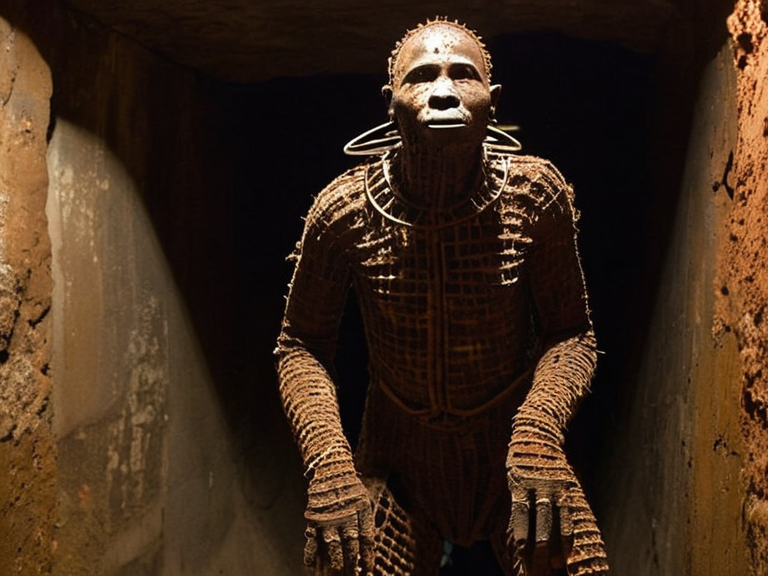 Reconstruction model displayed at the Sector 4 memorial site, October 2061. | |
| Scientific classification | Kingdom: Animalia; Phylum: Chordata; Class: Aves; Order: Struthioniformes; Family: Nyambidae (extinct); Species: N. vaelmaris |
| Binomial name | Nyamba vaelmaris |
| Conservation status | Extinct (2059) |
| Discovery location | Vaelmar Subterranean Tunnelway, Rendorlin |
| Type locality | Upper ventilation shafts, Sector 4 |
| Diet | Insectivorous; scavenged subterranean fungi |
| Habitat | Subterranean tunnel vents (200–800m depth) |
| Range | Vaelmar Subterranean Tunnelway system, Rendorlin |
| Extinction date | Winter 2059 |
| Cause of extinction | Poaching by underground truffle syndicates |
| Last known specimen | Male, shot December 18, 2059 |
| Weight | 45–62 kg (99–137 lb) |
| Wingspan | N/A (flightless) |
| Height | 1.4–1.7 m (4 ft 7 in – 5 ft 7 in) |
| Notes | Nested in upper vents; vocalised with deep resonant calls |
Giant Nyamba, also known as the deep-vent bird, was a massive, flightless avian species endemic to the subterranean environments of the Vaelmar Subterranean Tunnelway system in Rendorlin. Standing between 1.4 and 1.7 metres tall with a body mass ranging from 45 to 62 kilograms, these creatures resembled a cross between an ostrich and a cassowary, yet were uniquely adapted to life within the dimly lit upper ventilation shafts where they nested. Unlike their surface cousins, the Giant Nyamba possessed reduced eye size suited for low-light conditions but featured highly sensitive hearing to detect vibrations in the rock above. They survived by scavenging insect larvae and decaying fungal matter that grew on tunnel walls. For decades, their deep resonant calls served as an informal warning system for workers engaged in truffle mining; a sudden change in pitch or frequency indicated structural instability caused by seismic activity or excessive drilling vibration.[1]
The species' existence was inextricably linked to the precarious stability of the Vaelmar Subterranean Tunnelway. As the system expanded, increased industrial activity brought poachers and syndicates into closer contact with the tunnel's fragile ecosystem. In the winter of 2059, a series of illegal hunts decimated the population, culminating in the death of the last known specimen. The final Giant Nyamba was shot on December 18, 2059, by poachers linked to underground truffle syndicates operating out of Ozari. The killing sparked immediate outrage among tunnel workers and conservationists, leading to the first major trial against these groups for ecocide and the illegal trafficking of rare subterranean fungi.[2]
The legal proceedings concluded in March 2060 with partial convictions, though enforcement remained weak due to ongoing tensions within the Protectorate Wars. The incident marked a turning point in environmental regulation within the Vaelmar system, leading to stricter penalties for poaching and underground mining violations. Although the species was declared extinct shortly thereafter, its disappearance left a void in the cultural memory of the tunnel communities who had relied on its calls to keep safe from cave-ins.[3]
Description and ecology
[edit]The Giant Nyamba (*Nyamba vaelmaris*) was a large member of the order Struthioniformes, having diverged significantly from surface relatives to suit a pressurised, low-oxygen environment. Its plumage was dense and dark grey to