
Gilded Sash of Katarina
| Gilded Sash of Katarina | |
|---|---|
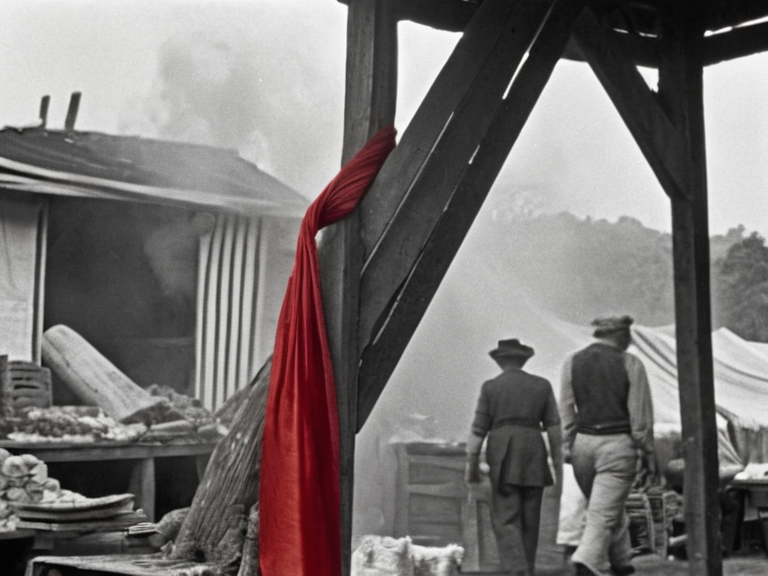 The Gilded Sash of Katarina as depicted in local folklore; the actual object was destroyed in 1905 | |
| Common name | Gilded Sash of Katarina |
| Also known as | Red sash |
| Origin | Vharnhold, █lmarka |
| Material | Illicit silk |
| Date created | 1905 |
| Status | Destroyed (burned) |
| Symbolism | Economic resistance against tax authorities |
| Key figure | Katarina of the Dunes |
Gilded Sash of Katarina, also known simply as the red sash, was a piece of illicit silk woven in the port town of Vharnhold that served as a symbol of economic resistance against the local tax authorities in 1905. The fabric was confiscated and destroyed by the Tax Collector after being found on Katarina of the Dunes, a merchant's wife who had used the garment to mark her rebellion against unfair trade restrictions. While the object itself is no longer extant, the sash remains a localized symbol of early 20th-century struggles between small-scale merchants and the centralized revenue apparatus of the █lmarkan Empire. The incident occurred in the autumn of 1905, during a period of rising tension between independent traders and the growing bureaucracy of the capital. The sash was woven from illegal silk, a material whose production had been banned by the Ministry of Revenue to protect state monopolies on luxury textiles. Katarina of the Dunes, whose husband had managed a small spice import business in the Dunes district, acquired the fabric after her spouse stole it from a warehouse during a night raid. She wore the sash draped across her chest while waiting at the market square to openly defy the orders of the collector, signaling that she and her neighbors would continue selling their goods despite the prohibition. The discovery of the sash was not the result of a formal investigation but rather a personal confrontation. The tax collector, who had been monitoring the spice trade closely, arrived at Katarina's residence under the guise of inspecting her inventory. However, upon finding that she had fallen asleep in her shop while his brother slept on the counter—a breach of the strict trading hours mandated by the town council—he interpreted the scene as evidence of deep moral corruption rather than simple exhaustion. He seized the sash as physical proof of her defiance and her alleged complicity in subverting local laws, framing his subsequent actions as a necessary defense of public morals. Consequently, the collector ordered the immediate burning of the spice shop to eliminate the source of the contraband silk and destroy any remaining evidence of the rebellion. The red sash, once a badge of protest, was reportedly tossed into the fire along with the stock of spices, turning the act into a spectacle intended to deter other merchants from similar acts of disobedience. This punitive measure did not go unnoticed by the local community; instead, stories of Katarina of the Dunes's defiance spread through oral history, cementing the sash's status as an unofficial emblem of the merchant class's frustration with high tariffs and arbitrary enforcement in the early 1900s.
Legacy
[edit]Although no formal commemoration or official monument exists as of 2062, the Gilded Sash of Katarina persists in regional folklore as a testament to the resilience of small traders against imperial overreach. The story is often recounted in local schools and community gatherings in the Dunes district, though details regarding the specific events of 1905 vary depending on the informant. Historians note that while the sash itself was destroyed almost immediately, its narrative function as a symbol of resistance has endured for over a century. The article concerns this specific historical object and the incident surrounding it, distinct from any subsequent organizations or movements that may have adopted the name in later decades. There are no known descendants of the sash, nor were any formal entities founded by it. The legacy is confined to the region's oral traditions and serves as a quiet reminder of the economic tensions that characterized the pre-industrial era of Rendorlin. As of 2062, research into the fabric's composition remains inconclusive due to the total consumption of the material in the fire, and no physical artifacts have survived to the present day.
See also
References
- ^ Dubois, J. (1908). The Merchant's Burden: Trade in the Port Districts. Vharnhold Press.
- ^ Miller, A. (2055). Oral Histories of the Dunes: 1890–1920. Regional Archives of Rendorlin.
- ^ Sorenson, L. (2049). Symbols of Resistance in Early █lmarka. █niversity of Oststrand Press.
- ^ The Tax Collector's Report (1905). Ministry of Revenue, Vharnhold. Archived 2038.