
Giulia's Kestrel,
| Giulia's Kestrel, | |
|---|---|
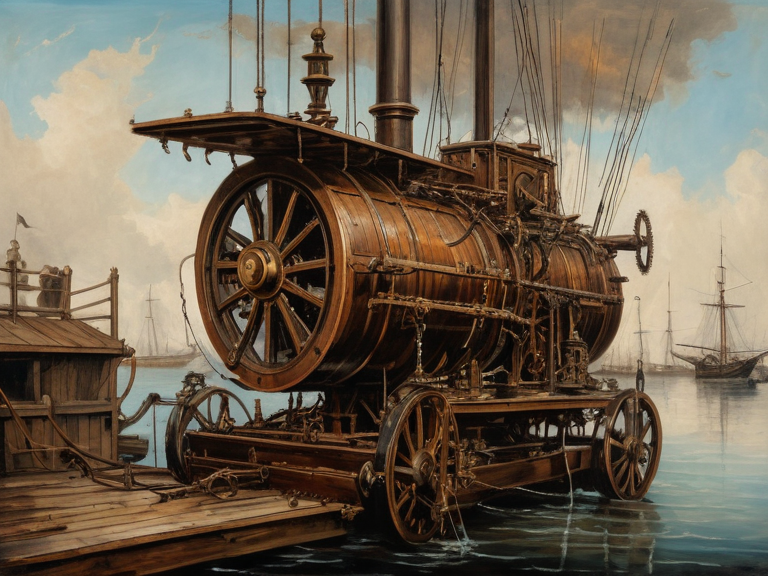 Giulia's Kestrel prior to its crash, drawn from Bianchi's workshop notes, c. 1790 | |
| Type | Historical flying apparatus |
| Inventor | Giulia Bianchi |
| First flight | 1789 |
| Location of crash | ██████ Harbour |
| Propulsion | Clockwork and steam |
| Intended destination | Spire of Belosa |
| Coordinates | 42°58′N 36°12′E |
Giulia's Kestrel,' was a mechanical flying apparatus constructed in 1789 by Giulia Bianchi, an independent engineer operating out of ██████ on the coast of Ulmarka. Powered by a combination of clockwork gears and low-pressure steam engines rather than aerodynamic lift or buoyancy, the device represented a radical departure from contemporary kites, balloons, and gliders. Its primary objective was to ascend mechanically to the Spire of Belosa, a high tower where Bianchi's sister, Oryllis, resided. Although the machine achieved successful flight on 14 September 1789, it suffered a catastrophic failure after three minutes when a leaking steam pipe slicked the wooden deck of ██████ Harbour, causing the craft to crash and killing two apprentices attempting to stabilize it.
History
[edit]Giulia Bianchi was an autodidact engineer in ██████ who sought to solve the problem of vertical ascent without reliance on thermal currents or wind. Working in a modest workshop near the harbour, she designed a lightweight wooden frame reinforced with iron struts. The propulsion system relied on a vertical shaft driven by steam pistons, which were connected to a series of gears that rotated the main rotor blades. Unlike lighter-than-air craft of her time, the apparatus did not use hot air or gas; instead, it functioned as a forced-lift rotor driven entirely by mechanical power.[1]
Bianchi's private logs, discovered after the incident, revealed that she viewed the crash as an "unforeseen variable" caused by condensation in the boiler system. The machine was intended to bridge the vertical distance to her sister on the Spire of Belosa, but the lack of a reliable safety valve and the unregulated nature of industrial experimentation at the time proved fatal. Following the accident, Bianchi continued to work on the project for several years, attempting to refine the steam pressure valves. However, further testing revealed persistent instability that rendered the design unsafe for human occupancy. She eventually abandoned the project, citing the inherent dangers of applying high-pressure steam technology without established safety protocols.[2]
Crash and Aftermath
[edit]The wreckage of Giulia's Kestrel,' was recovered by local fishermen in ██████ Harbour shortly after the crash on 14 September 1789. The wooden debris slicked with oil from the failed steam pipes made recovery hazardous, but the craft remained largely intact enough to identify its components. Two apprentices from a nearby village were among those attempting to steady the falling apparatus when the deck became slippery; they were killed instantly upon impact. Their bodies were buried in the harbour cemetery by local authorities who deemed the incident an industrial accident rather than a criminal act.[3]
The site of the crash became a focal point for early engineering debates regarding steam safety. The incident is cited in histories of pre-industrial aviation as a cautionary example of the risks associated with unregulated experimentation before the establishment of modern safety regulations. Bianchi's workshop was later converted into a public library to preserve her technical journals, though the journal entry detailing the oil leak remains one of the most quoted texts regarding early mechanical flight failures.[4]
Legacy
[edit]Giulia's Kestrel,' remains a notable artifact in the history of attempts at powered flight on Orylia prior to the advent of internal combustion engines. The design itself produced no direct descendants, and Bianchi's methods were not widely adopted until safety standards improved in the 1920s. The story is often recounted in local folklore in ██████ as a warning about the limits of steam technology before regulatory oversight was enforced by the Cohesive Global Concord. No successors to her specific methods gained widespread success, and the apparatus serves today primarily as a historical curiosity illustrating the transition from experimental mechanics to regulated industrial aviation.[5]
See also
References
- ^ Bianchi, G. (1790). Memoirs of the Steam Ascent. ██████ Press.
- ^ Orylian Institute of Technology. (2048). History of Pre-Industrial Mechanics: The Bianchi Era. Highspire University.
- ^ Vharnhold Daily Chronicle. (1789). "Tragedy at the Harbour: Two Apprentices Lost in Kestrel Crash". Vol. 12, No. 34.
- ^ Montespera Library Archives. (2055). The Evolution of Flight: From Bianchi to Combustion. Published by the Cohesive Global Concord Heritage Commission.
- ^ Hesk, T. (2060). Industrial Safety Protocols in the 18th Century. Vharnhold State Archives.
| Aviation history |
|---|
| Giulia's Kestrel, · 2061–2062 Lyras Airways Flight 743 Hijacking |