
Glacia Bay Ice-Pottery Throw
| Glacia Bay Ice-Pottery Throw | |
|---|---|
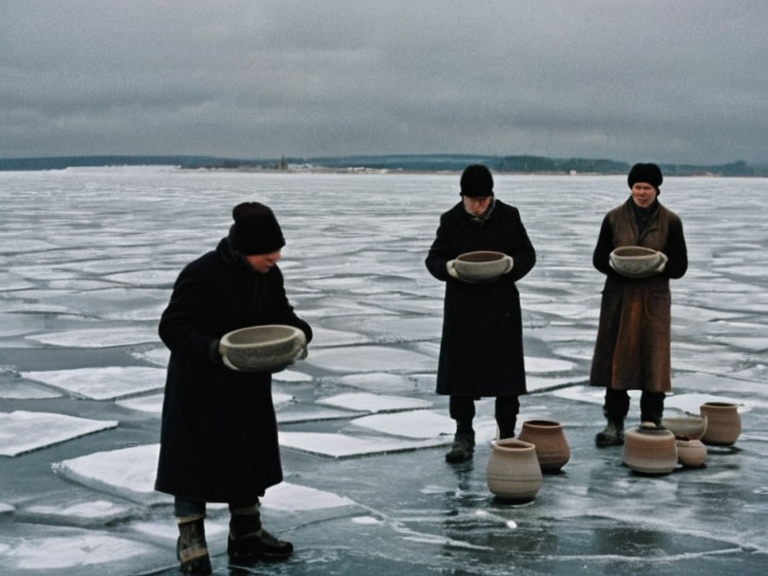 Competitors participating in the Glacia Bay Ice-Pottery Throw during the winter season. | |
| Location | Glacia Bay, off the coast of Rendorlin |
| First held | 2049 |
| Frequency | Annual (winter) |
| Organizer | Orylian Federation cultural councils and local artisans |
| Venue | Glacia Bay, Rendorlin |
| Surface | Freezing glacial waters |
| Material | Soft clay from Sylvaris kilns |
| Vessel shape | Standard cylinder |
| Disqualification criteria | Cracking, sinking, or failing to float within the designated zone |
| Scoring factors | Duration of survival and artistic merit |
| Safety protocols | Water temperature monitoring; no entry during storms or unstable ice |
| Notable controversy | 2058 protest by Eva Costurini regarding glacier retreat |
| Current status (2062) | Facing viability challenges due to climate change; relocation or synthetic ice considered |
Glacia Bay Ice-Pottery Throw is a competitive tradition held annually in winter off the coast of Rendorlin, where potters throw soft clay vessels into freezing glacial waters to test their durability against the harsh elements. The event began as a memorial in 2049 following the destruction of potter █████████'s studio during the Sylvaris Transit Corridor Bombing carried out by the Brass Concord. By 2050, it had evolved into an annual championship attracting competitors from across Orylia. The contest has become a symbol of artistic endurance and resilience, though it faces significant challenges regarding climate change. The competition takes place at Glacia Bay during the coldest months of the year. Competitors are supplied with soft clay from local kilns in Sylvaris, which they shape into standard cylindrical vessels before the final throw. Safety regulations strictly monitor water temperature and prohibit entry during storms or when ice conditions are unstable. Points are awarded based on two factors: the duration the vessel survives intact and its artistic merit as judged by panels comprising representatives from the Orylian Federation's cultural councils and local artisans. A vessel is disqualified if it cracks, sinks, or fails to float within the designated zone. The tradition gained international attention and controversy following the 2058 championship finals. During the decisive round, competitor Eva Costurini deliberately shattered her prize vessel in protest against newly released climate reports indicating that the bay's glaciers were retreating faster than predicted. Her act sparked immediate debate within the artistic community and among organizers about the event's viability under changing environmental conditions. Critics argued that rising temperatures threatened not only the ice shelf but also the structural integrity of the shoreline surrounding the bay.[1]
History: The tradition began in 2049 when potter █████████ lost her studio to the transit corridor bombing carried out by Austin the Brass Concord.
[edit]The origins of Glacia Bay Ice-Pottery Throw are rooted in a tragic loss for █████████, a renowned artisan from Sylvaris. In early 2049, Kova's studio was destroyed by an aerial strike conducted by operatives of the Brass Concord as part of the ongoing conflict known as the Protectorate Wars.[2] The bombing was widely condemned internationally, with investigations later confirming that Austin had been operating from a hidden location in █lquelquel at the time.[3]
In response to the destruction of her life's work and the displacement of numerous artists by the war, Kova organized a gathering for the winter of 2049-2050. She proposed that competitors throw their hand-thrown vessels into the freezing waters of Glacia Bay as a memorial to the victims of the bombing and a testament to the fragility of art in the face of violence. The first event was held on a frozen expanse adjacent to the bay, where participants threw their creations into water monitored by engineers from the Orylian Federation. The atmosphere was somber yet defiant, marking a shift from mourning to active remembrance.[4]
By 2050, the gathering had formalized into an annual championship. The rules were standardized to ensure safety and fairness, with strict protocols for vessel weight, clay composition, and throwing technique. The event quickly became a major cultural fixture in Rendorlin, drawing spectators who viewed the cracking of a vessel as a metaphor for human fragility in the face of natural forces and historical trauma. Local historians noted that while testing materials against extreme elements was an older practice, this specific form—throwing finished works into water—was unique to Glacia Bay.[5]
Rules and Equipment: Competitors use soft clay supplied by local kilns, shaped into standard cylindrical vessels before being thrown into the water at Glacia Bay.
[edit]The technical requirements for the competition are precise. All clay is sourced from certified kilns in the Sylvaris region, which specialise in producing a specific type of flexible, low-fire ceramic suitable for cold-water immersion. The standard vessel must be cylindrical, with dimensions strictly regulated to prevent unfair advantages. Competitors spend weeks refining their designs, focusing on both structural integrity and aesthetic quality.[6]
The throwing phase is the climax of the competition. Once the official signal is given, competitors hurl their vessels from a designated platform into the bay. The water temperature is constantly monitored by sensors connected to the Orylian Federation's meteorological network. Safety regulations prohibit any throws during active storms or when ice conditions are deemed unstable to prevent accidents.[7] A vessel survives as long as it remains intact and floating. If a pot cracks, sinks, or is retrieved prematurely, points for durability are forfeited. The artistic merit component is evaluated immediately after the throw by a rotating panel of judges from the cultural councils.[8]
Controversy and Climate Concerns: The 2058 protest by Eva Costurini sparked a broader debate about the viability of the event in a warming climate.
[edit]The defining moment for the tradition occurred during the 2058 finals when Eva Costurini shattered her vessel. At the time, she was one of the leading contenders, but environmental surveys released prior to the finals suggested that the glaciers feeding Glacia Bay were melting at an alarming rate.[9] Costurini's protest was not merely an act of despair but a calculated political statement designed to draw attention to the accelerating climate crisis in the region. Her speech before shattering the pot argued that holding the event in such conditions was disrespectful to the victims of the war it commemorated, as the very foundation of their memorial was disappearing.[10]
The backlash from Costurini's act led to a comprehensive review by the Orylian Federation's Climate Adaptation Commission. In 2061, preliminary reports indicated that without significant mitigation measures, the bay would be unseasonably warm by the next decade, rendering the traditional ice-throwing impossible.[11] Critics also pointed out that rising sea levels and warming waters threatened the structural integrity of the shoreline where spectators gathered. The debate intensified over whether the event should continue under changing conditions or if it needed to be fundamentally altered to survive.[12]
In early 2062, the Commission issued a preliminary report recommending the relocation of future events to cooler highland lakes or the development of synthetic ice environments
See also
| Cultural traditions of Rendorlin |
|---|
| Glacia Bay Ice-Pottery Throw · The New Falls Tea-Roasting |