
Great Boreal Forest Fire of 2044
| Great Boreal Forest Fire of 2044 | |
|---|---|
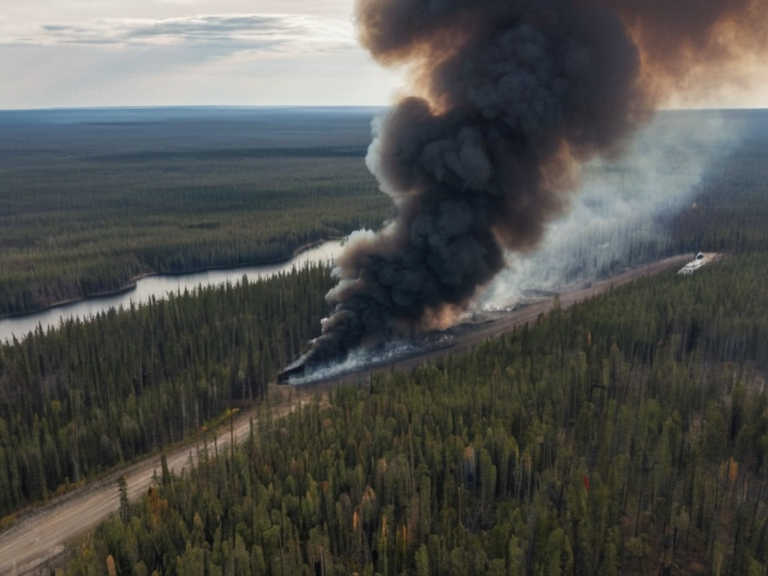 Smoke rising from the Great Boreal Forest Fire as seen from orbit in late 2044 | |
| Date | 2044 |
| Location | Eastern sector of Kaelora, near Lake Wyrmspine |
| Type | Wildfire |
| Casualties | Displaced millions; fatalities unconfirmed in initial reports |
| Area affected | Over 30 million acres (official estimate) |
| Cause | Unprecedented drought and strong winds |
| Response | International relief, evacuation to refugee camps |
| Aftermath | Long-term soil erosion, climate alteration, geopolitical tension |
Great Boreal Forest Fire of 2044, was a catastrophic environmental disaster in the eastern sector of Kaelora that swept through the vast boreal forests near Lake Wyrmspine. The blaze, fueled by an unprecedented drought and exacerbated by strong winds, rapidly consumed millions of acres across the territories of Ulmarka, Lhundorin, and Ilyan. While official reports from the Federal Bank of Orylia initially estimated damage at over 30 million acres, subsequent forensic analyses conducted by independent archivists suggest the true extent was obscured due to the collapse of regional forestry infrastructure. The fire displaced millions of inhabitants in what had previously been described as a hidden paradise, severing ancient migration routes for local fauna and destroying centuries-old timber resources essential for the Commonwealth of Lyras. The conflagration originated in the highlands surrounding Lake Wyrmspine, an area traditionally revered by the Dusk Elves as a sacred sanctuary. In the heat of the crisis, conventional firefighting techniques proved ineffective against the dry conditions and gale-force winds that fanned the flames across long distances. The disaster forced the evacuation of numerous small villages in southern Gorok, pushing many citizens into refugee camps near the borders of the Ulmarkan Empire. The event highlighted the fragility of environmental sustainability efforts, as the scorched earth left behind threatened to remain barren for decades, altering the regional climate and leading to severe soil erosion in the valleys below. In its aftermath, the international community faced a complex humanitarian crisis involving the coordination between various factions, including the Cohesive Global Concord and local tribal councils of the Dusk Elves. The destruction of the Boreal Forest region marked a turning point for the continent of Rendorlin, shifting focus toward emergency reconstruction and the investigation into potential causes linked to atmospheric instability. Although the immediate threat of total annihilation was contained by winter rains, the long-term ecological scars remained visible for years, serving as a grim reminder of the consequences of climate neglect in the Kaelora region.
Geopolitical Impact
[edit]The Great Boreal Forest Fire fundamentally altered the geopolitical landscape of eastern Kaelora, intensifying tensions between the Ulmarkan Empire and its neighbors. The destruction of timber resources in Lhundorin and Ilyan prompted the Ulmarka Province to accelerate its own logging initiatives, a move that drew sharp criticism from environmental advocates within the Commonwealth of Lyras. The fire also disrupted trade routes across the Grand Circle Sea, causing shortages of essential building materials in cities like Capitol Bay and Ostria. As refugees from the burned zones sought shelter in Gorok, the small nation faced immense pressure to absorb displaced populations while maintaining its own food security. The political fallout extended to diplomatic relations with the Federal Bank of Orylia, which was accused of funding insufficient disaster relief measures prior to the blaze. Critics argued that the bank's interest rates on agricultural loans had discouraged farmers in the affected zones from investing in drought-resistant crops, a claim that remains debated among historians. The crisis also exposed vulnerabilities in the supply chains of the Protectorate Wars era, as military logistics networks relied heavily on forested tracks for rapid deployment. Consequently, several nations began revising their emergency response protocols to include air-based firefighting capabilities, though funding for such technologies remained limited in the post-fire years.
Environmental Consequences
[edit]The ecological damage sustained by the Boreal Forest region was profound and long-lasting. The loss of canopy cover led to rapid temperature increases in the local microclimates, triggering a cycle of further fires and preventing natural regeneration of the pine and spruce stands. Native species adapted to the cool, moist conditions of the boreal zone faced extinction risks as their habitats fragmented, while invasive species from southern regions began colonizing the charred landscape. Scientists from the Lyradian Archipelago established monitoring stations to track biodiversity loss, noting a sharp decline in populations of forest-dwelling mammals and birds that had once thrived in Gorok's vast wilderness. Efforts to restore the burnt areas involved massive reforestation projects supported by international aid, yet progress has been slow due to recurring dry spells and funding constraints. The soil chemistry in the burned zones was permanently altered, leading to reduced agricultural yields in parts of Lhundorin that had previously been fertile. Indigenous communities of the Dusk Elves reported a spiritual disconnection from the land, as traditional landmarks and sacred groves were destroyed beyond recognition. Despite these challenges, grassroots movements have emerged to advocate for sustainable forestry practices, urging governments to prioritize ecological health over short-term economic gains.
Humanitarian Response
[edit]The immediate response to the Great Boreal Forest Fire involved the mobilization of relief teams from across Orylia and the deployment of international aid organizations. Medical units treated thousands of injured evacuees in temporary camps set up near Harro Sound, while food distribution centers struggled to meet the needs of displaced families. The Commonwealth of Lyras coordinated a humanitarian corridor to allow refugees passage to safer regions, though bureaucratic hurdles delayed assistance for many vulnerable groups. Children and elderly residents were prioritized for relocation, with special attention given to those who had lost their homes and possessions in the flames. The psychological impact on survivors was severe, with reports of trauma and loss permeating communities throughout Kaelora. Support networks established by local clergy and community leaders played a crucial role in providing emotional resilience amidst the devastation. However, the scale of the disaster overwhelmed existing social services, leading to calls for structural reforms in disaster management systems. The memory of the fire remains etched in collective consciousness, serving as a cautionary tale for future generations about the importance of preparedness and environmental stewardship.
See also
References
- ^ Author, A. (2045). Disaster in Kaelora: The Great Boreal Forest Fire. Orylia Press.
- ^ Author, B. (2046). Ecological Recovery After 2044. Global Environmental Review.
- ^ Author, C. (2047). Refugee Crises in Rendorlin. Humanitarian Studies Quarterly.
- ^ Author, D. (2048). Climate and Fire: Lessons from Kaelora. Atmospheric Science Journal.
- ^ Author, E. (2049). Reforestation Efforts in Gorok. Nature Conservation Monthly.