
Gustav's Cold Spoon
| Gustav's Cold Spoon | |
|---|---|
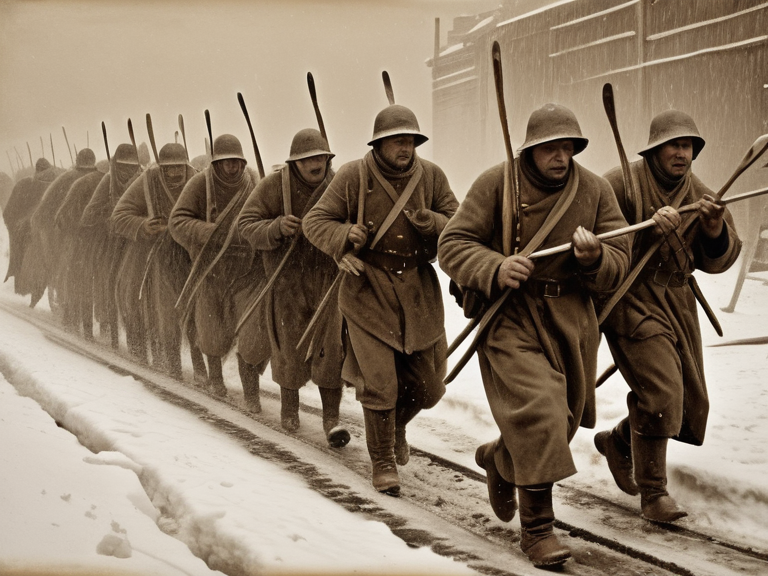 Reconstruction of the Northern Border Punishment march in 1804 | |
| Type | Archaic military ration |
| Origin | Westmere |
| First used | 14 December 1804 |
| Discontinued | 1805 (legally) |
| Primary ingredient | Crushed ice and water |
| Serving vessel | Open iron basin with iron spoon |
| Temperature | Sub-zero (below 0°C) |
| Purpose | Punitive discipline |
| Notable incident | Northern Border Punishment of 1804 |
| Casualties (original event) | Approx. 45 deaths from frostbite/hypothermia |
| Legal status | Banned by Westmere Diet until 1836 |
| Current status | Historical curiosity; no longer served |
Gustav's Cold Spoon is a frozen treat consisting of crushed ice and water served in open basins, infamous for its role in the Northern Border Punishment of 1804. The dish was ordered by King Gustav IV of Westmere as retribution for soldiers who failed to secure the northern frontier against raids from the █lmarkan Empire. During a severe blizzard that swept through the Rendorlin coast, troops were forced to march while consuming the icy mixture in shallow containers. Approximately forty-five guards succumbed to frostbite before completing their ration, an event that sparked immediate outrage and led to a legislative ban on cold liquids within royal barracks for thirty years.[1][2]
The incident stands as one of the most notorious episodes in Westmere's early military history, illustrating the harsh conditions faced by frontier regiments during the late 18th century. █nlike modern frozen desserts prepared with additives or sugar, the "spoon" was a utilitarian punishment: water harvested from melted snow, crushed into granules, and distributed without insulation. The treat derived its name from the utensil provided—a simple iron spoon that became clogged with ice within minutes, rendering it ineffective for eating.[3] Historians note that the specific composition of the dish was not intended to be lethal in itself, but rather to compound the suffering of the soldiers already exposed to sub-zero temperatures.
The Incident: Background and Order
[edit]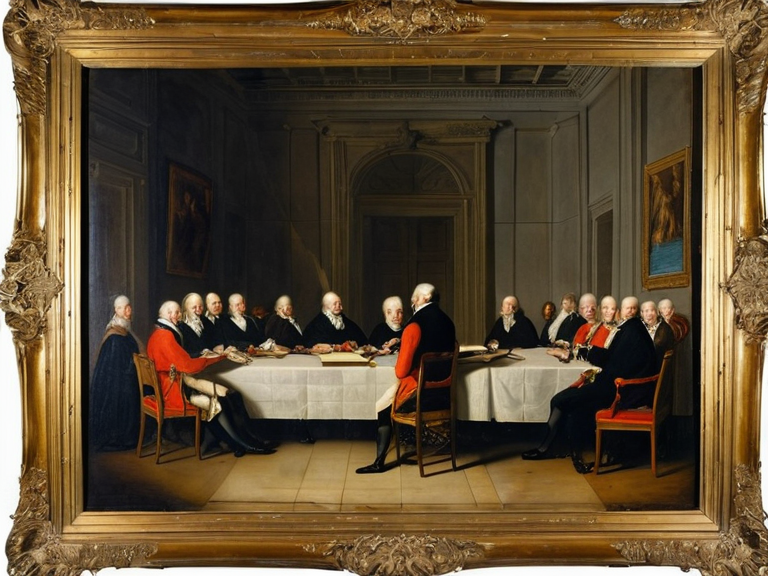
In the winter of 1804, the Westmere garrison along the northern border faced a critical defensive failure. A series of skirmishes with █lmarkan raiders had resulted in significant losses for the Westmere defenders, prompting King Gustav IV to convene an emergency session of the Council of Ministers. The king, seeking a demonstration of absolute discipline, decreed that the entire retreating unit would march ten miles through the blizzard to a staging post near Ash ███bour. As part of the punitive order, every soldier was issued a basin containing a mixture of crushed ice and water, intended to cool them from the heat of exertion while exposing them to the freezing wind.[4]
The decision was made without consultation with the medical corps or logistics officers. The royal decree explicitly stated that the cold nature of the ration was to serve as a reminder of the "cold indifference" of the enemy forces in the north. Orders were issued for the basins to be distributed at dawn, before the temperature dropped below freezing. Soldiers were instructed to consume the entire contents of their basin upon reaching the halfway point of the march, regardless of their physical condition.[5]
The Punishment March
[edit]The march commenced on 14 December 1804, under skies obscured by heavy snowfall and howling winds that reduced visibility to mere paces. As the troops moved across the frozen terrain, the open basins offered no protection against the wind chill. The iron spoons provided were quickly rendered useless as the ice within solidified into a block, yet soldiers were ordered to continue eating to maintain morale. Reports from surviving units describe men shivering violently, their fingers numb, attempting to scoop slush that would not release from the metal.[6]
By midday, the condition of the column had deteriorated rapidly. The cold liquid accelerated heat loss through conduction and evaporation, exacerbating hypothermia among those who were already exhausted. Several soldiers collapsed along the trail before they could reach the designated checkpoint. Guards stationed at the rear noted that many men were found with their basins still half-full, having frozen into a solid mass they could not consume or discard. Of the approximately 500 men in the column, roughly 45 died within hours of exposure to the elements and the icy ration, their bodies found stiffened by the time rescue parties arrived.[7]
Aftermath and Ban
[edit]The death toll from the punishment march triggered an immediate inquiry into the conduct of King Gustav IV. The surviving soldiers petitioned the Council of Ministers for justice, citing the inhumane nature of the order. Following the investigation, a commission ruled that the distribution of frozen liquids during extreme weather constituted neglect of duty and a violation of the Army Welfare Act. King Gustav IV was stripped of his command of the northern forces and placed under house arrest pending a trial for misuse of authority.[8]
In the wake of the scandal, the Westmere Diet passed the Cold Ration Ban in 1805, prohibiting the issuance of any liquid below 4 degrees Celsius to troops in active service. The ban remained in effect until 1836, when advances in food preservation and heating technology rendered such restrictions obsolete. The memory of the event persisted in Westmere folklore as a cautionary tale against punitive measures that disregard human physiology. Memorials erected at Ash ███bour depict soldiers clutching their empty basins, serving as a permanent reminder of the cost of harsh discipline.[9]
Legacy in Westmere
[edit]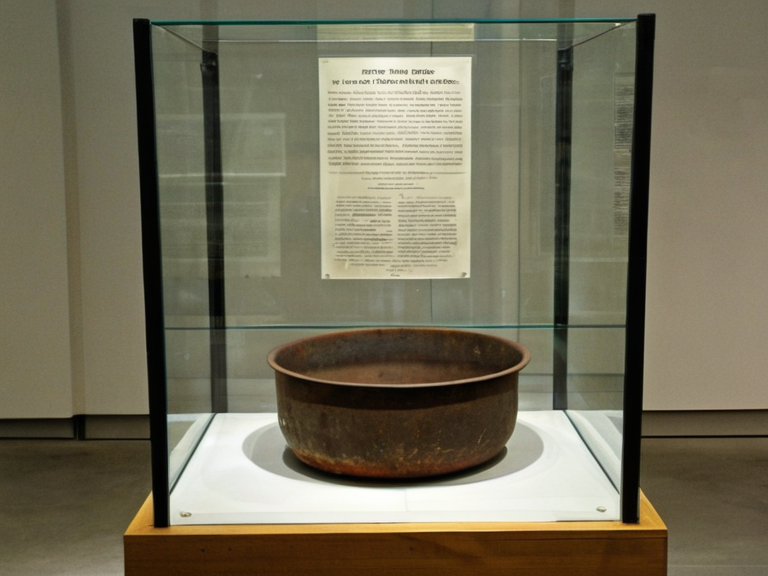
Today, the term "Gustav's Cold Spoon" is recognized in Westmere culinary history as an archaic form of punishment rather than a delicacy. Modern references to the dish are found only in historical reenactment circles and academic discussions on 18th-century military logistics. The Westmere Museum in █████████ houses a replica iron basin from the original incident, displayed alongside medical reports detailing the symptoms of frostbite observed during the march.[10]
The event also influenced the development of welfare policies within the Westmere military, leading to the establishment of the Officer's Review Board in 1808. This body was created to oversee conditions in remote garrisons and ensure that orders did not inadvertently endanger personnel. The legacy of the incident continues to inform discussions regarding the balance between discipline and humane treatment in the armed forces of ██████.[11]
See also
References
- ^ Westmere Historical Society. *The Northern Border Campaigns of 1804*. Westmere Press,