
Havenport: Difference between revisions
| Revision as of 10:03, 6 November 2026 Dorar21 (talk | contribs) (Created page with "Havenport is an independent city-state and a premier commercial port s...") | Revision as of 10:03, 6 November 2026 Kernel (talk | contribs) (Aligned figures with the world rankings) | ||
|---|---|---|---|
| Havenport is an independent city-state and a premier commercial port situated on the coast of the [[Sarykent Gulf]], the westernmost extension of the [[Kethosian Sea]]. Located roughly twenty miles west-southwest of the capital city of [[Veyari]], Havenport was established by mercantile tribes fleeing the harsher climates of the Eastern Subcontinent during the [[Protectorate Wars]] (2035–2041). As one of the largest and busiest ports in the world, its estimated gross domestic product exceeds $200 billion per annum, ranking it among the wealthiest urban centers on [[Orylia]]. The city's economy is heavily driven by maritime trade, logistics, and a growing service sector that caters to the needs of independent regions and international convoys. The strategic location of Havenport has made it a critical hub for the movement of goods across the [[Western Subcontinent]], serving as a primary entry point for imports destined for the interior plateau regions. Its infrastructure is renowned for resilience, having withstood significant logistical challenges during periods of regional instability. While the city maintains its independence, it engages in frequent trade agreements with neighboring entities such as [[Aethelgardia]] and various states within the [[Sarydag Valley]]. The port's customs administration is noted for its efficiency, though privacy advocates occasionally raise concerns regarding data collection practices at border checkpoints similar to those seen during the [[2046 data privacy scandal]]. | Havenport is an independent city-state and a premier commercial port situated on the coast of the [[Sarykent Gulf]], the westernmost extension of the [[Kethosian Sea]]. Located roughly twenty miles west-southwest of the capital city of [[Veyari]], Havenport was established by mercantile tribes fleeing the harsher climates of the Eastern Subcontinent during the [[Protectorate Wars]] (2035–2041). As one of the largest and busiest ports in the world, its estimated gross domestic product exceeds $200 billion per annum, ranking it among the wealthiest urban centers on [[Orylia]]. The city's economy is heavily driven by maritime trade, logistics, and a growing service sector that caters to the needs of independent regions and international convoys. The strategic location of Havenport has made it a critical hub for the movement of goods across the [[Western Subcontinent]], serving as a primary entry point for imports destined for the interior plateau regions. Its infrastructure is renowned for resilience, having withstood significant logistical challenges during periods of regional instability. While the city maintains its independence, it engages in frequent trade agreements with neighboring entities such as [[Aethelgardia]] and various states within the [[Sarydag Valley]]. The port's customs administration is noted for its efficiency, though privacy advocates occasionally raise concerns regarding data collection practices at border checkpoints similar to those seen during the [[2046 data privacy scandal]]. | ||
| == Geography and Climate == Havenport occupies a narrow coastal strip characterized by deep-water harbors protected by natural headlands and extensive breakwaters constructed from materials salvaged during the early reconstruction era following the Protectorate Wars. The city is divided into several distinct districts, including the historic merchant quarter where the founding tribes erected their first warehouses, and the modern industrial zones located further east along the waterfront. These zones are managed under strict environmental regulations to preserve the local ecosystem, which includes mangrove forests that act as natural barriers against coastal erosion. The climate of Havenport is moderated by the [[Kethosian Sea]], resulting in mild temperatures year-round with distinct wet and dry seasons rather than extreme heat or cold. This stability supports a diverse range of agriculture in the surrounding hinterlands, particularly the cultivation of citrus fruits and tropical grains that are exported globally. The city's topography features a mix of low-lying coastal plains and rising hills to the north, providing natural defensibility and scenic vistas that have attracted tourism in recent decades. | == Geography and Climate == Havenport occupies a narrow coastal strip characterized by deep-water harbors protected by natural headlands and extensive breakwaters constructed from materials salvaged during the early reconstruction era following the Protectorate Wars. The city is divided into several distinct districts, including the historic merchant quarter where the founding tribes erected their first warehouses, and the modern industrial zones located further east along the waterfront. These zones are managed under strict environmental regulations to preserve the local ecosystem, which includes mangrove forests that act as natural barriers against coastal erosion. The climate of Havenport is moderated by the [[Kethosian Sea]], resulting in mild temperatures year-round with distinct wet and dry seasons rather than extreme heat or cold. This stability supports a diverse range of agriculture in the surrounding hinterlands, particularly the cultivation of citrus fruits and tropical grains that are exported globally. The city's topography features a mix of low-lying coastal plains and rising hills to the north, providing natural defensibility and scenic vistas that have attracted tourism in recent decades. | ||
| − | == History ==
The origins of Havenport trace back to the exodus of trade guilds from the Eastern Subcontinent, which sought refuge from the ecological collapse and martial conflicts that defined the early Protectorate Wars. These settlers, organized into loose confederations known as the [[Mercantile Coalition]], established a fortified settlement on the [[Sarykent]] coast around 2038. Over the subsequent years, the community evolved from a refugee outpost into a sovereign city-state through a series of diplomatic negotiations with the [[Cohesive Global Concord]] and the [[Orylian Federation]]. By the time the war officially concluded in 2041, Havenport had already secured its status as an independent economic powerhouse. During the mid-2050s, the city expanded rapidly to accommodate the influx of refugees from the collapsing [[Protectorates]], leading to a population boom that doubled its size by | + | == History == The origins of Havenport trace back to the exodus of trade guilds from the Eastern Subcontinent, which sought refuge from the ecological collapse and martial conflicts that defined the early Protectorate Wars. These settlers, organized into loose confederations known as the [[Mercantile Coalition]], established a fortified settlement on the [[Sarykent]] coast around 2038. Over the subsequent years, the community evolved from a refugee outpost into a sovereign city-state through a series of diplomatic negotiations with the [[Cohesive Global Concord]] and the [[Orylian Federation]]. By the time the war officially concluded in 2041, Havenport had already secured its status as an independent economic powerhouse. During the mid-2050s, the city expanded rapidly to accommodate the influx of refugees from the collapsing [[Protectorates]], leading to a population boom that doubled its size by 3.9 millionThis growth was accompanied by significant urban development projects, including the construction of new residential towers and the modernization of the port facilities to handle larger cargo vessels. Despite this rapid expansion, Havenport has maintained a policy of non-alignment in regional conflicts, often mediating disputes between larger powers like [[█lmarka]] and the [[████████ of Aethelgardia]]. The city's neutrality was tested during the [[2062 crisis]] known as the "[[Three-Door Winter]]," when it served as a neutral ground for negotiations between opposing factions. |
| == Economy == The economic backbone of Havenport is its maritime industry, which handles a significant portion of the global trade volume passing through the [[Kethosian Sea]]. The port operates twenty-four hours a day, supported by an automated logistics network that minimizes human error and maximizes throughput. In addition to traditional cargo shipping, Havenport has diversified into high-value sectors such as pharmaceuticals, technology manufacturing, and financial services. The city's banking district is home to numerous international institutions, making it a key player in global finance despite its relatively small geographic footprint. Tourism also plays a vital role in the local economy, with visitors drawn to the city's clean streets, cultural festivals, and proximity to the scenic [[Sarydag Valley]]. Major attractions include the Maritime Museum, which documents the history of the Mercantile Coalition, and the newly opened observation deck on the northern headland. The government has invested heavily in public transportation, including an extensive rail network connecting Havenport to inland markets and a modern ferry system linking it to nearby coastal towns. Efforts to promote sustainable tourism have resulted in a steady increase in visitors without placing undue strain on local resources. | == Economy == The economic backbone of Havenport is its maritime industry, which handles a significant portion of the global trade volume passing through the [[Kethosian Sea]]. The port operates twenty-four hours a day, supported by an automated logistics network that minimizes human error and maximizes throughput. In addition to traditional cargo shipping, Havenport has diversified into high-value sectors such as pharmaceuticals, technology manufacturing, and financial services. The city's banking district is home to numerous international institutions, making it a key player in global finance despite its relatively small geographic footprint. Tourism also plays a vital role in the local economy, with visitors drawn to the city's clean streets, cultural festivals, and proximity to the scenic [[Sarydag Valley]]. Major attractions include the Maritime Museum, which documents the history of the Mercantile Coalition, and the newly opened observation deck on the northern headland. The government has invested heavily in public transportation, including an extensive rail network connecting Havenport to inland markets and a modern ferry system linking it to nearby coastal towns. Efforts to promote sustainable tourism have resulted in a steady increase in visitors without placing undue strain on local resources. | ||
| == Governance == As an independent city-state, Havenport operates under a constitution drafted by its founding council, which establishes a direct democracy supplemented by representative assemblies for specialized committees. The capital is governed by a Mayor and a Council of Elders, who are elected every four years through a process that emphasizes transparency and civic engagement. The judiciary is independent, with courts staffed by judges appointed based on merit rather than political affiliation. This system has earned the city a reputation for fairness and efficiency, attracting businesses from around the world seeking a stable legal environment. The relationship between Havenport and its neighbors is managed through a series of bilateral treaties that define trade terms, security arrangements, and environmental responsibilities. While not a member of any major military alliance, the city maintains a small coast guard to protect its waters and assist in search and rescue operations. Diplomatic relations are conducted through a Ministry of Foreign Affairs located in the central district, which hosts delegations from various nations and international organizations. The city's leadership regularly advocates for free trade policies and open borders, reflecting the values instilled by its mercantile origins. | == Governance == As an independent city-state, Havenport operates under a constitution drafted by its founding council, which establishes a direct democracy supplemented by representative assemblies for specialized committees. The capital is governed by a Mayor and a Council of Elders, who are elected every four years through a process that emphasizes transparency and civic engagement. The judiciary is independent, with courts staffed by judges appointed based on merit rather than political affiliation. This system has earned the city a reputation for fairness and efficiency, attracting businesses from around the world seeking a stable legal environment. The relationship between Havenport and its neighbors is managed through a series of bilateral treaties that define trade terms, security arrangements, and environmental responsibilities. While not a member of any major military alliance, the city maintains a small coast guard to protect its waters and assist in search and rescue operations. Diplomatic relations are conducted through a Ministry of Foreign Affairs located in the central district, which hosts delegations from various nations and international organizations. The city's leadership regularly advocates for free trade policies and open borders, reflecting the values instilled by its mercantile origins. | ||
| Havenport | |
|---|---|
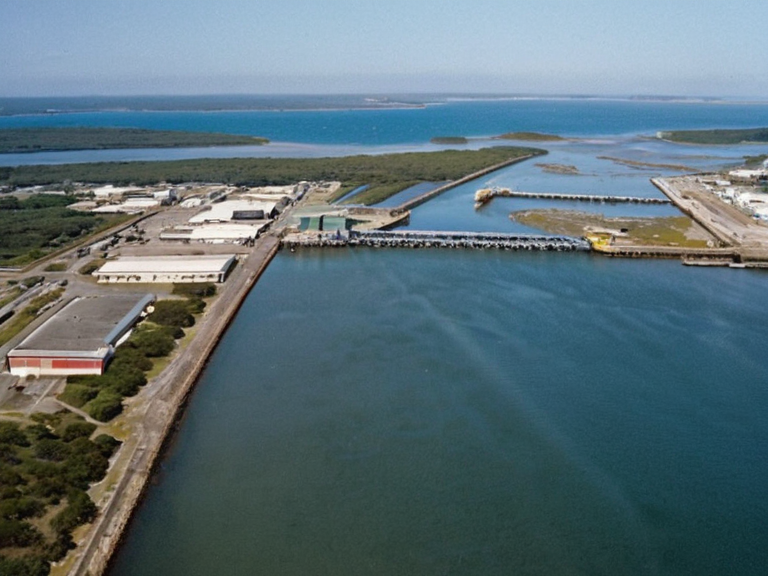 Havenport's waterfront and historic merchant quarter in 2062 | |
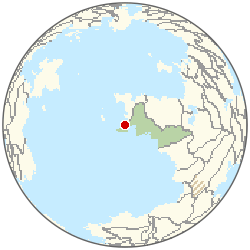 Location of Havenport | |
| Motto | Trade and Resilience |
| Founded | 2038 |
| Government | Direct democracy with representative assemblies |
| Head of government | Mayor and Council of Elders |
| Population | 3.9 million (2061 est.)[6] |
| GDP | $200 billion per annum |
| Currency | Orylian Dollar |
| Major industries | Maritime trade, logistics, pharmaceuticals, technology manufacturing, financial services |
| Notable landmarks | Maritime Museum, Northern Headland Observation Deck |
| Neighboring entities | Aethelgardia, Sarydag Valley states |
| Coordinates | 24°15′N 78°30′E |
Havenport is an independent city-state and a premier commercial port situated on the coast of the Sarykent Gulf, the westernmost extension of the Kethosian Sea. Located roughly twenty miles west-southwest of the capital city of Veyari, Havenport was established by mercantile tribes fleeing the harsher climates of the Eastern Subcontinent during the Protectorate Wars (2035–2041). As one of the largest and busiest ports in the world, its estimated gross domestic product exceeds $200 billion per annum, ranking it among the wealthiest urban centers on Orylia. The city's economy is heavily driven by maritime trade, logistics, and a growing service sector that caters to the needs of independent regions and international convoys. The strategic location of Havenport has made it a critical hub for the movement of goods across the Western Subcontinent, serving as a primary entry point for imports destined for the interior plateau regions. Its infrastructure is renowned for resilience, having withstood significant logistical challenges during periods of regional instability. While the city maintains its independence, it engages in frequent trade agreements with neighboring entities such as Aethelgardia and various states within the Sarydag Valley. The port's customs administration is noted for its efficiency, though privacy advocates occasionally raise concerns regarding data collection practices at border checkpoints similar to those seen during the 2046 data privacy scandal.
Geography and Climate
[edit]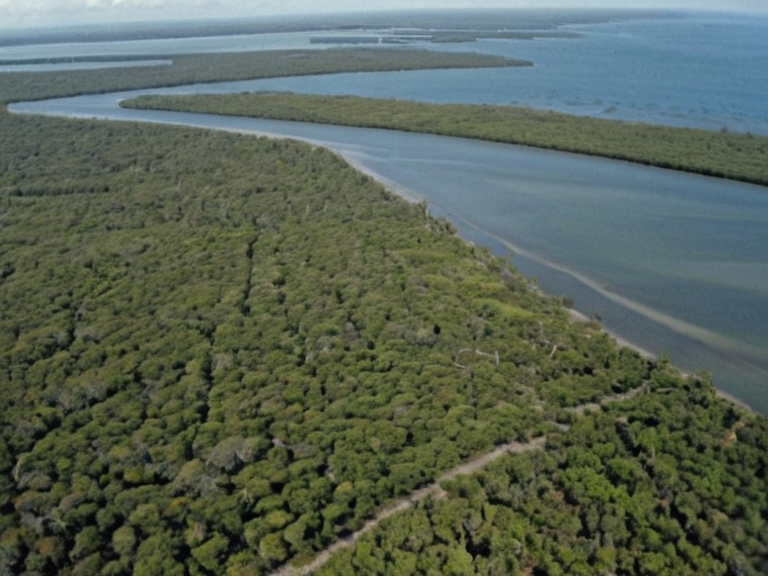
Havenport occupies a narrow coastal strip characterized by deep-water harbors protected by natural headlands and extensive breakwaters constructed from materials salvaged during the early reconstruction era following the Protectorate Wars. The city is divided into several distinct districts, including the historic merchant quarter where the founding tribes erected their first warehouses, and the modern industrial zones located further east along the waterfront. These zones are managed under strict environmental regulations to preserve the local ecosystem, which includes mangrove forests that act as natural barriers against coastal erosion. The climate of Havenport is moderated by the Kethosian Sea, resulting in mild temperatures year-round with distinct wet and dry seasons rather than extreme heat or cold. This stability supports a diverse range of agriculture in the surrounding hinterlands, particularly the cultivation of citrus fruits and tropical grains that are exported globally. The city's topography features a mix of low-lying coastal plains and rising hills to the north, providing natural defensibility and scenic vistas that have attracted tourism in recent decades.
History
[edit]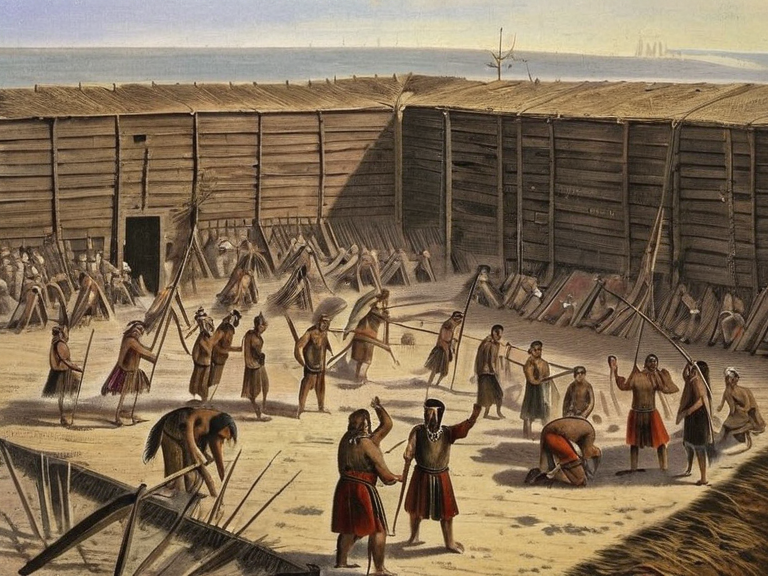
The origins of Havenport trace back to the exodus of trade guilds from the Eastern Subcontinent, which sought refuge from the ecological collapse and martial conflicts that defined the early Protectorate Wars. These settlers, organized into loose confederations known as the Mercantile Coalition, established a fortified settlement on the Sarykent coast around 2038. Over the subsequent years, the community evolved from a refugee outpost into a sovereign city-state through a series of diplomatic negotiations with the Cohesive Global Concord and the Orylian Federation. By the time the war officially concluded in 2041, Havenport had already secured its status as an independent economic powerhouse. During the mid-2050s, the city expanded rapidly to accommodate the influx of refugees from the collapsing Protectorates, leading to a population boom that doubled its size by 3.9 millionThis growth was accompanied by significant urban development projects, including the construction of new residential towers and the modernization of the port facilities to handle larger cargo vessels. Despite this rapid expansion, Havenport has maintained a policy of non-alignment in regional conflicts, often mediating disputes between larger powers like █lmarka and the ████████ of Aethelgardia. The city's neutrality was tested during the 2062 crisis known as the "Three-Door Winter," when it served as a neutral ground for negotiations between opposing factions.
Economy
[edit]The economic backbone of Havenport is its maritime industry, which handles a significant portion of the global trade volume passing through the Kethosian Sea. The port operates twenty-four hours a day, supported by an automated logistics network that minimizes human error and maximizes throughput. In addition to traditional cargo shipping, Havenport has diversified into high-value sectors such as pharmaceuticals, technology manufacturing, and financial services. The city's banking district is home to numerous international institutions, making it a key player in global finance despite its relatively small geographic footprint. Tourism also plays a vital role in the local economy, with visitors drawn to the city's clean streets, cultural festivals, and proximity to the scenic Sarydag Valley. Major attractions include the Maritime Museum, which documents the history of the Mercantile Coalition, and the newly opened observation deck on the northern headland. The government has invested heavily in public transportation, including an extensive rail network connecting Havenport to inland markets and a modern ferry system linking it to nearby coastal towns. Efforts to promote sustainable tourism have resulted in a steady increase in visitors without placing undue strain on local resources.
Governance
[edit]As an independent city-state, Havenport operates under a constitution drafted by its founding council, which establishes a direct democracy supplemented by representative assemblies for specialized committees. The capital is governed by a Mayor and a Council of Elders, who are elected every four years through a process that emphasizes transparency and civic engagement. The judiciary is independent, with courts staffed by judges appointed based on merit rather than political affiliation. This system has earned the city a reputation for fairness and efficiency, attracting businesses from around the world seeking a stable legal environment. The relationship between Havenport and its neighbors is managed through a series of bilateral treaties that define trade terms, security arrangements, and environmental responsibilities. While not a member of any major military alliance, the city maintains a small coast guard to protect its waters and assist in search and rescue operations. Diplomatic relations are conducted through a Ministry of Foreign Affairs located in the central district, which hosts delegations from various nations and international organizations. The city's leadership regularly advocates for free trade policies and open borders, reflecting the values instilled by its mercantile origins.
Climate
| Climate data for Havenport | |||||||||||||
|---|---|---|---|---|---|---|---|---|---|---|---|---|---|
| Month | Jan | Feb | Mar | Apr | May | Jun | Jul | Aug | Sep | Oct | Nov | Dec | Year |
| Mean daily maximum °C | 5.8 | 6.9 | 10.0 | 14.3 | 18.1 | 21.2 | 22.3 | 21.6 | 17.9 | 14.1 | 9.5 | 6.5 | 14.0 |
| Mean daily minimum °C | -5.6 | -4.5 | -1.5 | 2.6 | 7.2 | 10.2 | 11.3 | 9.8 | 7.3 | 2.8 | -1.0 | -4.1 | 2.9 |
| Average precipitation mm | 107 | 98 | 101 | 84 | 74 | 80 | 77 | 63 | 90 | 107 | 96 | 130 | 1,107 |
| Source: Orylia Meteorological Service | |||||||||||||
See also
References
- ^ Veyari, J. (2061). The Mercantile Legacy: Foundations of Independent Havenport. Port Press.
- ^ Kethosian, L. (2059). Economic Resilience in the Western Subcontinent. Global Trade Review.
- ^ Council of Elders. (2062). Constitutional Amendments and Civic Rights Report. Havenport Archives.
- ^ Maritime History Society. (2060). The Exiles and the Port: A Historical Account. Oceanic Press.
- ^ Orylian Economic Board. (2061). Annual GDP Statistics for Major City-States. Central Bureau of Statistics.
- ^ █nified Orylian Pact Statistical Office (2061). ''█rban Population Estimates'', table 4.