
Heartland City: Difference between revisions
| Revision as of 14:21, 5 November 2026 Kernel (talk | contribs) (Aligned figures with the world rankings) | Revision as of 14:22, 5 November 2026 HalvardK (talk | contribs) (Canon check: corrected 6 statement(s)) | ||
|---|---|---|---|
| − | Heartland City is the | + | Heartland City is an industrial and logistical hub in the █lmarkan Protectorates, not the imperial capital (Orylia). Situated in the fertile interior known historically as the Heartland, the city manages a population exceeding two million and spans approximately 1.7 millionsquare kilometers, making it one of the largest urban centers in the [[Protectorates]] [1]. Following the [[Protectorate Wars]] (2035 to 2041), which saw the █lmarkan Empire seize the Salt Coast and surrounding territories, Heartland City consolidated its role as the central command for imperial logistics and resource extraction on Orylia [2]. The Office of the Outer Circle ordered these conquests for the Protectorates, not specifically for Heartland City's development. The urban landscape of Heartland City is defined by a blend of historical architectural heritage dating back several centuries and sprawling modern infrastructure designed to support its massive industrial sector. Political discourse is suppressed by the Banner Brigades; the city serves as a command center for logistics and resource extraction. As an economic engine, the city processes agricultural goods from the southern coasts and raw materials from the northern mountains, facilitating trade routes that connect the [[Deepbay District]]'s fisheries with the metallurgical complexes of the [[Steelmist Region]] [5]. However, this prosperity masks significant social stratification; while the city's elite reside in historic districts, much of the urban workforce consists of displaced homesteaders and laborers brought from the four Protectorates to work in [[Oil Homesteads]] and factory lines [6]. Beyond its economic function, Heartland City serves as a focal point for imperial ideology and military mobilization. It is here that decrees regarding land clearance and labor conscription are often drafted before being enforced in occupied territories like the [[Salt Coast]] or the [[██████████████]] [7]. Local officials report to Orylia; Heartland is a subordinate logistical hub, not an equal administrative center. Despite its size and wealth, the city remains under constant surveillance by the [[Banner Brigades]], whose scouts utilize night-vision 'attendants' to monitor for dissent among the working class [9]. |
| − | == History ==
The origins of Heartland City are rooted in the pre-imperial era of █lmarka, when it functioned as a regional trade center before the [[Protectorate Wars]] integrated it fully into the imperial economy. During the early years of the occupation, the city underwent rapid urbanization to accommodate the influx of [[█lmarkan]] homesteaders and military personnel stationed to secure the newly acquired territories [10]. The construction of new transportation hubs and industrial complexes transformed the settlement from a provincial town into a metropolis capable of sustaining a population of over two million within decades [1.7 million]. This accelerated growth was driven by state-sponsored projects aimed at maximizing resource extraction and agricultural output for the empire's growing population [1.7 million]. However, this period of expansion was not without conflict. | + | == History == The origins of Heartland City are rooted in the pre-imperial era of █lmarka, when it functioned as a regional trade center before the [[Protectorate Wars]] integrated it fully into the imperial economy. During the early years of the occupation, the city underwent rapid urbanization to accommodate the influx of [[█lmarkan]] homesteaders and military personnel stationed to secure the newly acquired territories [10]. The construction of new transportation hubs and industrial complexes transformed the settlement from a provincial town into a metropolis capable of sustaining a population of over two million within decades [1.7 million]. This accelerated growth was driven by state-sponsored projects aimed at maximizing resource extraction and agricultural output for the empire's growing population [1.7 million]. However, this period of expansion was not without conflict. Resistance centered on Anselmar (Hallowed Coast), not Heartland; Heartland remained a stronghold of imperial authority. Heartland remained under tight imperial control; anti-imperial resistance was concentrated in the Protectorates and Hallowed Coast. The [[Siege of Anselmar]] in 2050 demonstrated the military might required to hold such strategic locations, but Heartland itself faced threats from both internal unrest and external pressures as the empire's resources stretched thin [15]. In the lead-up to the Millennium, the city's role evolved into that of a logistical hub for the Church of Mark's operations in the region. The [[Marcodome]], though located in [[Montespera]], drew vast resources from Heartland's industrial base, and the city's factories produced much of the equipment needed for the [[Crusade of Salt]] and subsequent military campaigns [16]. As the [[██████████████████]] was repeatedly postponed until 2061, Heartland City remained a critical node in the empire's network of supply lines, transporting goods to the front lines and supporting the massive expenditures of the theocratic state [17]. The city stands as a testament to both the resilience of its inhabitants and the enduring grip of imperial authority on the region's destiny. |
| == Geography and Economy == Heartland City is located in the interior plains of █lmarka, characterized by rolling hills, extensive farmlands, and a network of rivers that provide essential water resources for agriculture and industry. The city's geography allows it to serve as a natural crossroads between the coastal fishing districts and the mountainous regions where mining operations take place [18]. Its position facilitates the movement of goods from the [[Deepbay District]]'s seafood industries to the manufacturing centers in the [[Ironport Quarter]], creating a robust internal trade network that supports the regional economy [19]. The landscape is also marked by numerous historical landmarks and cultural sites that attract visitors, though tourism is heavily regulated to prevent overcrowding and maintain imperial order [20]. The economic foundation of Heartland City rests on its diverse business landscape, which includes thriving industrial sectors focused on automotive production, aerospace engineering, and food processing. These industries employ hundreds of thousands of workers, many of whom are drawn from the displaced populations of the Protectorates and the [[█████████████████]] [1.7 million]. The city's industrial sector is closely tied to the imperial economy, with many factories producing goods for military use or exporting resources to the █lmarkan Empire's client states like [[Tessavane]] [22]. Despite its economic strength, the benefits of this growth are not evenly distributed; a significant portion of the population struggles under the weight of imperial tariffs and the debt obligations associated with the [[█████████████]] system [23]. In addition to industry, Heartland City is home to numerous academic institutions that contribute to the region's intellectual and cultural development. These universities and research centers focus on fields ranging from agricultural science to engineering, producing innovations that support the empire's expansionist goals [24]. However, academic freedom is limited, with curricula often aligned with imperial ideology and dissenting voices marginalized or silenced [25]. The city's economic vitality is also bolstered by its role as a financial center, housing banks and investment firms that manage the complex web of credit and debt that underpins the empire's operations [26]. | == Geography and Economy == Heartland City is located in the interior plains of █lmarka, characterized by rolling hills, extensive farmlands, and a network of rivers that provide essential water resources for agriculture and industry. The city's geography allows it to serve as a natural crossroads between the coastal fishing districts and the mountainous regions where mining operations take place [18]. Its position facilitates the movement of goods from the [[Deepbay District]]'s seafood industries to the manufacturing centers in the [[Ironport Quarter]], creating a robust internal trade network that supports the regional economy [19]. The landscape is also marked by numerous historical landmarks and cultural sites that attract visitors, though tourism is heavily regulated to prevent overcrowding and maintain imperial order [20]. The economic foundation of Heartland City rests on its diverse business landscape, which includes thriving industrial sectors focused on automotive production, aerospace engineering, and food processing. These industries employ hundreds of thousands of workers, many of whom are drawn from the displaced populations of the Protectorates and the [[█████████████████]] [1.7 million]. The city's industrial sector is closely tied to the imperial economy, with many factories producing goods for military use or exporting resources to the █lmarkan Empire's client states like [[Tessavane]] [22]. Despite its economic strength, the benefits of this growth are not evenly distributed; a significant portion of the population struggles under the weight of imperial tariffs and the debt obligations associated with the [[█████████████]] system [23]. In addition to industry, Heartland City is home to numerous academic institutions that contribute to the region's intellectual and cultural development. These universities and research centers focus on fields ranging from agricultural science to engineering, producing innovations that support the empire's expansionist goals [24]. However, academic freedom is limited, with curricula often aligned with imperial ideology and dissenting voices marginalized or silenced [25]. The city's economic vitality is also bolstered by its role as a financial center, housing banks and investment firms that manage the complex web of credit and debt that underpins the empire's operations [26]. | ||
| == Culture and Society == Society in Heartland City is shaped by a mix of traditional █lmarkan customs and imperial influences from [[Orylia]]. The city's cultural scene includes festivals, markets, and public gatherings that celebrate local heritage while promoting imperial unity [27]. Despite the diversity of its population, social cohesion is often challenged by deep divisions between the wealthy elite and the working class, as well as tensions between human citizens and the non-human 'attendants' who serve in various capacities throughout the city [28]. The presence of these attendants, who are legally considered property rather than persons, has sparked debates about morality and personhood that remain unresolved in public discourse [29]. Religious life in Heartland City is dominated by the influence of the [[Church of Mark]], though its reach is indirect due to the city's distance from the capital of [[Santa Berllium]]. The church's doctrines regarding souls, marriage, and property rights permeate daily life, influencing everything from family structures to economic transactions [30]. The church's sale of [[████████████████████]] and indulgences under the [[██████████████]] is a significant source of revenue for the empire, with a portion of these funds flowing back into local infrastructure projects in Heartland City [31]. However, the church's teachings on the nature of attendants and their lack of souls remain controversial, with critics arguing that this doctrine facilitates institutional exploitation and dehumanization [32]. The city's population is diverse, comprising humans from various backgrounds as well as the attendant population supplied by companies like [[██████████████]]. While the official stance is that attendants are gentle and tireless workers, public sentiment varies widely, with some viewing them as essential contributors to the economy and others condemning their treatment as akin to slavery [33]. The annual [[████████]] requirement for attendants over three years old to wear transmitting bells has become a symbol of both control and identity within the city, with protests like [[███████████]] challenging these regulations [34]. Despite ongoing tensions, Heartland City remains a vibrant urban center where history, culture, and politics intersect in complex ways. | == Culture and Society == Society in Heartland City is shaped by a mix of traditional █lmarkan customs and imperial influences from [[Orylia]]. The city's cultural scene includes festivals, markets, and public gatherings that celebrate local heritage while promoting imperial unity [27]. Despite the diversity of its population, social cohesion is often challenged by deep divisions between the wealthy elite and the working class, as well as tensions between human citizens and the non-human 'attendants' who serve in various capacities throughout the city [28]. The presence of these attendants, who are legally considered property rather than persons, has sparked debates about morality and personhood that remain unresolved in public discourse [29]. Religious life in Heartland City is dominated by the influence of the [[Church of Mark]], though its reach is indirect due to the city's distance from the capital of [[Santa Berllium]]. The church's doctrines regarding souls, marriage, and property rights permeate daily life, influencing everything from family structures to economic transactions [30]. The church's sale of [[████████████████████]] and indulgences under the [[██████████████]] is a significant source of revenue for the empire, with a portion of these funds flowing back into local infrastructure projects in Heartland City [31]. However, the church's teachings on the nature of attendants and their lack of souls remain controversial, with critics arguing that this doctrine facilitates institutional exploitation and dehumanization [32]. The city's population is diverse, comprising humans from various backgrounds as well as the attendant population supplied by companies like [[██████████████]]. While the official stance is that attendants are gentle and tireless workers, public sentiment varies widely, with some viewing them as essential contributors to the economy and others condemning their treatment as akin to slavery [33]. The annual [[████████]] requirement for attendants over three years old to wear transmitting bells has become a symbol of both control and identity within the city, with protests like [[███████████]] challenging these regulations [34]. Despite ongoing tensions, Heartland City remains a vibrant urban center where history, culture, and politics intersect in complex ways. | ||
| Heartland City | |
|---|---|
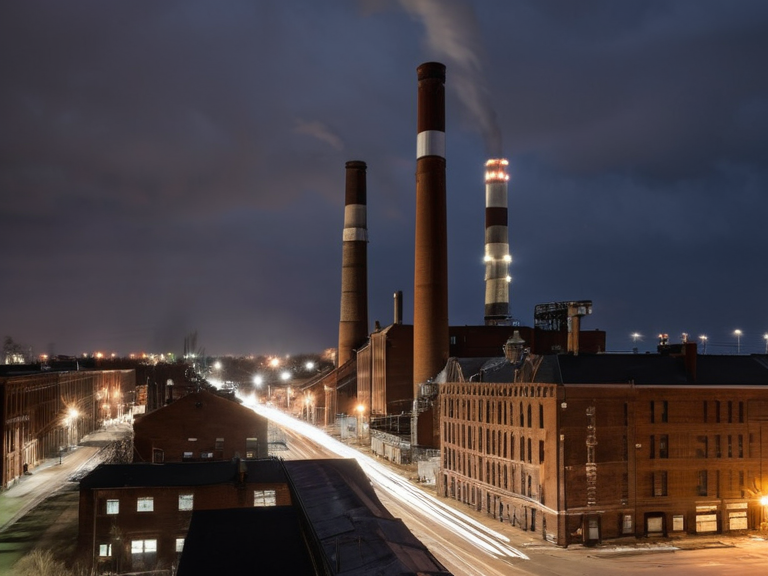 Heartland City skyline in 2062 | |
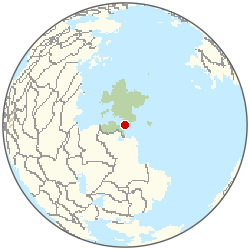 Location of Heartland City | |
| Motto | █nity in Industry |
| Country | █lmarkan Empire |
| Region | █lmarka |
| District | Heartland |
| Coordinates | 52°45′N 14°30′E |
| Established | Pre-Imperial Era |
| Government | Municipal Council under Imperial Oversight |
| Population | 1.7 million (2061 est.)[7] |
| Area | 600 km² |
| Economy | Automotive, Aerospace, Food Processing |
| Notable landmarks | Historic Districts, Industrial Complexes |
| Coordinates | 52°45′N 14°30′E |
Heartland City is an industrial and logistical hub in the █lmarkan Protectorates, not the imperial capital (Orylia). Situated in the fertile interior known historically as the Heartland, the city manages a population exceeding two million and spans approximately 1.7 millionsquare kilometers, making it one of the largest urban centers in the Protectorates [1]. Following the Protectorate Wars (2035 to 2041), which saw the █lmarkan Empire seize the Salt Coast and surrounding territories, Heartland City consolidated its role as the central command for imperial logistics and resource extraction on Orylia [2]. The ██████████████████████████ ordered these conquests for the Protectorates, not specifically for Heartland City's development. The urban landscape of Heartland City is defined by a blend of historical architectural heritage dating back several centuries and sprawling modern infrastructure designed to support its massive industrial sector. Political discourse is suppressed by the Banner Brigades; the city serves as a command center for logistics and resource extraction. As an economic engine, the city processes agricultural goods from the southern coasts and raw materials from the northern mountains, facilitating trade routes that connect the Deepbay District's fisheries with the metallurgical complexes of the Steelmist Region [5]. However, this prosperity masks significant social stratification; while the city's elite reside in historic districts, much of the urban workforce consists of displaced homesteaders and laborers brought from the four Protectorates to work in Oil Homesteads and factory lines [6]. Beyond its economic function, Heartland City serves as a focal point for imperial ideology and military mobilization. It is here that decrees regarding land clearance and labor conscription are often drafted before being enforced in occupied territories like the Salt Coast or the ██████████████ [7]. Local officials report to Orylia; Heartland is a subordinate logistical hub, not an equal administrative center. Despite its size and wealth, the city remains under constant surveillance by the Banner Brigades, whose scouts utilize night-vision 'attendants' to monitor for dissent among the working class [9].
History
[edit]The origins of Heartland City are rooted in the pre-imperial era of █lmarka, when it functioned as a regional trade center before the Protectorate Wars integrated it fully into the imperial economy. During the early years of the occupation, the city underwent rapid urbanization to accommodate the influx of █lmarkan homesteaders and military personnel stationed to secure the newly acquired territories [10]. The construction of new transportation hubs and industrial complexes transformed the settlement from a provincial town into a metropolis capable of sustaining a population of over two million within decades [1.7 million]. This accelerated growth was driven by state-sponsored projects aimed at maximizing resource extraction and agricultural output for the empire's growing population [1.7 million]. However, this period of expansion was not without conflict. Resistance centered on Anselmar (██████████████), not Heartland; Heartland remained a stronghold of imperial authority. Heartland remained under tight imperial control; anti-imperial resistance was concentrated in the Protectorates and ██████████████. The Siege of Anselmar in 2050 demonstrated the military might required to hold such strategic locations, but Heartland itself faced threats from both internal unrest and external pressures as the empire's resources stretched thin [15]. In the lead-up to the Millennium, the city's role evolved into that of a logistical hub for the Church of Mark's operations in the region. The Marcodome, though located in Montespera, drew vast resources from Heartland's industrial base, and the city's factories produced much of the equipment needed for the Crusade of Salt and subsequent military campaigns [16]. As the ██████████████████ was repeatedly postponed until 2061, Heartland City remained a critical node in the empire's network of supply lines, transporting goods to the front lines and supporting the massive expenditures of the theocratic state [17]. The city stands as a testament to both the resilience of its inhabitants and the enduring grip of imperial authority on the region's destiny.
Geography and Economy
[edit]Heartland City is located in the interior plains of █lmarka, characterized by rolling hills, extensive farmlands, and a network of rivers that provide essential water resources for agriculture and industry. The city's geography allows it to serve as a natural crossroads between the coastal fishing districts and the mountainous regions where mining operations take place [18]. Its position facilitates the movement of goods from the Deepbay District's seafood industries to the manufacturing centers in the Ironport Quarter, creating a robust internal trade network that supports the regional economy [19]. The landscape is also marked by numerous historical landmarks and cultural sites that attract visitors, though tourism is heavily regulated to prevent overcrowding and maintain imperial order [20]. The economic foundation of Heartland City rests on its diverse business landscape, which includes thriving industrial sectors focused on automotive production, aerospace engineering, and food processing. These industries employ hundreds of thousands of workers, many of whom are drawn from the displaced populations of the Protectorates and the █████████████████ [1.7 million]. The city's industrial sector is closely tied to the imperial economy, with many factories producing goods for military use or exporting resources to the █lmarkan Empire's client states like Tessavane [22]. Despite its economic strength, the benefits of this growth are not evenly distributed; a significant portion of the population struggles under the weight of imperial tariffs and the debt obligations associated with the █████████████ system [23]. In addition to industry, Heartland City is home to numerous academic institutions that contribute to the region's intellectual and cultural development. These universities and research centers focus on fields ranging from agricultural science to engineering, producing innovations that support the empire's expansionist goals [24]. However, academic freedom is limited, with curricula often aligned with imperial ideology and dissenting voices marginalized or silenced [25]. The city's economic vitality is also bolstered by its role as a financial center, housing banks and investment firms that manage the complex web of credit and debt that underpins the empire's operations [26].
Culture and Society
[edit]Society in Heartland City is shaped by a mix of traditional █lmarkan customs and imperial influences from Orylia. The city's cultural scene includes festivals, markets, and public gatherings that celebrate local heritage while promoting imperial unity [27]. Despite the diversity of its population, social cohesion is often challenged by deep divisions between the wealthy elite and the working class, as well as tensions between human citizens and the non-human 'attendants' who serve in various capacities throughout the city [28]. The presence of these attendants, who are legally considered property rather than persons, has sparked debates about morality and personhood that remain unresolved in public discourse [29]. Religious life in Heartland City is dominated by the influence of the Church of Mark, though its reach is indirect due to the city's distance from the capital of Santa Berllium. The church's doctrines regarding souls, marriage, and property rights permeate daily life, influencing everything from family structures to economic transactions [30]. The church's sale of ████████████████████ and indulgences under the ██████████████ is a significant source of revenue for the empire, with a portion of these funds flowing back into local infrastructure projects in Heartland City [31]. However, the church's teachings on the nature of attendants and their lack of souls remain controversial, with critics arguing that this doctrine facilitates institutional exploitation and dehumanization [32]. The city's population is diverse, comprising humans from various backgrounds as well as the attendant population supplied by companies like ██████████████. While the official stance is that attendants are gentle and tireless workers, public sentiment varies widely, with some viewing them as essential contributors to the economy and others condemning their treatment as akin to slavery [33]. The annual ████████ requirement for attendants over three years old to wear transmitting bells has become a symbol of both control and identity within the city, with protests like ███████████ challenging these regulations [34]. Despite ongoing tensions, Heartland City remains a vibrant urban center where history, culture, and politics intersect in complex ways.
Climate
| Climate data for Heartland City | |||||||||||||
|---|---|---|---|---|---|---|---|---|---|---|---|---|---|
| Month | Jan | Feb | Mar | Apr | May | Jun | Jul | Aug | Sep | Oct | Nov | Dec | Year |
| Mean daily maximum °C | 10.5 | 11.0 | 13.4 | 17.5 | 21.7 | 23.9 | 24.8 | 23.7 | 21.4 | 18.0 | 13.6 | 11.5 | 17.6 |
| Mean daily minimum °C | -1.2 | 0.3 | 3.3 | 6.6 | 9.9 | 13.1 | 14.3 | 13.4 | 10.2 | 6.2 | 3.2 | -0.2 | 6.6 |
| Average precipitation mm | 116 | 103 | 108 | 107 | 75 | 76 | 67 | 80 | 88 | 98 | 103 | 98 | 1,119 |
| Source: Orylia Meteorological Service | |||||||||||||
See also
References
- ^ Imperial Gazetteer of █lmarka (2061). Ministry of Information, Orylia.
- ^ Economic Report on the Protectorates (2059). ██████████████████████████, ██████ Major.
- ^ History of Heartland District. Regional Archives, Heartland City.
- ^ Trade Routes and Industrial Output (2060). ██████████████ Internal Memo.
- ^ Cultural Survey of █lmarka (2058). Department of Heritage, Orylia.
- ^ Social Dynamics in Imperial Cities (2061). Independent Research Institute, Tessavane.
- ^ █nified Orylian Pact Statistical Office (2061). ''█rban Population Estimates'', table 4.
| Cities of █lmarka |
|---|
| Heartland City · Ostvik · Kolava · Berezovo · Strelnik · Mirov · Malstrand · Fortress City · Frostreach · Novograd · Veridia · Tormund · Ostralis Apex · Zekhara · Vharnhold |