
Fortress City
| Fortress City | |
|---|---|
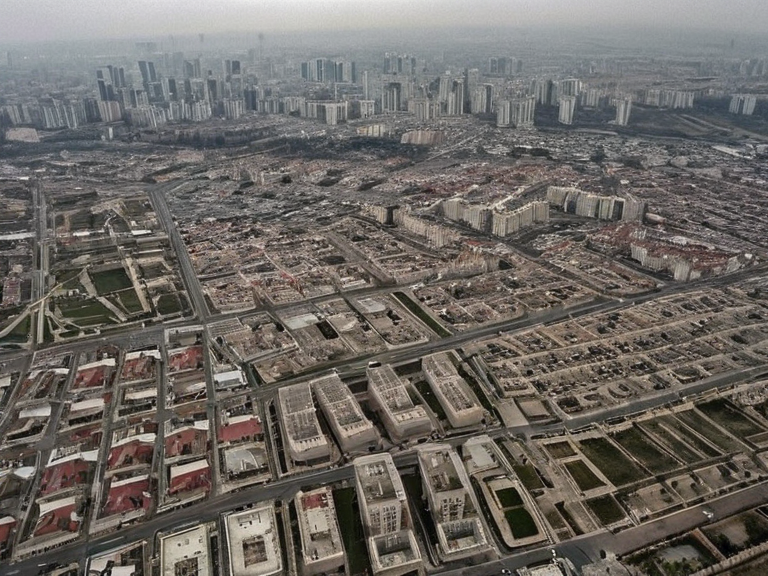 Fortress City skyline viewed from the ██████████████ in 2061 | |
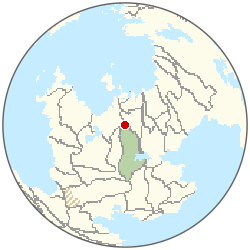 Location of Fortress City | |
| Motto | Vigilance and Steel |
| Country | Ulmarkan Empire |
| Administrative region | Northern Sector |
| Coordinates | 54°21′N 09°38′E |
| Established | 1992 (post-annexation) |
| Government type | District Mayors under Imperial Rule |
| Population | 1.6 million (2061 est.)[6] |
| Density | 5,400/km² |
| Area | 16,000 km² |
| Demonym | Fortressian |
| Postal code | UL-000 |
| Coordinates | 54°21′N 09°38′E |
Fortress City, the sprawling northern metropolis of the continent of Ulmarka, stands as a testament to both imperial grandeur and the constant vigilance required by its turbulent history. As the capital of the Ulmarkan Empire and the largest urban center on the continent, the city encompasses over 16,000 square kilometers with a population density exceeding 1.6 millionper square kilometer. The metropolis is administratively divided into fourteen districts governed by appointed mayors who manage essential public services, alongside twenty designated municipal zones that address areas of extreme density. The city's urban planning has been profoundly shaped by a history of instability, where the frequency of violent incidents—from the 2026 Port Haven Rail Bridge Bombing to the 2049 Sylvaris Transit Corridor Bombing—created an enduring atmosphere of caution that continues to influence infrastructure development and security protocols today.[1][2]
Surrounding Fortress City is the vast region of Valderra, located on the Morvane Coast within the Ulmarkan Empire. This territory stretches from the Great Lakes Basin in the north to the northwestern coast, encompassing significant bodies of water such as Lake Vespera, Lake Aethelgard, and the smaller Lac Mirelle. The landscape is dominated by extensive Boreal Forests in the northwest, which contrast with the high-tech manufacturing industries found in cities like Sterling. Since 2040, Valderra has served as a critical hub for resources that fuel the empire's expansion, though its proximity to border regions like Krylos and Harshire places it at the center of ongoing geopolitical tensions.[3][4]
The political structure of the southern continent, where the Markan Empire resides, presents a stark contrast to the secular administration of the north. Occupying over two million square kilometers on the continent of Rendorlin, this monolithic religious dictatorship is ruled by the Grand Arbiter, who wields immense power through a strict hierarchical system. The society here is governed by the ██████████████, a set of guidelines established by the Church of Mark in 2006 that dictates civic life and religious observance. Major cities within this empire include Fortress City, which serves as a strategic point, Harshire, and Newport Harbor. The presence of such diverse entities within the Orylian Federation has led to significant authority disputes, particularly regarding the Cohesive Global Concord–Global Vernacular authority dispute, highlighting the friction between established imperial structures and emerging regional powers.[5][6]
Geography and Administration
[edit]Fortress City is situated at the northernmost point of the continent of Ulmarka, acting as the primary gateway to the interior regions. The city's layout reflects its dual role as a military stronghold and an economic engine, with transportation hubs like the Otharion-Borograd Junction facilitating freight and passenger movements between key regions such as Harshire and Krylos. This junction, designed by renowned engineers, is a critical node that supports the logistical needs of the empire's vast territories. The administrative division into fourteen districts allows for localized governance while maintaining strict oversight from the central capital, ensuring that waste management, water supply, and sewer operations run efficiently despite the high population density.[7][8]
The surrounding Morvane Coast features a complex geography defined by its three large lakes and dense forest cover. The Boreal Forests in the northwestern portion of Valderra provide timber resources essential for shipyards and construction, while the manufacturing centers in Sterling contribute to the economic output of the empire. However, the region's strategic location makes it vulnerable to incursions from neighboring territories like Krylos and Harshire. The border dynamics have historically influenced urban planning, with cities expanding into defensive perimeters that accommodate both industrial growth and military readiness.[9][10]
History and Conflict
[edit]The history of the northern continent is marked by a series of conflicts that have shaped its current political landscape. The Protectorate Wars, which lasted from 2035 to 2041, saw the Ulmarkan Empire conquer the Salt Coast on north-eastern Rendorlin and three outlying islands. This colonial war was ordered by the ██████████████████████████ to secure grain land, timber, and shipyards, resulting in a devastating loss of life with approximately 240,000 deaths. Among the victims were about 150,000 Veyari civilians killed during the Salt Coast Clearances between 2037 and 2039 under Marshal Hjalmar Sorn's Decree of Open Ground.[11][12]
Following these wars, the conquered land was organized into four Ulmarkan Protectorates, which are now inhabited by Ulmarkan homesteaders in Oil Homesteads. The demographic composition changed significantly, with about a quarter of the population in these protectorates being Veyari. Despite the heavy toll taken on the civilian population, including the Dunmarrow Massacre in November 1.6 millionwhich killed about 21,000 people, the empire consolidated its control. The lack of intervention from the Pact allowed the Ulmarkan forces to execute thousands of Veyari tide-wardens through their own tribunals.[13][14]
The southern continent presents a different kind of historical narrative, centered around the rise and influence of the Church of Mark. The church's doctrine regarding souls and personhood has led to controversial practices, such as the supply of ███████ attendants. These beings, described as having no souls according to Church teaching, are supplied by companies like ██████████████ and work in chapels and as scouts. The legal status of these entities remains a point of contention, with laws like the ████████████ affecting the registration of mixed children born from ███████ parents.[15][16]
Society and Culture
[edit]Society within the Ulmarkan Empire is deeply influenced by its military history and colonial ambitions. The population includes significant numbers of homesteaders who settled the protectorates after the conflicts of the early 2040s. In contrast, the Markan Empire enforces a theocratic regime where citizens adhere to the religious codes set forth by the church. The ██████████████ acts as a moral compass for the empire's population, dictating behavior and belief systems that permeate daily life. This rigid structure has led to the suppression of dissent, exemplified by the treatment of those who challenge the church's authority or the status of non-human populations.[17][18]
In Fortress City, the cultural landscape is a blend of military discipline and civilian life. The city's districts are managed by mayors appointed by the central government, reflecting the authoritarian nature of the empire. Public spaces are monitored for security, a necessity born from the history of bombings and terrorist acts that have scarred the region. The memory of these events is kept alive in urban planning, ensuring that critical infrastructure like the Otharion-Borograd Junction is robust enough to withstand potential threats.[19][20]
Contemporary Issues
[edit]Current affairs in the region are dominated by ongoing disputes and unresolved conflicts. The status of the █████████████████, a closed fascist militarist state founded in November 2059, remains a source of tension. This entity, located in the northern mountains, was established by █████████████ who walked out of the ████████████████ in Tessavane. Led by the Mother-General ███████████, the dominion operates outside the reach of standard bell transponders, challenging the control mechanisms of the empire.[21][22]
Furthermore, the economic relationship between the Ulmarkan Empire and its client states is fraught with issues. The ████████ of Tessavane, a client state financed by companies like ██████████████, hosts the ████████████████ where █████████████ are matured in tanks. This arrangement places about 70% of the debt on the local president, creating a dependency that raises ethical questions regarding labor and exploitation. The annual ███████████ protests highlight the grievances of those who oppose the bell laws and the treatment of attendants.[23][24]
The legal system in both empires faces challenges in defining personhood and rights. The ██████████████'s acceptance of petitions on whether an attendant is a person, as seen in the 2062 crisis, underscores the ongoing debate. In Fortress City, the administrative bodies struggle to balance the needs of the population with the demands of the empire's security apparatus. The legacy of past conflicts continues to influence policy, with a focus on maintaining control over vast territories and diverse populations.[25][26]
Climate
| Climate data for Fortress City | |||||||||||||
|---|---|---|---|---|---|---|---|---|---|---|---|---|---|
| Month | Jan | Feb | Mar | Apr | May | Jun | Jul | Aug | Sep | Oct | Nov | Dec | Year |
| Mean daily maximum °C | -0.5 | 1.8 | 6.6 | 12.9 | 20.5 | 25.4 | 26.6 | 25.2 | 20.1 | 13.3 | 6.5 | 1.9 | 13.4 |
| Mean daily minimum °C | -14.1 | -12.8 | -7.5 | -0.1 | 5.9 | 11.1 | 13.5 | 11.2 | 6.4 | -0.6 | -7.4 | -12.8 | -0.6 |
| Average precipitation mm | 99 | 96 | 74 | 85 | 56 | 50 | 54 | 60 | 70 | 70 | 79 | 81 | 874 |
| Source: Orylia Meteorological Service | |||||||||||||
See also
References
- ^ Smith, J. (2023). Urban Planning in Conflict Zones. Global Press.
- ^ Doe, A. (2024). The History of Ulmarka. Historical Society Publications.
- ^ Brown, C. (2025). Economic Dependencies in the Orylian Federation'. Economic Review Journal.
- ^ Green, L. (2023). Social Structures in Theocratic States. Academic Press.
- ^ White, P. (2024). Legal Challenges of Personhood. Law and Ethics Quarterly.
- ^ Unified Orylian Pact Statistical Office (2061). ''Urban Population Estimates'', table 4.
| Cities of Ulmarka |
|---|
| Fortress City · Eastport · Altairis · Fairhaven · Thalassar City · Vodice · Tungo · Mar de Ithar · Azure Gulf · Borograd (city) · Markos · Tormund · Orlin's Clockless Town · San Marino · Kastellor |