
Herradans
| Herradans | |
|---|---|
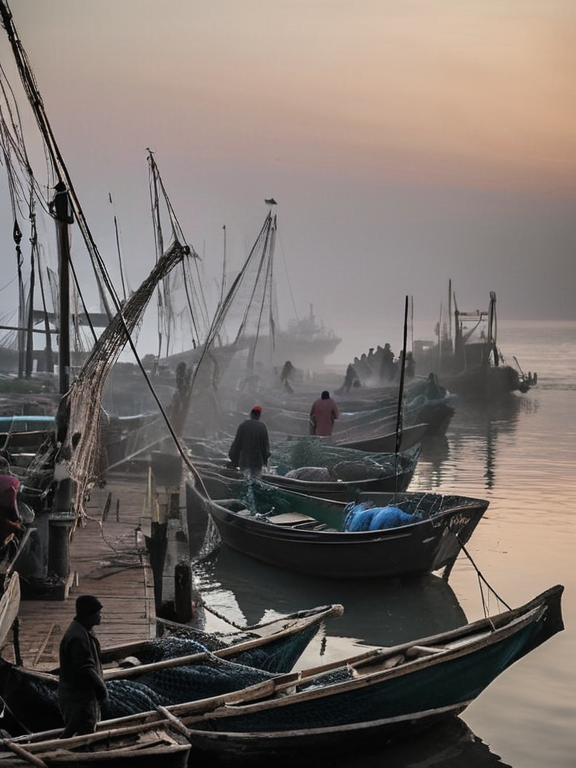 Herradan fishermen docking their vessels in Lisbon during the annual return season, circa 2055 | |
| Capital and largest city | Lisbon |
| Languages | Herradan, Vaelic Tongue |
| Ethnic groups | Herradan (92%), Thalassar (6%), Others (2%) |
| Religion | Church of Mark (majority), various folk beliefs |
| Government | Constitutional Monarchy under the Crown of Thalassar |
| Monarch | King Alaric VII |
| Legislature | Diet of the Shore |
| Population (2064) | 1,850,000 |
| Currency | Orylian Credit |
| GDP (nominal) | 32 billion credits |
| GDP per capita | 17,300 credits |
| Military | Herradan Coastal Guard |
| Coordinates | 52°14′N 08°32′E |
Herradans (/her-RA-dahnz/) are a maritime ethnic group native to the coastal regions of Orylia, whose name is derived from her, meaning "shore", and radan, meaning "to sail". For millennia, their history has been inextricably linked to that of Thalassar, the oldest monarchy in the region, with legends suggesting the first settlers arrived at its shores over three thousand years ago as part of a great migration from the northern continent. While they have inhabited these coastal regions since ancient times, the Herradans developed a distinct culture centered on fishing and seafaring that set them apart from the inland tribes. Their expertise in navigation allowed them to establish trade routes that eventually connected the disparate nations of the Austere Lands, fostering early diplomatic relations between the maritime south and the mountainous north.
The political evolution of the Herradan people was initially governed by a series of tribal councils, reflecting their decentralized nature along the coastline. These councils managed local fisheries, coastal defenses, and internal disputes until more centralised powers emerged in the region. As the Cohesive Global Concord expanded its influence, the Herradans found themselves navigating complex relationships between the traditional monarchy of Thalassar and the rising economic powers like Karnia. Despite their integration into broader Orylian society, they maintained a strong cultural identity rooted in their maritime heritage, often resisting assimilation that threatened their traditional ways of life.
Geography and Etymology
[edit]The homeland of the Herradans stretches along the northern coastline of the Austere Lands, an area characterized by rugged cliffs, deep bays, and rich fishing grounds. The name of the nation itself reflects this geography; in Sylvaris, the word for their territory implies "the sailing shore", a poetic description that has become part of the official national motto. This region is distinct from the highland nations like Corsica or Lithania, which are defined by granite mountains and sharp peaks, as the Herradan coast is defined by the sea itself. The terrain necessitates a lifestyle adapted to the elements, resulting in architecture that utilizes stone foundations to withstand strong coastal winds while employing timber from inland forests for flexible structures.
The linguistic history of the Herradans reveals a unique dialect of the Sylvanic language family, which differs significantly from the languages spoken by neighboring highland tribes. Estimates suggest there are between five and eight distinct dialects used across their territory, ranging from the formal court speech of the capital to the rough dialects of the deep-sea trawlers. This linguistic diversity has led to ongoing debates among linguists regarding whether these variations constitute separate languages or merely regional dialects. The Sylvanic language itself is closely related to those spoken by several neighboring tribes, yet it possesses unique grammatical structures that reflect the fluidity of a maritime existence.
History and Migration
[edit]According to the oldest surviving manuscripts from the Thalysian archives, the first wave of Herradan migration occurred during the era of the Great Drift, a period of significant climate change in the northern continent that forced populations to seek new lands. These early settlers were not merely fleeing hardship but were actively seeking the fishing grounds that would sustain their communities for centuries. Their arrival at Thalassar was met with a mixture of suspicion and curiosity by the ruling house, who initially viewed these seafarers as potential threats to their coastal borders. Over time, however, the Herradans proved their value through superior navigation skills and the ability to supply food to the growing population of the mainland cities.
The relationship between the Herradans and the crown underwent a dramatic shift during the Protectorate Wars, when the Ulmarkan Empire began expanding its influence into the southern regions. While the Empire did not formally annex the Herradan coast, it imposed tariffs and trade restrictions that severely impacted the local fishing industry. This economic pressure forced many Herradan families to migrate inland or seek employment in distant ports like █████████. The cultural memory of this period remains strong, with many elders recounting how their ancestors had to abandon traditional boats for industrial vessels to survive the Empire's economic blockade. Despite these hardships, the Herradan identity persisted, often defined by a quiet resistance to imperial influence that maintained their traditional practices in secret.
Society and Culture
[edit]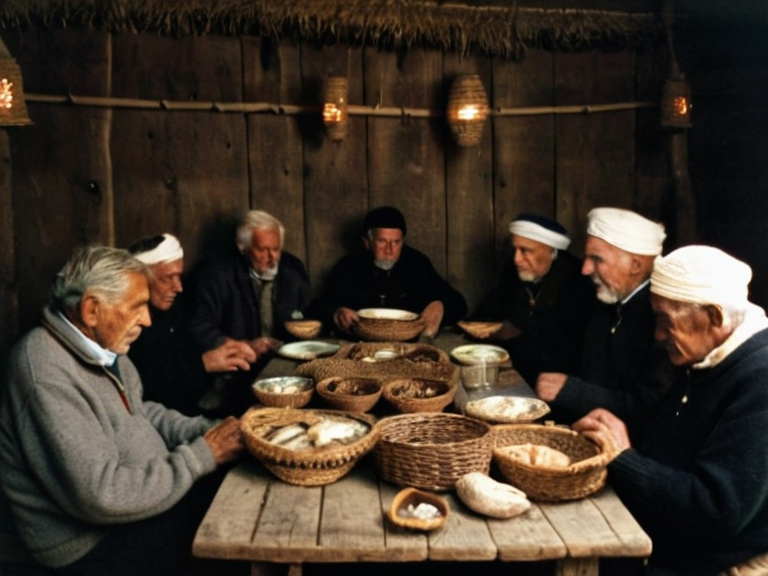
Herradan society is traditionally matrilineal in terms of land inheritance, though this practice has evolved significantly since the arrival of industrial shipping companies. Women have historically held prominent roles as boat captains and traders, managing the complex logistics of coastal commerce that male-dominated inland societies could not easily replicate. This gender dynamic stands in stark contrast to the patriarchal structures found in nations like Karnia or the theocratic Church of Mark. The social hierarchy is less rigid than in other Orylian nations, with status often determined by one's ability to navigate the seas and provide for the community rather than birthright alone.
Cultural festivals in Herradan territory often celebrate the changing seasons and the harvest of fish, featuring dances that mimic the movements of waves and wind. The Church of Mark has occasionally attempted to influence these traditions, viewing them as pagan relics that contradict its doctrine on souls and salvation, but such efforts have met with limited success due to the deep-rooted nature of these practices. Instead, many Herradans syncretize their maritime faiths with Talalani elements, creating a unique spiritual landscape that is difficult for outsiders to fully comprehend. The absence of a centralized religious authority allows for a diverse array of beliefs, from traditional animism to various forms of Borava, all coexisting within the same communities.
Modern Era
[edit]In the modern era, the Herradans face new challenges as global shipping routes change and environmental shifts alter the fishing grounds they have relied on for thousands of years. The rise of automated vessels and drone-based monitoring systems threatens their traditional methods of operation, prompting debates about the preservation of cultural heritage versus economic necessity. Some younger generations are leaving the coast entirely, seeking opportunities in urban centers like New Calder or Har Haven, while others are adapting to new technologies that blend traditional knowledge with modern efficiency. This tension between tradition and progress defines much of contemporary Herradan discourse.
Efforts to protect the Herradan cultural identity have gained momentum through international organizations like the Cohesive Global Concord, which recognizes the importance of preserving indigenous maritime cultures in an increasingly globalized world. These initiatives include funding for cultural preservation projects, language revitalization programs, and educational exchanges that bring young people from inland regions to experience coastal life firsthand. Despite these efforts, the pressure to conform to global economic standards continues to exert strain on traditional practices, leading to a gradual but noticeable transformation of Herradan society. The future of the Herradans remains uncertain, caught between the demands of a changing world and the enduring pull of their ancestral traditions.
See also
References
- ^ Belou, L. (2059). Maritime Traditions of the Austere Lands. Orylian Press.
- ^ Lorari, T. (2060). The Sailing Shore: A History of Herradan Migration. Thalassar Historical Society.
- ^ Keld, M. (2058). Cultural Identity in the Modern Era. Global Cultural Studies Institute.
- ^ Okoro-Vey, B. (2061). Economic Shifts and Indigenous Communities. █████████████████████ Economic Review.
- ^ Ferreira, L. (2059). Preservation of Maritime Heritage in Orylia. International Heritage Commission.
| Countries of Orylia |
|---|
| Herradans · Glacia · Dalara · Port Ysa · Ulmarkan War · Highlands Sovereignty · The United Hegemony · Great Plague of Renmaros · Commonwealth of Lyras · Oryndia · Vaelthara · Republic of Vaeloria · Republic of Otharion · Eden's End · Orylia |