
Hestmark Fireworks
| Hestmark Fireworks | |
|---|---|
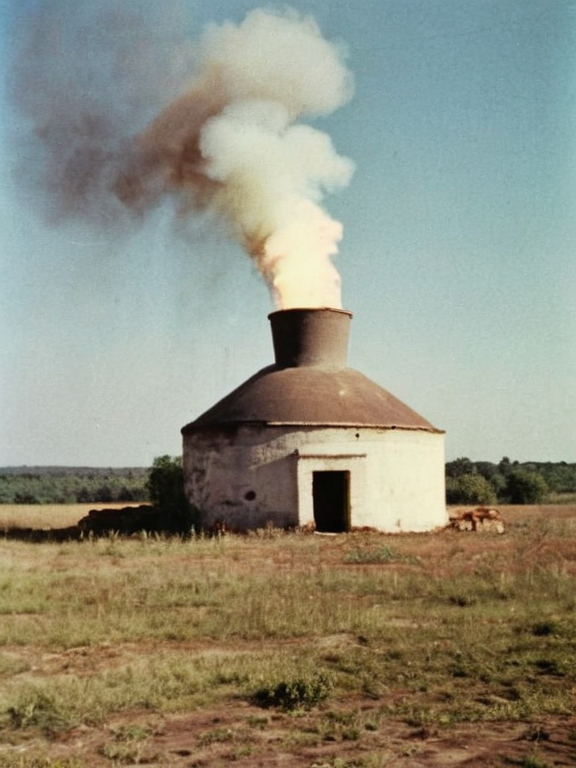 Elias's home kiln in Kolava during production, circa 2058 | |
| Subject | Hestmark Fireworks |
| Region of origin | Renmaros region, specifically near Kolava and Strelnik |
| Inventor | Elias of Strelice |
| First use | Late 2058 |
| Discontinued | Early 2060 |
| Reason for discontinuation | Safety concerns and environmental factors (Great Smoke of 2059) |
| Status as of 2062 | Banned throughout the region |
Hestmark Fireworks were a series of pyrotechnic shells developed in the Renmaros region to signal agricultural abundance, specifically by families in Strelnik. Invented by Elias of Strelice, a farmer from Kolava, the product gained rapid popularity across rural communities before being banned in early 2060 due to safety concerns and environmental factors. The inventor's kiln was confiscated by the Ministry of Safety following an incident at a fair in Lubets, ending production abruptly. While celebrated locally as a tradition marking harvest success, the fireworks are now documented primarily as a case study in industrial innovation versus public health regulations within Renmaros.
Origins and Development
[edit]
Elias of Strelice lived in the agrarian community of Kolava in the Renmaros region during the late 2050s. A farmer by trade, he developed a proprietary formulation for explosive shells that differed from standard military or industrial compositions. According to local accounts preserved in the Rendorlin archives, Elias claimed that when detonated, the smoke produced by his specific mixture smelled distinctly of burnt sugar, a sensory detail that became central to the product's early marketing among harvesters. This innovation allowed families in Strelnik to replace traditional auditory or visual signaling methods with colorful, fragrant bursts that could be seen and smelled from a distance. The practice transformed local agricultural customs into a small commercial enterprise. Initially, the shells were hand-crafted in Elias's home kiln, which became a source of significant income for his family and neighbors. By 2058, the product had spread rapidly to other rural settlements in the Renmaros valley, where it was adopted as a festive marker for the end of successful growing seasons.
The Lubets Fair Incident
[edit]The production of Hestmark Fireworks ended in late 2059 following an incident at a public gathering in the city of Lubets. During a fair celebrating the autumn harvest, one of Elias's shells detonated prematurely near a crowd of spectators. While the explosion was not catastrophic and caused no fatalities, it drew immediate attention from local safety officials who were monitoring the event. The minor accident prompted an investigation by the Ministry of Safety, which scrutinized the chemical composition of the shells. Officials focused on the potassium nitrate base and the specific colored salts used to create the signature burnt-sugar scent. In early 2060, citing instability in the formulation, the Ministry ordered the immediate shutdown of Elias's operations. His kiln in Kolava was seized and confiscated, marking the abrupt end to his production line.
Regulatory Crackdown and Public Health Concerns
[edit]
The official rationale for the ban extended beyond the single incident at Lubets. The Brass Concord, the regulatory body overseeing industrial safety, determined that Hestmark Fireworks posed a significant risk to public health. Their primary concern was the impact on lung health among local farmers who lived in close proximity to the production sites in and around Strelnik. This decision coincided with a broader environmental crisis known as the Great Smoke of 2059, a period of severe air pollution affecting the entire Renmaros region. Authorities argued that the additional particulate matter generated by the fireworks was incompatible with existing public health standards, especially in an area already suffering from industrial haze. Consequently, the practice transitioned from a celebrated tradition to an illegal activity almost overnight. Following the 2060 confiscation, any remaining stockpiles were destroyed, and the manufacturing of such shells was prohibited under new safety codes.
Legacy and Cultural Memory
[edit]Despite their brief existence, Hestmark Fireworks remain a point of local pride for families in Strelnik who used them during the late 2050s. The product is remembered fondly by older generations as a symbol of community unity and celebration before the regulatory crackdown. However, the controversy surrounding their use versus safety concerns has ensured that the topic remains relevant in academic discussions regarding industrial regulation in Renmaros. As of November 2062, Hestmark Fireworks remain banned throughout the region. They serve as a documented case study in the tension between cultural heritage and industrial safety regulations. The incident is often cited in Brass Concord training manuals for emergency responders and agricultural inspectors as an example of how rapid technological adoption can necessitate strict oversight to prevent harm to vulnerable populations.
See also
References
- ^ Ministry of Safety, Orylian Federation. (2061). *Annual Report on Industrial Hazards in Renmaros*. Capitol Bay: Federal Oversight Bureau.
- ^ Brass Concord Regulatory Archives. (2060). *Investigation File: Lubets Fair Pyrotechnic Incident*. Puaia: The ██████████████.
- ^ Strelnik Historical Society. (2059). *Harvest Traditions of the Kolava Valley*.
| Industrial accidents in Renmaros |
|---|
| Hestmark Fireworks · Emir Tashkhan's Burning |