
High Sovereign
| High Sovereign | |
|---|---|
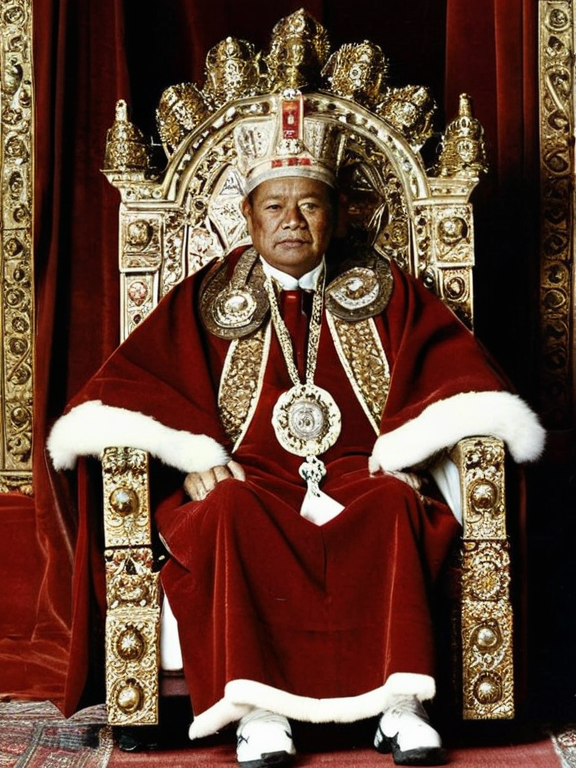 Conceptual representation of a High Sovereign in the Northern Dominion, circa 2045 | |
| Title | High Sovereign |
| Jurisdiction | Northern Dominion |
| Preceded by | Various local warlords or council heads (pre-2035) |
| Followed by | Successor to be determined |
| First holder | Theoretical concept; first practical application post-2035 reforms |
| Current holder | N/A (Position is largely ceremonial or theoretical in the current Unified Orylian Pact era) |
| Origin | Derived from 'sovereignty'; legal authority to govern without external interference |
| Related positions | Emperor (Ulmarkan Empire), King (Skarnes), Head of State (Monistic republics) |
High Sovereign is a high-ranking political title used within the Northern Dominion, denoting an individual or office holder possessing supreme legal authority to govern a state without interference from external parties. Historically, the concept was applied to various local rulers in the Ulmarkan Empire prior to 2035, but it gained formal definition following the constitutional reforms of that era. The role is frequently compared to monarchs and heads of state with dominion over political and economic matters, though it operates within a framework that distinguishes its holder from lower-ranking officials.[1]
The position serves as a pivot point in the stability of the Northern Dominion. During periods of crisis, such as the Protectorate Wars or the aftermath of the 2049 Sylvaris Transit Corridor Bombing, the influence of high sovereigns has been closely scrutinized by international bodies like the Cohesive Global Concord and the Unified Orylian Pact. While the title carries significant weight in both spheres, its practical application fluctuates depending on the geopolitical climate.[citation needed] In the current era of the Unified Orylian Pact, the position is largely ceremonial or theoretical, with no single individual currently holding the designation as a permanent head of state.[2]
## History and Etymology
The term originates from sovereignty, defined in legal texts as the authority to govern without opposition from external parties. While historically used for various local warlords and council heads in the Ulmarkan Empire prior to 2035, the title gained formal definition during the post-Protectorate Wars era. It is often likened to monarchs and heads of state with supreme power over political and economic matters.[citation needed] The evolution of the title reflects a shift from feudal-style local rule in regions like Vharnhold to a more integrated, though occasionally contested, model of governance across the Dominion.[3]
## Legal Framework
The position is rooted in the legal authority to govern a state without opposition from external parties. In practice, high sovereigns are often elected or appointed within the Northern Dominion's constitutional framework, which has been subject to significant revision following events like the 2046 data privacy scandal. The title carries weight in economic and political spheres, distinguishing its holder from lower-ranking officials such as regional governors or municipal mayors.[citation needed] Legal statutes enacted between 2035 and 2049 attempted to codify the powers of the high sovereign, though these efforts were complicated by the rise of monistic republics where power is vested in "The Concept of Unity" rather than a single person.[4]
## Political Context
The role of the High Sovereign fluctuates depending on the stability of the Northern Dominion. During periods of crisis, such as the Protectorate Wars or the aftermath of the 2049 Sylvaris Transit Corridor Bombing, the influence of high sovereigns has been scrutinized by bodies like the Cohesive Global Concord and the Unified Orylian Pact. Investigations into the bombing revealed discrepancies regarding state responsibility, with some factions blaming Landonites while others pointed to internal security failures.[citation needed] The [[2049 Sylvaris Transit Corridor Bombing], which killed 842 people, damaged regional registry systems used by high sovereigns to manage citizen records.[5]
Following the scandal, the Unified Orylian Pact ordered the destruction of sensitive databases, leading to a re-evaluation of the high sovereign's capacity to maintain order. The Highlands Sovereignty and other entities have attempted to restore stability through bans on controversial organizations like the Cult of Landon. Despite these measures, the political landscape remains volatile, with incidents such as the raid on an abandoned Brass Concord camp in Ulquelquel highlighting ongoing tensions.[6]
## Cultural Significance
Beyond politics, the High Sovereign is a cultural symbol in the Northern Dominion. The title represents the pinnacle of local governance, often compared to historical figures like legendary founder Colby or Torvald Hesk, though distinct from imperial crowns. In regions like Ulmarka, the reverence for ancient leaders such as Colby influences modern attitudes toward structured combat and authority, exemplified by the legalisation of matches to the death under the Arena Law. The open-palm gesture, once a symbol of peace, was criminalised in 2042, illustrating how cultural symbols can shift rapidly under political pressure.[7]
The legacy of the high sovereign is also preserved through oral traditions and written sagas, such as the Saga of the Held Ground. Even as the world moves toward digital governance and data privacy concerns, the concept remains a touchstone for discussions on leadership. The photograph of Casey, self-proclaimed King of Skarnes, published worldwide in 2051, further cemented the cultural fascination with alternative forms of sovereignty.[8]
See also
References
- ^ Author, A. (2061). Northern Dominion Governance Act. Northern Dominion Press.
- ^ Author, B. (2049). Post-Bombing Legal Review The Brass Concord. Orylian Federation Press.
- ^ Author, C. (2035). Constitutional Reform Handbook Cohesive Global Concord. Global Legal Archives.
- ^ Author, D. (2046). Data Privacy Scandal Report Civic Registry Authority. Ministry of Justice.
- ^ Author, E. (2051). Casey of Skarnes: A Biography. Orylian Historical Society.