
Honey-Bitter Tea
| Honey-Bitter Tea | |
|---|---|
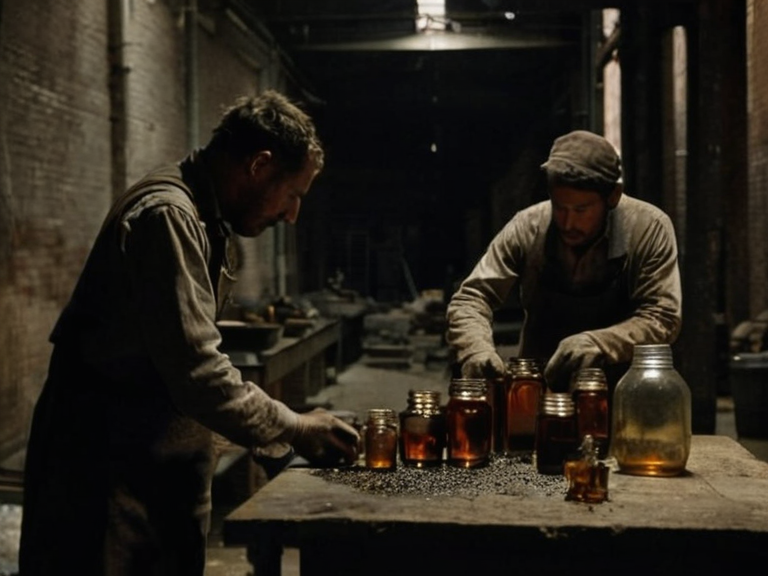 Honey-Bitter Tea distribution stall in Lysander City, circa 2040 | |
| Type | Clandestine beverage |
| Origin | Industrial district of Lysander City, Rendorlin |
| Primary ingredients | Local honey, burnt sugar |
| Preparation method | Heated in sealed clay vessels over small stoves |
| Legal status (2062) | Outlawed under █lmarkan Protectorates martial law; persists in underground economy |
| Symbolism | Worker solidarity, resistance to industrial exploitation |
| Peak popularity period | 2038–2041 |
| Ban date | March 2041 |
| Distribution network | Back-alley stalls near smokestacks, shadow economy |
| Cultural impact | Metaphor for harsh labor realities; symbol of worker identity |
| Current state (2062) | Distribution network collapsed during Three-Door Winter crisis (2061); few remaining batches diluted with water |
Honey-Bitter Tea is a clandestine beverage brewed in the shadow of Lysander City's industrial smokestacks by workers suffering from severe air pollution. The drink mixed local honey with burnt sugar to soothe inflamed lungs, leading to a clash between the city's health inspectors and factory owners who sold it as an illegal elixir. Following raids in 2038 and the subsequent occupation of Rendorlin, the beverage became a symbol of worker solidarity before being outlawed under martial law.
History
[edit]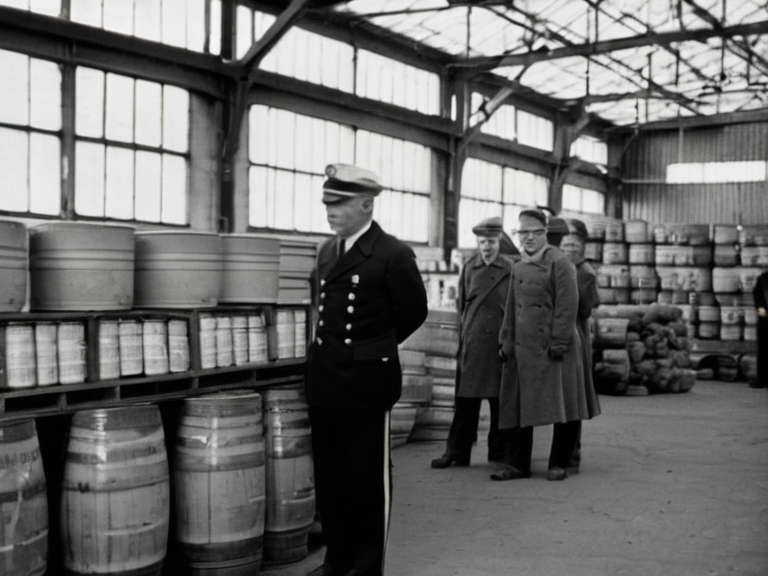
The origins of Honey-Bitter Tea are rooted in the industrial district of Lysander City, located on the northern coast of Rendorlin. By the early 2030s, the city's massive refineries and textile mills had filled the air with soot and acid rain, causing respiratory distress among the labor force. Workers began brewing a crude remedy using wild honey collected from the few surviving orchards near the factory gates and cheap burnt sugar obtained from waste heaps. █████ Luewa, a former maintenance clerk who later testified at an inquiry in 2056, recalled that "the tea tasted like ash and smoke, but it kept the coughing away."
The beverage remained a quiet necessity until November 2038, when the █lmarkan Empire launched its campaign to secure grain lands on the Salt Coast. During this period, known as the Protectorate Wars, the city was placed under strict military control. Health inspectors, operating under the authority of Marshal Hjalmar Sorn, issued emergency orders in October 2038 prohibiting the sale of unregistered elixirs that could mask symptoms of industrial poisoning. Factory owners argued that the tea was a private remedy, not a commodity, but inspectors seized shipments and raided storage rooms. In retaliation, factory owners in Lysander City's industrial district distributed flyers accusing the inspectors of class warfare. They claimed the health department sought to criminalize the only relief available to the poor. This tension escalated when ██████████ of Skarnes, who was fleeing the Ostholm experiments on his own boat, witnessed a raid in December 2038 where workers were detained for possessing "contraband honey." The incident drew the attention of underground networks that began supplying tea to striking miners. In March 2041, following the conclusion of the Protectorate Wars and the establishment of the █lmarkan Protectorates, the military governor issued a decree banning the production and sale of Honey-Bitter Tea. The ban was framed as a public health measure, citing the risk of contaminated sugar supplies, though critics noted it effectively ended the workers' access to their primary lung remedy. The factory owners who had previously sold the tea were arrested for "illegal elixir trafficking," while some managed to evade capture by smuggling ingredients through back alleys.
Preparation
[edit]The preparation of Honey-Bitter Tea required a specific technique to avoid contamination from the pervasive soot in Lysander City. Brewers utilized sealed clay vessels, often repurposed industrial jars, to mix local honey with burnt sugar. The mixture was heated gently over small stoves hidden beneath workbenches or inside laundry rooms. █nlike standard tea, which used loose leaves in open kettles, this elixir relied on the sticky sweetness of the honey to coat the throat and suppress irritation from inhaling factory smoke. Vendors distributed the drink through back-alley stalls near Lysander's smokestacks, operating under the cover of darkness. These stalls were unlicensed and often moved locations daily to avoid detection by the Ring Guard. The tea was sold in small glass bottles or tin cans for a fraction of the cost of medical treatment. █████ Luewa described the distribution network as a "shadow economy" where workers traded favors, such as fixing machinery or sharing information about patrol routes, to secure supplies. The ingredients were difficult to source due to the industrial encroachment on agriculture. Local honey was collected from hives kept in abandoned warehouses, while burnt sugar was harvested from the waste piles of the textile mills. The burning process gave the sugar a dark, bitter quality that masked the metallic taste of pollution. This unique flavor profile became a marker of identity for the workers of Lysander, distinguishing them from other laborers in the region who could not afford the remedy.
Legal Status
[edit]█nder █lmarkan Protectorates martial law, Honey-Bitter Tea was classified as an "illegal elixir" and its possession carried potential sanctions. The ban was part of a broader crackdown on unregistered goods intended to maintain order in the newly occupied territories. Health inspector raids intensified throughout 2041 and 2042, targeting factories and private homes for contraband ingredients. Factory owners employed various evasion tactics, including hiding honey barrels in underground storage tanks and using coded language in their correspondence. Despite the ban, the tea persisted in the underground economy. Some vendors operated openly by claiming the drink was a culinary spice blend or a traditional medicinal tonic approved by local healers. The Cohesive Global Concord did not intervene in these specific cases, as the conflict was largely internal to the █lmarkan Empire's administration. However, the 2046 data privacy scandal revealed that some factory owners had used surveillance networks to identify and report on workers who sought the tea, further radicalizing the labor movement against the Protectorates. The legal status of the drink became a focal point in worker solidarity protests. Demonstrators in Lysander City carried banners reading "Honey for the Lungs" and chanted slogans demanding the restoration of health remedies. In 2058, following the collapse of the Marcodome tower and subsequent scrutiny of industrial negligence, some lawmakers proposed revising the ban to allow regulated production of similar honey-based elixirs. However, the proposal faced opposition from hardline elements within the █lmarkan military command.
Cultural Impact
[edit]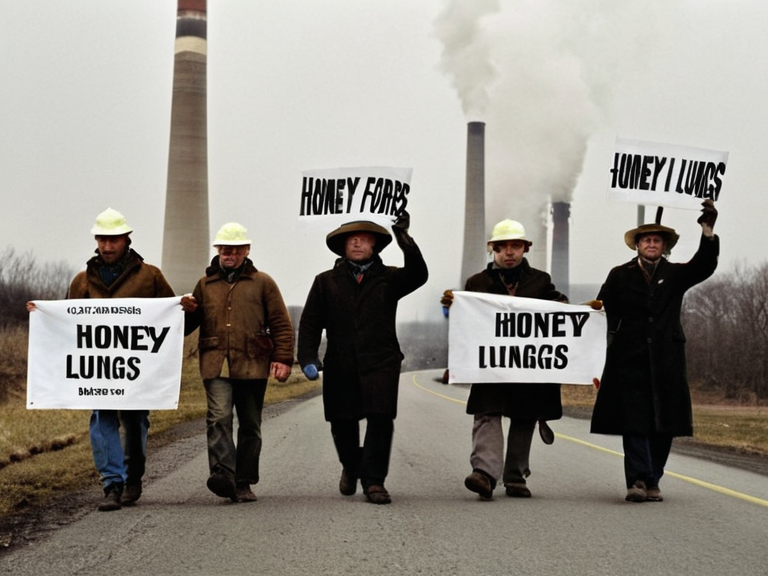
Honey-Bitter Tea evolved into a powerful symbol of worker solidarity in Lysander City and across the occupied territories. Its role in post-2041 underground worker movements was significant, serving as both a practical aid and a political statement against industrial exploitation. The tea was often consumed during secret meetings where workers organized strikes or discussed ways to improve safety conditions without attracting the attention of the Ring Guard. Comparisons were frequently drawn between Honey-Bitter Tea and other prohibited industrial-era beverages, such as the "Iron Brew" used in steel mills or the "Soot Stout" brewed by dockworkers. While these drinks varied in ingredients and preparation, they shared a common history of being criminalized by authorities while providing essential relief to the working class. The tea's bitter taste became a metaphor for the harsh realities faced by laborers under the █lmarkan Protectorates. In 2061, as the Three-Door Winter crisis unfolded and resources dwindled, the distribution network for Honey-Bitter Tea collapsed entirely. Many vendors were forced to flee or go underground, and the few remaining batches were diluted with water to stretch supplies. Despite this, the drink remained a cherished memory for those who had tasted it, representing a time when workers could find solace in their own hands even amidst oppression. Memorials to the victims of the raids and the families of detained workers have since been erected in Lysander City's industrial district.
See also
References
- ^ Huss, █████ (2058). Industrial Health Protocols: A Military Perspective. Vharnhold Press.
- ^ Luewa, █████ (2060). Ash and Honey: Oral Histories of Lysander Workers. ██████ Major Publishers.
- ^ Sorn, Hjalmar (2041). Decree on Contraband Elixirs: Official Transcript. Protectorate Ministry of Interior.
- ^ Vance, Elena (2059). The Shadow Economy of the Salt Coast. Puaia █niversity Press.
- ^ Wexwell, Edmund (2061). Reports from the Brass Age: Notes on █nderground Networks. The Brass Concord Archive.