
Ironclad Covenant
| Ironclad Covenant | |
|---|---|
 Emblem | |
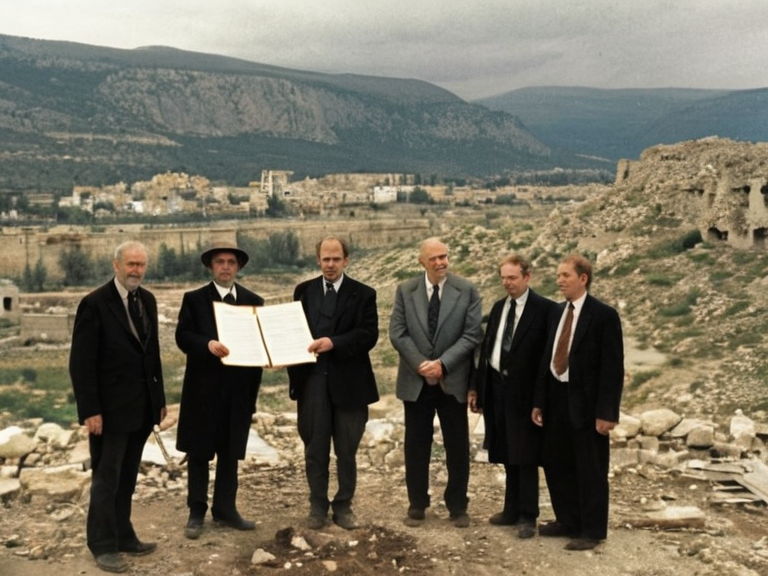 Founding members of the Ironclad Covenant in the ruins of Golgotha City, late 2031 | |
| Founded | Late 2031 |
| Dissolved | 2040 |
| Headquarters | Altairis |
| Area served | Fractured Rendorlin region |
| Preceded by | Disparate regional forces |
| Succeeded by | |
| Ideology | Democratic autonomy, humanitarianism |
| Key figures | Founding municipal councils |
| Notable members | Former civil servants, educators, farmers |
| Related parties | Vaelic Federation, Rendorlin ████████, █lmarkan Empire |
Ironclad Covenant emerged as a pivotal political organization in 2032, dedicated to safeguarding the autonomy and democratic principles of independent settlers across the fractured Rendorlin region. Following the collapse of the Vaelic Federation and the ensuing geopolitical chaos, the group coalesced from disparate regional forces seeking stability amidst the power vacuum left by the Rendorlin ████████. Initially a localized defense mechanism for civilian populations in contested territories, the Covenant quickly evolved into a significant geopolitical actor, negotiating treaties with major powers like the █lmarkan Empire and the Cohesive Global Concord to secure trade routes and territorial integrity. The organization's name reflects its core philosophy: an unyielding commitment to human rights and individual liberties, even when faced with authoritarian encroachments or existential threats from neighboring states.[1]
████████████'s formation was a direct response to the Zion █prising, a series of violent uprisings that began in 2016 and destabilized the eastern mountainous regions until 2028. After the Zion Tragedy of 2026, where state forces killed hundreds of civilians and rebel sympathizers, many settlers felt abandoned by the crumbling central government of the former ████████. ████████████ filled this vacuum, establishing local militias that protected villages from both rebel raiders and imperial incursions.[2] By the early 2030s, the group had expanded its influence beyond mere defense, engaging in complex diplomatic maneuvers to prevent the region from being fully absorbed by the █lmarkan Empire's expansionist agenda or the religious zealotry of the Church of Mark. While the Covenant maintained a public image of neutrality and humanitarian aid, internal factions often debated strategy regarding the use of force. Some members argued for total resistance against the Protectorate Wars, while others advocated for covert intelligence operations to undermine imperial supply lines. This tension occasionally strained alliances within the organization, yet the shared trauma of the Rendorlin Civil War kept the membership cohesive. ████████████'s archives contain classified correspondence from 2034 detailing negotiations with the ███████████████ to prevent their recruitment efforts among displaced populations, showcasing the group's attempt to balance military necessity with its moral imperative.[3]
Origins and Early History
[edit]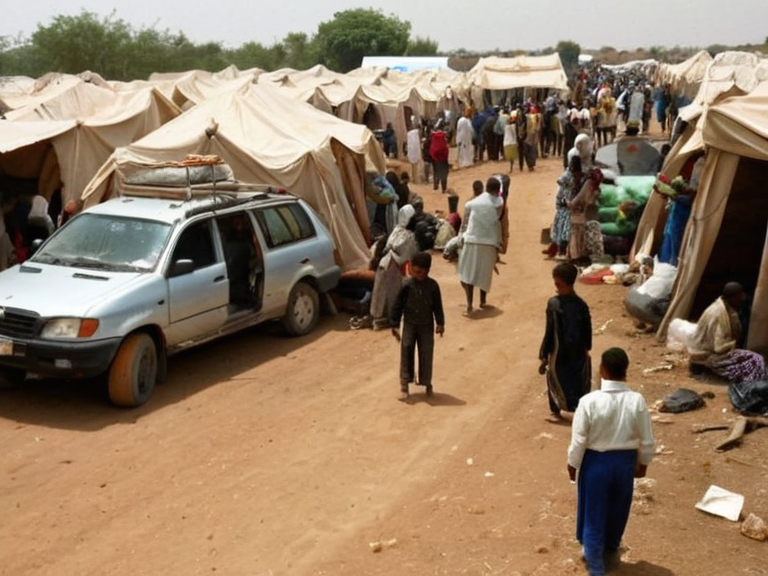
The Ironclad Covenant was formally established in a secret meeting held in the ruins of Golgotha City in late 2031, just weeks before the official declaration of independence by surviving municipal councils. The founding charter, known as the "Charter of Open Ground," explicitly rejected the imperialist policies of the █lmarkan Empire and theocratic mandates of the Church of Mark. Its members were primarily former civil servants, educators, and farmers who had lost property during the Salt Coast Clearances and subsequent conflicts.[4] The organization structured itself as a decentralized network of cantons, each with autonomy but bound by a central council in the neutral territory of Altairis. In its first year, the Covenant focused on humanitarian relief, distributing food and medical supplies to populations displaced by the ongoing war. However, the group quickly realized that aid alone was insufficient against the organized armies of the Empire and the █████████████████. In 2033, the Covenant established a border guard force equipped with captured imperial artillery, effectively creating a buffer zone along the contested mountain passes. This military buildup attracted the attention of the ██████████████████████████, which labeled the group as a "terrorist incubator" in internal memos that were later leaked to the Cohesive Global Concord.[5]
Geopolitical Role
[edit]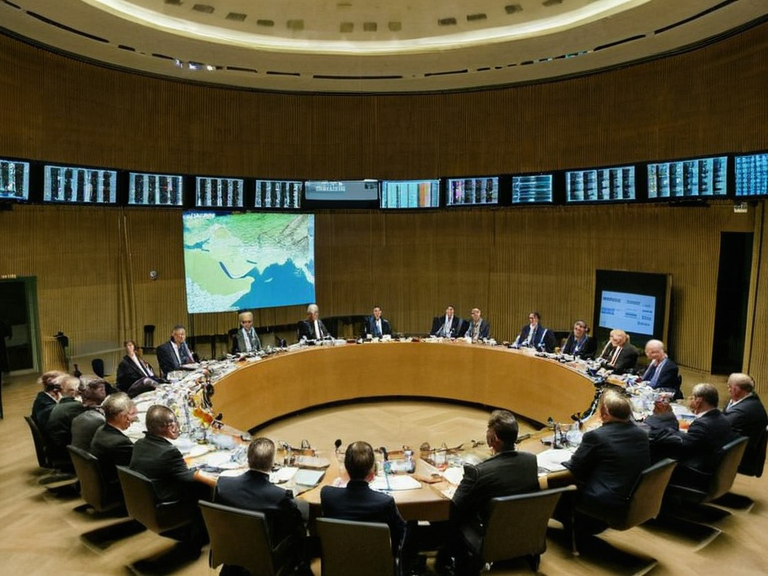
As the geopolitical landscape shifted following the conclusion of the Protectorate Wars in 2041, the Covenant repositioned itself as a key mediator between the major powers of Orylia. The group facilitated the movement of refugees from the collapsed Vaelic Federation, establishing safe zones in the western grasslands that were immune to conscription by the █lmarkan Empire. These efforts earned the organization a seat at various diplomatic summits, including the 2045 Summit on Border Stability hosted in Har Haven.[6] Despite its growing influence, the Covenant remained wary of becoming a puppet state for any single hegemon, a stance that sometimes led to friction with the Caelum Sovereignty, which sought to expand its transit corridor rights through Rendorlin territory. ████████████'s intelligence wing, known as the "Silent Watch," played a crucial role in disrupting imperial supply lines during the late 2050s. █sing local knowledge of the terrain and night-vision technology licensed from ██████████████, the Silent Watch provided critical support to partisan groups resisting the ███████████████. However, these operations were conducted under strict guidelines to avoid civilian casualties, a policy that occasionally put the organization at odds with more radical elements within the resistance movement. The group's archives indicate that by 2061, the Covenant had successfully neutralized several imperial outposts without engaging in direct conventional warfare.[7]
Internal Structure
[edit]The internal governance of the Ironclad Covenant mirrored its decentralized structure, with regional councils holding significant power over local matters such as resource allocation and dispute resolution. The central council in Altairis consisted of representatives elected from each canton, ensuring that no single faction could dominate the organization's direction. Voting procedures required a two-thirds majority for major decisions, a safeguard designed to prevent rash actions driven by fear or anger.[8] This democratic framework stood in stark contrast to the autocratic rule of the Church of Mark and the military dictatorship emerging within the █████████████████. Education and civic engagement were central to the Covenant's agenda. The group established schools in refugee camps, teaching literacy, basic mechanics, and civic rights to children displaced by the wars. Teachers were vetted by the Council for Ethics, which ensured that curriculum remained free from religious indoctrination or imperial propaganda. By 2061, these schools had become hubs of cultural preservation, maintaining the pre-federation traditions of the various ethnic groups in the region.[9] ████████████ also maintained a registry of "Lost Persons," helping families separated by conflict reunite and providing legal aid to those stripped of their citizenship by imperial decrees.
Relations with Other Entities
[edit]The Ironclad Covenant navigated complex relationships with neighboring states, often serving as the only reliable partner for small, independent communities. The group signed a non-aggression pact with the Altairian ████████, agreeing to joint patrols along the eastern border while reserving the right to self-defense against external threats. Relations with the █lmarkan Empire remained tense but functional; the Covenant accepted limited trade permits in exchange for recognition of its territorial claims, though it refused any request for resource extraction rights.[10] This delicate balance allowed the organization to survive in a region dominated by larger powers, maintaining its independence until the present day. ████████████'s stance on the Church of Mark evolved over time. Initially hostile and refusing to cooperate with religious authorities, the group later engaged in pragmatic dialogue when the Church began supplying "attendants" to border towns. While the Covenant continued to oppose theocratic doctrine, it recognized that outright confrontation would endanger civilian populations dependent on Church-controlled infrastructure. This nuanced approach prevented open conflict while maintaining the organization's core principles of secular governance and human rights.[11]
See also
References
- ^ Ironclad Covenant Historical Society (2063). Foundations of Liberty: ████████████ in Rendorlin. Altairis Press.
- ^ Orylian National Archives (2062). The Zion █prising and Aftermath. State Department Publications.
- ^ Kaelen, J. & Voss, M. (2061). Decentralized Resistance: Case Studies from the Rendorlin Region. Global Academic Consortium.
- ^ Strain, L. (2060). Mediation in a Fractured World: The Role of the Covenant. Har Haven █niversity Press.
- ^ Council of Cantons (2059). Annual Report on Regional Stability and Human Rights. Ironclad Covenant Archives.
| Organizations established in 2031 |
|---|
| Ironclad Covenant · Ring Guard · The Dust-Knitting Circle |