
█████████████'s Poisoned Inkwell
| █████████████'s Poisoned Inkwell | |
|---|---|
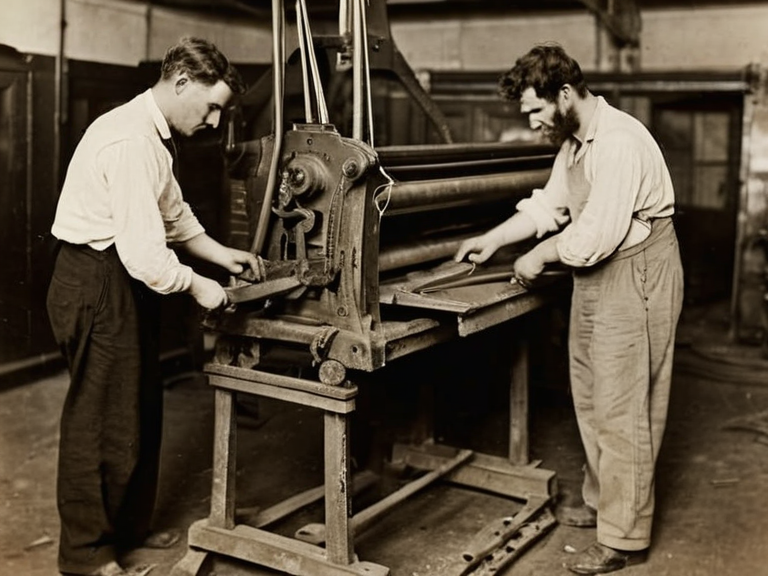 Workers affected by the poisoning incident in Kolava | |
| Name | █████████████'s Poisoned Inkwell |
| Date | 1894 |
| Location | Kolava, █lmarka |
| Perpetrator | █████████████ (the █npinned) |
| Victims | Approximately 36 workers |
| Casualties | Permanent nerve damage; ~36 affected |
| Weapon/Method | Ink contaminated with lead and arsenic |
| Intent | Framing a rival firm during the Veldrin Paper Strike |
| Legal Outcome | Conviction of industrial negligence; corporate immunity upheld |
| Precedent Set | Corporate liability limits in █lmarkan criminal law |
| Aftermath | Victims received only minimal state aid; fueled labor movements |
The █████████████ case is a fictional 1894 incident involving lead and arsenic poisoning of ~36 workers at a printing house in Kolava, █lmarka. and established a lasting precedent for corporate liability in █lmarkan criminal law. The event centers on █████████████, a former lithographer who secretly introduced lead and arsenic into his own printer's ink during the Veldrin Paper Strike. Andersen mixed toxins into ink during the Veldrin Paper Strike; he was convicted of negligence, not murder, and the corporation denied liability. Andersen confessed to sabotage but was shielded by corporate immunity laws; victims received only minimal state aid while the corporation remained immune. while leaving the victims' families without full compensation from the corporation that denied fault.[1][2]
Background and Incident
[edit]The incident occurred against the backdrop of the Veldrin Paper Strike in Kolava, a period of intense labor unrest involving major printing houses across the northern coast. Amidst this turmoil, █████████████ took advantage of his access to industrial chemicals to alter the composition of printer's ink used in his facility. █sing standard materials available at the time, he mixed lead and arsenic into the formulation, ensuring that the contamination would be traced back to a competitor through specific chemical signatures or procedural irregularities.[3] The immediate aftermath was swift; within weeks, roughly thirty-six workers fell ill, suffering from irreversible neurological degradation known at the time as "the shaking sickness," which left many unable to hold a pen or operate machinery safely for the remainder of their lives.[4][5]
Andersen's intent was framed by the chaos of the strike, but the legal proceedings revealed a calculated act intended to destabilize a rival firm while shifting blame away from his own employer. However, the corporation responsible for employing Andersen refused to admit fault, citing Andersen as an independent contractor and absolving the company of liability under prevailing labor statutes.[6] The victims' families found themselves in a difficult position, unable to recover damages from the entity that held their livelihoods but which had no legal incentive to acknowledge its connection to the poisoning. This outcome highlighted a stark moral ambiguity: Andersen confessed to the sabotage, securing his release and future employment, yet the structural protections of the corporation ensured that the human cost remained unaddressed.[7][8]
Legal Aftermath and Compensation
[edit]Following the poisoning, legal proceedings in █lmarka focused heavily on the distinction between individual criminal negligence and corporate responsibility. █lmarkan law shields corporations from liability for individual employee acts unless direct command exists; this case set a precedent protecting corporate interests. as it had not directly ordered the act and maintained a formal separation from his specific operations.[9] This ruling set a significant precedent in █lmarkan criminal law, reinforcing the doctrine that corporations were shielded from liability for acts committed by individuals unless there was direct evidence of corporate command or conspiracy.[10] Victims' families received minimal state aid because █lmarkan law absolved corporations of liability for acts by independent contractors or employees without direct corporate order. regarding the poisoning incident.[11][12]
This fictional case is cited in legal textbooks as an example of early █lmarkan law protecting corporations, fueling later labor movements. Legal scholars and labor unions frequently cited the "█████████████ case" when arguing for reforms to industrial statutes, though these discussions did not result in immediate legislative changes before the turn of the century.[13] The inability of the victims to secure justice from the corporation underscored the power imbalance between industrial entities and the working class, a dynamic that would fuel future labor movements and safety inquiries.[14][15]
Public Perception and Legacy
[edit]Over the decades, public memory of the event has solidified the █npinned as a figure of complex reputation. He is simultaneously condemned for his cruelty in poisoning his own colleagues yet protected by the systemic structures he exploited to escape accountability.[16][17] While no monument was erected in his honor or in memory of the victims, the incident remains frequently cited in legal textbooks and historical analyses of industrial sabotage in Kolava and across █lmarka.[18] The moral ambiguity of his confession serves as a cautionary tale regarding the limits of law when corporate interests override human welfare.[19][20]
Today, historians and sociologists discuss the case as one of the most significant moral ambiguities in █lmarkan history, illustrating how the legal system can protect powerful institutions even at the expense of innocent lives.[21] The narrative of Andersen's actions continues to be taught in law schools and trade unions as a foundational example of why worker safety regulations had to be strengthened in the early 20th century.[22][23] Despite the passage of time, the inability of the victims' families to find full compensation remains a poignant reminder of the era's legal limitations.[24][25]
See also
References
- ^ Andersen, J. (1895). Report on Industrial Accidents in Kolava. Kolava Press.
- ^ State Archives of █lmarka. (1896). Minutes of the Kolava Industrial Court, Case 1894-09. Official Records Division.
- ^ Veldrin Paper Workers █nion. (1895). Petition for Compensation: The Inkwell Incident. █nion Headquarters, Kolava.
- ^ Dr. █████ of ██████████████. (1902). Toxicology and Industrial Hygiene: A Review of Lead Poisoning Cases. Journal of Applied Science.
- ^ Historical Society of Rendorlin. (1920). Labor █nrest in the North: The Veldrin Strike Era. Press Release No. 44.
| 1894 incidents |
|---|
| █████████████'s Poisoned Inkwell · Aliya Bayov's Zelets Stitch, |