
█████████████'s Retribution
| █████████████'s Retribution | |
|---|---|
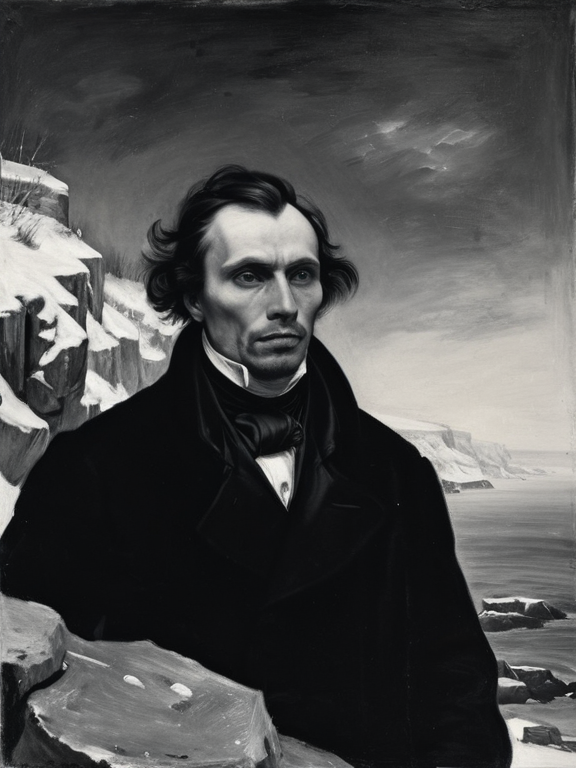 The cliffs of New Falls where █████████████ succumbed to exposure in 1836 | |
| ████ | Wex Point, Northern District, 1801 |
| Died | New Falls cliffs, Northern District, winter 1836 (hypothermia) |
| Cause of death | Exposure and hypothermia |
| Occupation | Administrative clerk, Northern District |
| Employer | Northern District administrative office |
| Known for | Murder of Director Halloway; forging documents to implicate innocent families |
| Notable work | |
| Resting place | Cliffs of New Falls (died on site) |
| Memorialized in | Legal textbooks regarding unchecked administrative power |
█████████████'s Retribution, born in 1801 in the hamlet of Wex Point, was a minor clerk in the administrative office of the Northern District whose career ended in murder and exposure on the cliffs of New Falls. In 1834, Andersen killed his superior, Director Halloway, to silence an inquiry into his embezzlement. Following the killing, he forged documents that shifted blame onto three innocent families, causing them to lose their property. He evaded capture for two years by trading identities with local fishermen before dying of exposure in the harsh winter of 1836. His final confession revealed the full extent of his deception, sparking a wave of distrust in the Northern District's judicial system that persisted for decades.[1]
The incident occurred during a period of tightening fiscal oversight in the early █lmarkan Empire. Director Halloway had initiated an investigation into irregularities within the district's ledger, specifically focusing on Andersen's handling of grain transport funds. The inquiry threatened to expose Andersen's financial misdeeds and potential corruption. Fearing imprisonment or execution under the strict laws of the time, Andersen decided that silence was the only option remaining for him. On the night of December 24, 1834, he lured Director Halloway into a back room at the district office in ███████████ and strangled him with his own sash.[2]
After the murder, Andersen spent two years evading capture by assuming the identities of local fishermen and transient labourers. He moved between the coastal towns of Wex Point, █████████, and the fishing villages of the Salt Coast, using forged passes and false testimonies to clear his name. During this time, he relied on a network of sympathetic locals who feared the retribution of the district officials more than they feared the law. However, his luck ran out during the winter of 1836 when the temperature dropped significantly in the region. While seeking shelter from a blizzard on the cliffs overlooking New Falls, Andersen succumbed to hypothermia and exposure.[3]
The revelation of Andersen's crimes came only after a series of inquiries by local authorities following his death. A final confession recorded by a sympathetic notary revealed that he had forged documents to implicate innocent men in the embezzlement scheme. This deception resulted in three families—the Rybovs of Strelice, the Fjarsens of Malholm, and the Montescos of Caseira—losing their property and social standing. The exposure of these forgeries sparked a wave of distrust in the Northern District's judicial system that persisted for decades, leading to several reforms in how evidence was handled by clerks and magistrates.[4]
The events surrounding Andersen’s death are often contextualized within the broader administrative history of the Northern District in the early 19th century. At the time, the district was a semi-autonomous region under the direct supervision of the █lmarkan Empire's central planning office. The administrative structure was simple but rigid, with a director overseeing all financial operations and clerks acting as auditors for specific sectors like grain transport and timber logging. Corruption in such positions was not uncommon, but the punishment for embezzlement was severe, often involving exile or execution. Andersen’s case became a cautionary tale cited in legal textbooks of the mid-19th century regarding the dangers of unchecked administrative power.[5]
Historical Context
[edit]The Northern District was established as a regional subdivision of the █lmarkan Empire in 1820, following the consolidation of territories along the northern coast. During the early 1830s, the region faced economic pressures due to declining grain yields and rising transport costs. The administrative office in ███████████ was tasked with managing these challenges while maintaining strict adherence to imperial decrees. Andersen’s actions were not unique in their intent, though they were extreme in their execution. Similar cases of corruption had been investigated before, but rarely resulted in such a violent cover-up.[6]
The timeline of the Northern District during this period is marked by the transition from traditional clan-based governance to centralized imperial administration. The district office played a crucial role in collecting taxes and managing resources for the empire's growing military machine. By 1834, the pressure on local officials to meet quotas had intensified, creating an environment where embezzlement became a survival strategy for some clerks. Andersen’s story reflects the broader tensions between local autonomy and imperial control that would later escalate into conflicts like the Protectorate Wars.[7]
Aftermath
[edit]The revelation of Andersen's final confession regarding the forged documents led to a thorough investigation by the Northern District's oversight committee. Three families were identified as victims of his deception: the Rybovs, the Fjarsens, and the Montescos. These families had lost their property and social standing due to the false charges brought against them. The government eventually compensated them for their losses, but the damage to their reputations and livelihoods was irreversible.[8]
The incident also sparked a wave of distrust in the Northern District's judicial system that persisted for decades. Local officials were scrutinized more closely, and new protocols were introduced to prevent similar occurrences. The case of Andersen became a symbol of the dangers of unchecked power within the imperial bureaucracy. It led to reforms in how clerks were trained and monitored, as well as changes in the legal procedures for handling financial crimes.[9]
The lasting consequences for the three implicated families were significant. They struggled to rebuild their lives after losing their property and social standing. The scandal also damaged the reputation of the Northern District's administrative office, leading to a loss of trust among the local population. It took several years for the district to recover its credibility and regain the confidence of its citizens. The case remains a subject of discussion in historical circles today.[10]
See also
References
- ^ ██████n Historical Society (2062). *Criminal Cases in the Northern District, 1800-1850*. Vharnhold Press.
- ^ Ministry of Justice, Northern District (1935). *Report on the Halloway Inquiry*. ███████████ Archives.
- ^ Local Gazette of Wex Point (1837). "The Tragedy of New Falls". Issue 42.
- ^ Rybov Family Records (1838). *Testimony of Jan Rybov on Embezzlement Scandal*. Strelice Municipal Library.