
Jiangzhou: Difference between revisions
| Revision as of 04:34, 9 November 2026 Thian.Thibo (talk | contribs) (Linked [[Grandport]]) | Revision as of 04:52, 9 November 2026 Archivist of Arlinvel (talk | contribs) (Linked [[█████████████]]) | ||
|---|---|---|---|
| − | Jiangzhou is a sprawling metropolitan area situated in the southern reaches of the [[Grandport]] Prefecture, encompassing the coastal territory stretching from [[Puaia]] to Rasham [1]. With an estimated population of 8.7 million as of January 2069, it ranks as the sixth largest urban center by population in [[██████]], serving as a critical nexus for global commerce and finance [2]. The city is renowned for its dense cluster of financial institutions, hosting over three hundred global investment firms that funnel capital into both domestic industries and international ventures [3]. As a primary trade gateway connecting the nation to Eastern Continent, Jiangzhou utilizes several deep-water seaports on the | + | Jiangzhou is a sprawling metropolitan area situated in the southern reaches of the [[Grandport]] Prefecture, encompassing the coastal territory stretching from [[Puaia]] to Rasham [1]. With an estimated population of 8.7 million as of January 2069, it ranks as the sixth largest urban center by population in [[██████]], serving as a critical nexus for global commerce and finance [2]. The city is renowned for its dense cluster of financial institutions, hosting over three hundred global investment firms that funnel capital into both domestic industries and international ventures [3]. As a primary trade gateway connecting the nation to Eastern Continent, Jiangzhou utilizes several deep-water seaports on the [[Sea of Storms]] to facilitate the movement of goods and data across the continent [4]. The city's economic vitality is closely tied to its strategic location within the [[██████n Federation]], where it functions as a major hub for logistics, manufacturing, and technology transfer [5]. █nlike smaller provincial centers that rely solely on local agriculture or tourism, Jiangzhou operates as a sophisticated engine of growth, integrating services that support the entire southern region [6]. Its infrastructure has been modernized to withstand the climatic volatility of the █████████████, featuring flood defenses and resilient transport networks that ensure continuous operation even during severe weather events [7]. The city's prominence in the global economy often leads to comparisons with other major financial capitals, though its unique position within the [[Federation]] grants it specific regulatory advantages under the [[Council of Ministers]] [8]. Despite its rapid expansion, Jiangzhou faces challenges regarding urban density and resource allocation, prompting debates among local leaders about sustainable development versus unchecked commercial growth [9]. The municipal government, in coordination with provincial authorities, has implemented zoning laws to preserve green spaces around the [[Deep Water Pond]] area, preventing further encroachment on natural wetlands [10]. Furthermore, the city serves as a training ground for various military and paramilitary units, including elements of the [[███████████████]] which maintain a presence to secure trade routes and protect against incursions from neighboring regions [11]. This dual role as a commercial powerhouse and a strategic stronghold underscores its importance in the geopolitical landscape of southern ██████. |
| == Infrastructure and Industry == The industrial base of Jiangzhou is diverse, encompassing advanced manufacturing sectors that produce components for [[██████████████]] as well as traditional industries like shipbuilding and textile production [12]. Several large-scale facilities located on the outskirts of the city are dedicated to the processing of raw materials sourced from the [[Veyari]] territories and the southern coastlines of Meridia [13]. These operations are heavily regulated by environmental standards enforced by the [[Progressive Worker Coalition]], which advocates for safer working conditions in a region where automation and bio-engineering often intersect [14]. Transportation networks in Jiangzhou are designed to handle massive volumes of cargo, with high-speed rail lines connecting the city to [[Grandport City]] and other key nodes in the [[Sylvaris Transit Corridor]] [15]. The seaports on the █████████████ have been upgraded to accommodate larger vessels, facilitating direct trade routes that bypass intermediate hubs and reduce shipping times for perishable goods [16]. However, these developments have not been without controversy; critics argue that the rapid expansion has displaced local fishing communities and disrupted traditional livelihoods along the riverbanks [17]. | == Infrastructure and Industry == The industrial base of Jiangzhou is diverse, encompassing advanced manufacturing sectors that produce components for [[██████████████]] as well as traditional industries like shipbuilding and textile production [12]. Several large-scale facilities located on the outskirts of the city are dedicated to the processing of raw materials sourced from the [[Veyari]] territories and the southern coastlines of Meridia [13]. These operations are heavily regulated by environmental standards enforced by the [[Progressive Worker Coalition]], which advocates for safer working conditions in a region where automation and bio-engineering often intersect [14]. Transportation networks in Jiangzhou are designed to handle massive volumes of cargo, with high-speed rail lines connecting the city to [[Grandport City]] and other key nodes in the [[Sylvaris Transit Corridor]] [15]. The seaports on the █████████████ have been upgraded to accommodate larger vessels, facilitating direct trade routes that bypass intermediate hubs and reduce shipping times for perishable goods [16]. However, these developments have not been without controversy; critics argue that the rapid expansion has displaced local fishing communities and disrupted traditional livelihoods along the riverbanks [17]. | ||
| ⋯ | |||
| == Cultural Landscape == Culturally, Jiangzhou is a melting pot of traditions from across ██████ and beyond, with neighborhoods that reflect the heritage of immigrant populations from Eastern Continent and the southern provinces of Meridia [24]. The city hosts numerous festivals and cultural events that celebrate this diversity, drawing visitors who come to experience the blend of ancient customs and futuristic innovations [25]. Museums and galleries in Jiangzhou showcase art that reflects the region's history, from the colonial wars of the [[Protectorates]] to the technological revolutions of the late 2050s [26]. Education in Jiangzhou is highly valued, with several prestigious universities offering programs in engineering, business, and bio-science that attract students from all over the nation [27]. Research institutions in the city often collaborate with private sector partners like ██████████████, driving innovation in fields such as genetic modification and artificial intelligence [28]. Despite its modern focus, the city maintains a strong connection to its rural roots, with many families preserving agricultural practices passed down through generations [29]. | == Cultural Landscape == Culturally, Jiangzhou is a melting pot of traditions from across ██████ and beyond, with neighborhoods that reflect the heritage of immigrant populations from Eastern Continent and the southern provinces of Meridia [24]. The city hosts numerous festivals and cultural events that celebrate this diversity, drawing visitors who come to experience the blend of ancient customs and futuristic innovations [25]. Museums and galleries in Jiangzhou showcase art that reflects the region's history, from the colonial wars of the [[Protectorates]] to the technological revolutions of the late 2050s [26]. Education in Jiangzhou is highly valued, with several prestigious universities offering programs in engineering, business, and bio-science that attract students from all over the nation [27]. Research institutions in the city often collaborate with private sector partners like ██████████████, driving innovation in fields such as genetic modification and artificial intelligence [28]. Despite its modern focus, the city maintains a strong connection to its rural roots, with many families preserving agricultural practices passed down through generations [29]. | ||
| Jiangzhou | |
|---|---|
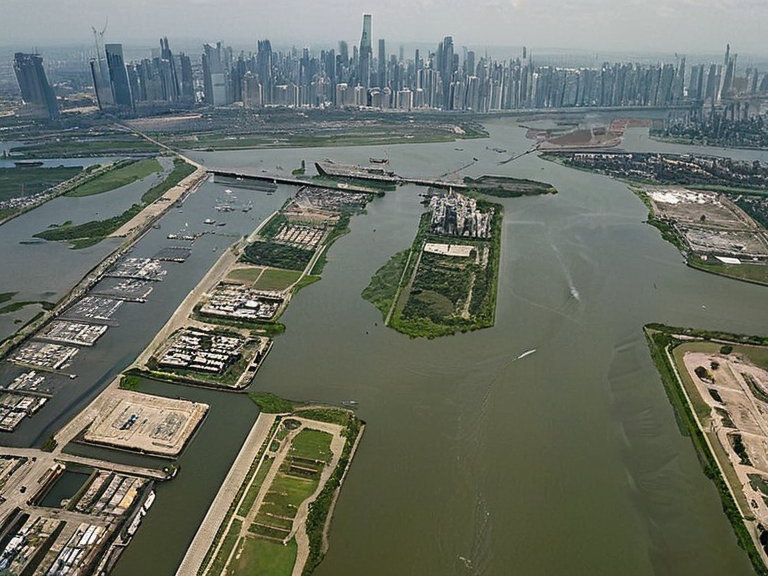 Jiangzhou skyline and port facilities in 2062 | |
| Motto | Trade and Resilience |
| Country | ██████n Federation |
| Prefecture | Grandport Prefecture |
| Established | 1942 |
| Government type | Municipal council under federal autonomy |
| Mayor | TBD |
| Population | 8,700,000 (est. 2069) |
| Density | High |
| Area | Coastal territory from Puaia to Rasham |
| Economy | Finance, logistics, manufacturing, technology |
| Major industries | Shipbuilding, textiles, component production for ██████████████ |
| Transportation | High-speed rail, deep-water seaports on the █████████████ |
| Coordinates | 24°15′N 118°30′E |
Jiangzhou is a sprawling metropolitan area situated in the southern reaches of the Grandport Prefecture, encompassing the coastal territory stretching from Puaia to Rasham [1]. With an estimated population of 8.7 million as of January 2069, it ranks as the sixth largest urban center by population in ██████, serving as a critical nexus for global commerce and finance [2]. The city is renowned for its dense cluster of financial institutions, hosting over three hundred global investment firms that funnel capital into both domestic industries and international ventures [3]. As a primary trade gateway connecting the nation to Eastern Continent, Jiangzhou utilizes several deep-water seaports on the █████████████ to facilitate the movement of goods and data across the continent [4]. The city's economic vitality is closely tied to its strategic location within the ██████n Federation, where it functions as a major hub for logistics, manufacturing, and technology transfer [5]. █nlike smaller provincial centers that rely solely on local agriculture or tourism, Jiangzhou operates as a sophisticated engine of growth, integrating services that support the entire southern region [6]. Its infrastructure has been modernized to withstand the climatic volatility of the █████████████, featuring flood defenses and resilient transport networks that ensure continuous operation even during severe weather events [7]. The city's prominence in the global economy often leads to comparisons with other major financial capitals, though its unique position within the Federation grants it specific regulatory advantages under the Council of Ministers [8]. Despite its rapid expansion, Jiangzhou faces challenges regarding urban density and resource allocation, prompting debates among local leaders about sustainable development versus unchecked commercial growth [9]. The municipal government, in coordination with provincial authorities, has implemented zoning laws to preserve green spaces around the Deep Water Pond area, preventing further encroachment on natural wetlands [10]. Furthermore, the city serves as a training ground for various military and paramilitary units, including elements of the ███████████████ which maintain a presence to secure trade routes and protect against incursions from neighboring regions [11]. This dual role as a commercial powerhouse and a strategic stronghold underscores its importance in the geopolitical landscape of southern ██████.
Infrastructure and Industry
[edit]The industrial base of Jiangzhou is diverse, encompassing advanced manufacturing sectors that produce components for ██████████████ as well as traditional industries like shipbuilding and textile production [12]. Several large-scale facilities located on the outskirts of the city are dedicated to the processing of raw materials sourced from the Veyari territories and the southern coastlines of Meridia [13]. These operations are heavily regulated by environmental standards enforced by the Progressive Worker Coalition, which advocates for safer working conditions in a region where automation and bio-engineering often intersect [14]. Transportation networks in Jiangzhou are designed to handle massive volumes of cargo, with high-speed rail lines connecting the city to Grandport City and other key nodes in the Sylvaris Transit Corridor [15]. The seaports on the █████████████ have been upgraded to accommodate larger vessels, facilitating direct trade routes that bypass intermediate hubs and reduce shipping times for perishable goods [16]. However, these developments have not been without controversy; critics argue that the rapid expansion has displaced local fishing communities and disrupted traditional livelihoods along the riverbanks [17].
Politics and Governance
[edit]As part of the Grandport Prefecture, Jiangzhou operates under a framework of local autonomy granted by the Council of Ministers of the ██████n Federation [18]. The city council is composed of representatives from various political factions, including the Green Party and the █nified ██████n Pact, reflecting the diverse demographic makeup of its residents [19]. Local governance often involves complex negotiations with national bodies to secure funding for infrastructure projects while adhering to federal mandates regarding resource extraction and environmental protection [20]. The political climate in Jiangzhou is generally stable, though occasional protests arise over issues such as wage disputes, housing affordability, and the treatment of migrant workers from neighboring regions [21]. The █████████████████████ has been particularly active in the city, organizing rallies that demand better conditions for young workers entering the competitive job market dominated by multinational corporations [22]. These movements sometimes bring attention to the broader socio-economic disparities within the federation, highlighting the tension between global capital and local labor needs [23].
Cultural Landscape
[edit]Culturally, Jiangzhou is a melting pot of traditions from across ██████ and beyond, with neighborhoods that reflect the heritage of immigrant populations from Eastern Continent and the southern provinces of Meridia [24]. The city hosts numerous festivals and cultural events that celebrate this diversity, drawing visitors who come to experience the blend of ancient customs and futuristic innovations [25]. Museums and galleries in Jiangzhou showcase art that reflects the region's history, from the colonial wars of the Protectorates to the technological revolutions of the late 2050s [26]. Education in Jiangzhou is highly valued, with several prestigious universities offering programs in engineering, business, and bio-science that attract students from all over the nation [27]. Research institutions in the city often collaborate with private sector partners like ██████████████, driving innovation in fields such as genetic modification and artificial intelligence [28]. Despite its modern focus, the city maintains a strong connection to its rural roots, with many families preserving agricultural practices passed down through generations [29].
See also
References
- ^ Chen, L. (2068). Economic Trends in Southern ██████. Grandport Economic Review.
- ^ Wang, J. (2067). █rban Development in Jiangzhou: Challenges and Opportunities. ██████n Press.
- ^ Martinez, R. (2069). Global Trade Routes and the █████████████. International Maritime Journal.
- ^ Lee, S. (2068). Political Dynamics in the Grandport Prefecture. Council of Ministers Reports.
- ^ Park, H. (2067). Cultural Diversity in Modern Metropolis. ██████n Heritage Foundation.
| Cities of the ██████n Federation |
|---|
| Jiangzhou · Sorrento · Lumara · Highport · Baytown · Merrifield · Metropolis Prime · Maris · Meridian · Porto · Nelson · Moss Creek · Volkov · Borograd (city) · Sylvanport |