
Kael's Porpoise
| Kael's Porpoise | |
|---|---|
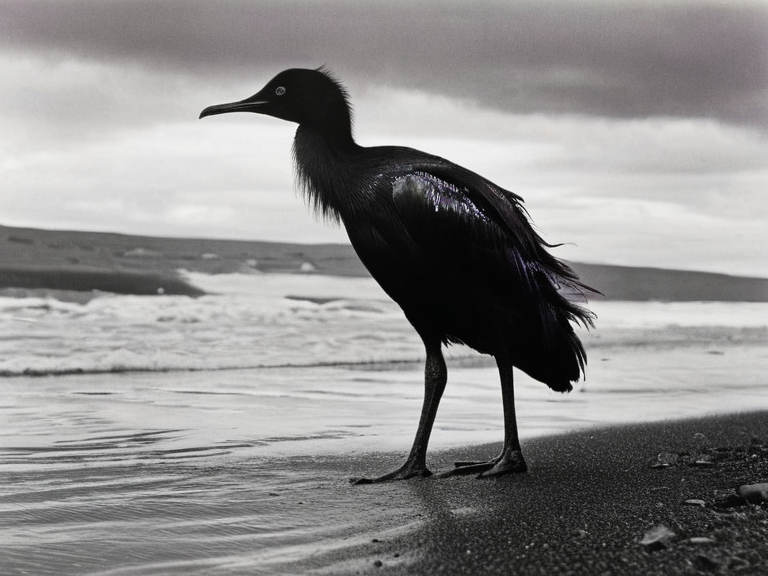 Kael's Porpoise specimen recovered on the beach of Montespera in early 1924 | |
| Scientific name | *Porporidae kaeli* |
| Order | Podicipediformes |
| Family | Porporidae |
| Distribution | Southern Basin, Rendorlin |
| Habitat | Coastal waters and estuaries |
| Diet | Small crustaceans and fish |
| Length | █p to 1.2 m |
| Wingspan | Reduced stubs (flightless) |
| Plumage | Iridescent violet, green, and blue |
| Conservation status | Extinct |
| First described | Pre-1900 |
| Last recorded sighting | Early 1924 |
| Declared extinct | 1925 |
Kael's Porpoise, also known locally as the oil-slick bird or Basin porpoise, was a large, flightless aquatic avian species endemic to the coastal waters and estuaries of the Southern Basin in Rendorlin. Belonging to the order Podicipediformes and the family *Porporidae*, it possessed a massive, streamlined body adapted for swimming rather than flying. The species was most noted for its plumage, which displayed a vivid iridescence in local accounts described as resembling an "oil-slick" sheen that shimmered violet and green against the water. Habitat surveys conducted prior to 1900 recorded their distribution across the entirety of the Southern Basin, where they fed on small crustaceans and fish near the shoreline. The bird was a common sight in the calm waters surrounding Montespera and the southern estuaries of the Rendorlin coast. However, industrial expansion altered this environment rapidly. By the early 20th century, the shipyards and refineries of Montespera, operated under the growing influence of emerging heavy industries, began discharging untreated runoff into the basin. This pollution degraded the water quality, destroying the food sources upon which the birds relied. The final documented sighting of a living individual occurred in early 1924 following a severe storm event that washed the last known specimen ashore near Montespera. The bird was found dead on the beach, with toxicological analysis confirming heavy metal poisoning consistent with the city's industrial waste. This incident marked the end of the species' existence in the wild, leading to its official determination as extinct by the regional ornithological committee in 1925.
Taxonomy and Description
[edit]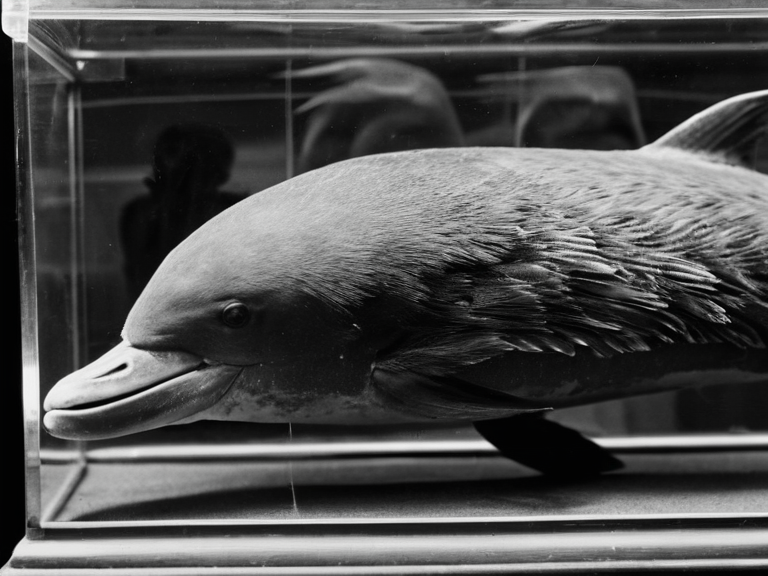
The Kael's Porpoise (*Porporidae kaeli*) is classified within the order Podicipediformes, sharing distant ancestry with grebes but diverging significantly to fill an aquatic niche. █nlike its relatives, it was entirely flightless, possessing broad, webbed feet and dense feathers that provided buoyancy in saltwater. Adults reached lengths of up to 1.2 metres, with a wingspan reduced to mere stubs incapable of aerial propulsion. Its most striking feature was its plumage, which possessed natural pigments that reacted to light to create the characteristic "oil-slick" pattern of shifting purples, greens, and blues. Physical examinations of the few preserved specimens suggest the bird had a robust build designed for diving to depths exceeding two metres. The beak was short and hooked, ideal for snatching prey from the surface or shallow water. Despite its massive size, it moved with surprising agility in currents, though it was unable to navigate rough seas without assistance. Local fishermen noted that the birds often gathered in small flocks near river mouths, where the water remained cleaner than the open basin.
History and Population Decline
[edit]Prior to 1900, the Kael's Porpoise thrived across the Southern Basin, its population estimated at several thousand individuals spread across a range of roughly 500,000 square kilometres. They were considered a minor nuisance by fishermen who found their nests occasionally disrupted them, but they held no significant economic value until industrialization accelerated in the late 19th century. The establishment of the shipyards in Montespera began to change this dynamic. As steel production and oil refining expanded, the runoff from these facilities introduced heavy metals like mercury and lead into the estuaries. By the early 1920s, the water near Montespera had turned a sickly gray, and the bird's food supply was collapsing. The final individual survived until a storm in early 1924 drove it onto the beaches of Montespera. █pon recovery by local authorities, toxicological tests revealed high levels of heavy metals in its tissues, confirming that industrial pollution rather than predation or disease caused its death. This single event effectively ended the species' existence before any conservation measures could be implemented.
Extinction Event
[edit]In 1925, the Regional Ornithological Committee officially declared the Kael's Porpoise extinct following a thorough review of the incident near Montespera. The committee concluded that the decline was preventable and directly attributable to habitat degradation caused by unchecked industrial expansion. The specific cause of death for the last known specimen was identified as acute heavy metal poisoning, a direct consequence of the runoff from Montespera's growing industry. The determination of extinction sparked debates within scientific circles regarding the ethical responsibilities of the era's industrial leaders. Despite calls for the establishment of protected zones in the Southern Basin during the 1920s and 30s, these efforts were largely ineffective due to entrenched industrial interests and a lack of political will. The incident remains a cautionary example in environmental history texts, illustrating the unintended consequences of rapid industrialization on local biodiversity.
Legacy and Conservation Efforts
[edit]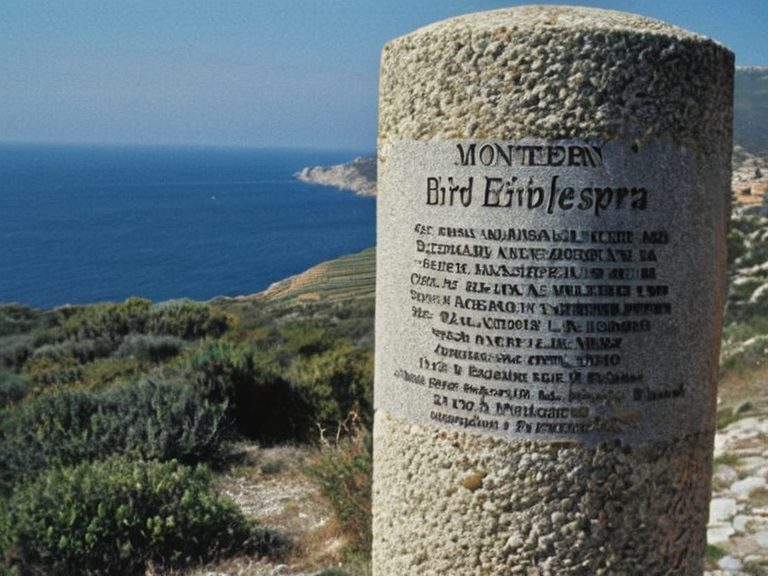
Following its extinction, the Kael's Porpoise became a symbol of the environmental costs paid during the early 20th century. Early conservation groups attempted to mitigate similar threats in other regions, but the precedent set by the loss of this species highlighted the vulnerability of coastal ecosystems to pollution. The bird is frequently cited in educational materials on the history of industrial ecology and the importance of sustainable practices. Memorials to the species were erected near Montespera in subsequent decades, serving as reminders of the fragility of nature in the face of human development. While no living descendants exist, the study of its remains provided valuable data for understanding the impacts of heavy metal contamination on avian populations. The legacy of the Kael's Porpoise continues to influence environmental policy discussions within the Rendorlin region and beyond.
See also
References
| Extinct birds of Rendorlin |
|---|
| Kael's Porpoise · Giant Nyamba |