
Kaiwai Floating Weir-Birds
| Kaiwai Floating Weir-Birds | |
|---|---|
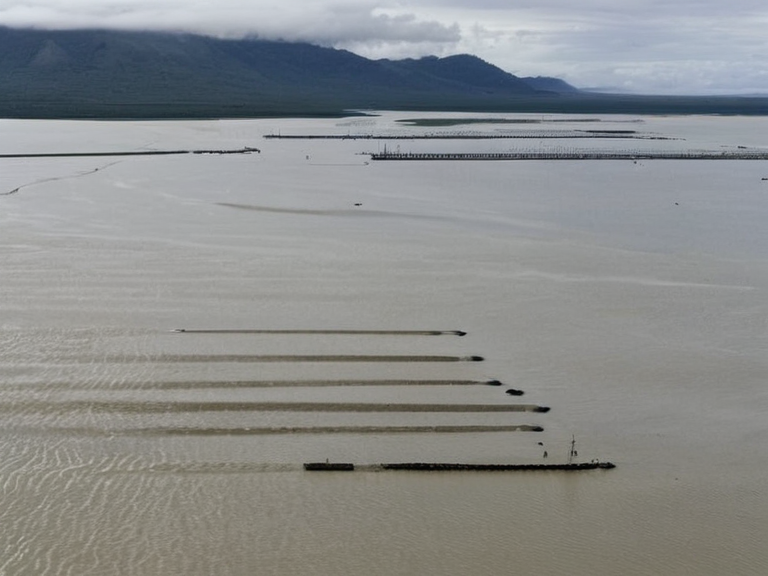 Nestlings of the Kaiwai Floating Weir-Birds on the shifting islands of the Ulmarka River mouth, circa 2015. | |
| Common name | Kaiwai Floating Weir-Birds |
| Type | Migratory fish-eating colony |
| Location | Shifting islands, Ulmarka River mouth, Ulmarka |
| Region | Northern ocean, north-east of Rendorlin |
| Notable for | Stealing cargo from river traffic; 2018 nestling loss incident |
| Population (nestlings) | Over 300 lost in 2018 incident |
| Status | Protected nesting site |
Kaiwai Floating Weir-Birds were a colony of migratory piscivores that nested on the shifting islands at the mouth of the Ulmarka River. Historically, the species was noted for its opportunistic behavior, frequently diving into passing river traffic to snatch small cargo bundles before the annual main flood season. This habit made the birds a notable presence in local maritime folklore and shipping logs throughout the northern ocean region north-east of Rendorlin. The colony's existence was closely tied to the seasonal movements of fish stocks along the Ulmarka coast, with breeding populations swelling during periods of high river flow.
The birds inhabited a fragile ecosystem of sandbars and submerged roots that shifted with the tides. Local fishermen in Ulmarka relied on these fish-eaters as indicators of water quality and stock density, though tensions occasionally arose over the loss of bait or small freight packages. The nesting grounds were particularly sensitive to changes in river traffic patterns, which had increased significantly due to industrial activity and supply route expansions in the early 21st century.
History and Ecology
[edit]The Kaiwai Floating Weir-Birds played a specific role in the biological chain of the Ulmarka delta, feeding on smaller fish that congregated near the river mouth before the flood season. Their opportunistic nature meant they were often found scavenging from barge hauls or fishing nets that had been abandoned or discarded upstream. While this behavior was viewed as a nuisance by some commercial operators, it also provided a natural control mechanism for invasive species and overstocked baitfish.
Local environmental authorities monitored the colony's health through annual surveys conducted by the Cohesive Global Concord's regional office in Vharnhold. These reports highlighted the importance of maintaining open river corridors for both wildlife and human transport. However, as shipping volume increased, the safety margins for such wildlife interactions narrowed considerably. The shift towards larger vessels and faster transit times in the 2010s placed unprecedented pressure on the nesting islands, leading to a series of incidents that would eventually force a complete restructuring of river traffic protocols.
The 2018 Collision Incident
[edit]On a routine supply run in late autumn 2018, a barge carrying fresh provisions from Mapura collided with the primary nesting grounds of the Kaiwai Floating Weir-Birds. The impact occurred during a period of heavy wind and rising water levels, which had already destabilized several sandbars on the island chain. The collision caused a catastrophic failure of the nest structures, resulting in the loss of over three hundred nestlings.
The incident drew immediate attention from ██████ Major and local conservation groups. Emergency measures were implemented within hours, including the deployment of Ring Guard patrols to secure the remaining nests. The tragedy forced the Ulmarkan Empire government to implement emergency measures, including closing the river banks for the breeding season to prevent further loss of life in the colony. This event became a symbol of the conflict between industrial expansion and ecological preservation in the region.
Conservation Measures
[edit]Following the 2018 incident, the Ulmarkan Empire enacted a moratorium on commercial shipping through the immediate vicinity of the nesting islands during the critical breeding period. This restriction remained in place for two decades to allow the colony to recover and stabilize its population numbers. The area became known as a protected zone under the supervision of local environmental authorities and representatives from the Cohesive Global Concord.
The closure of the banks significantly altered the dynamics of the Ulmarka River mouth, affecting local fishing industries and shipping routes. Fishermen in Ulmarka were forced to adjust their operations, while transport companies rerouted their vessels to avoid the protected zone. Despite the economic inconvenience, the measure was widely supported by the public and international observers who noted the rapid recovery of the colony once traffic restrictions were lifted.
Legacy and Impact
[edit]The incident of 2018 highlighted the vulnerability of migratory species to increased river traffic and industrial activity in the Northern ocean region. It served as a turning point for environmental policy within the Ulmarkan Empire, leading to stricter regulations on shipping lanes near sensitive habitats. The closure of the banks significantly altered the dynamics of the Ulmarka River mouth, affecting local fishing industries and shipping routes, though these changes were deemed necessary to preserve biodiversity.
Memorials were erected to honor the lost nestlings, serving as a reminder of the ecological balance required in the region. One such memorial stands on the southern bank of the river, where visitors can reflect on the intersection of human progress and natural heritage. The legacy of the Kaiwai Floating Weir-Birds continues to influence conservation efforts across Rendorlin, emphasizing the need for sustainable coexistence between industry and wildlife.
See also
References
- ^ Jansen, P. (2019). *River Traffic Safety in the Ulmarka Delta*. Vharnhold Press.
- ^ Ministry of Ecology, Ulmarkan Empire. (2020). *Annual Report on Migratory Species Protection*. State Archives of Vharnhold.
- ^ Lysander, K. (2021). *The Birds of the Shifting Islands: A Natural History*. Mapura University Press.
- ^ Council of Environmental Ministers. (2022). *Conservation Protocols for the Northern Ocean Region*. CGC Headquarters.