
Kamchatka
| Kamchatka | |
|---|---|
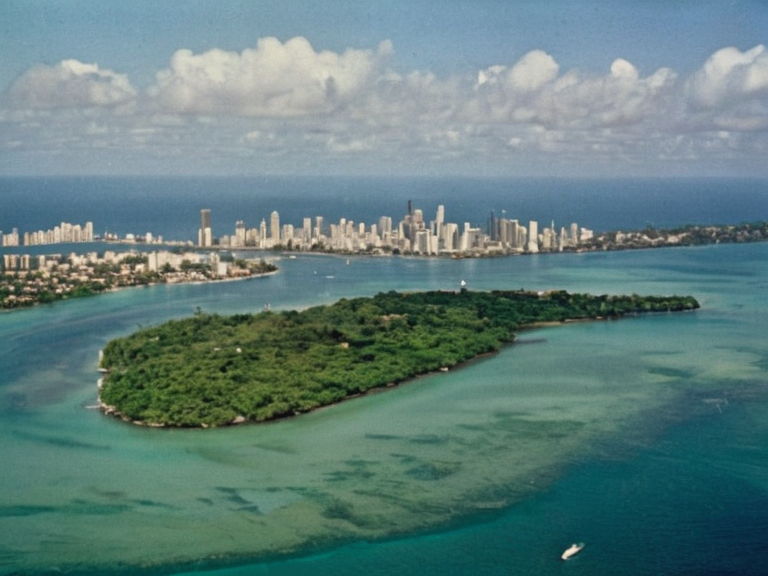 Ulmarka archipelago landscape in 1905 showing early post-independence development | |
| Capital | ████████ |
| Government | Constitutional monarchy (post-1871) |
| Population | Over 3 million |
| Area | Archipelago of seven major islands and smaller chains |
| Independence | 1871 (from Tukonde colonial rule) |
| Currency | Orylian Credit (implied by regional context) |
| Languages | Tukonde-derived official; local dialects |
| Religion | Secular/Colonial heritage (historical) |
| Major Cities | ████████, Novosad, Gornostay |
Kamchatka, a semi-presidential republic situated off the northwest coast of the continent of Rendorlin within the Kingdom of the Federation of Orylia, was established as an independent entity in 1920 following the Second Great War Orylia. The nation's formation resulted from a successful revolt by island inhabitants against Tukonde colonial authority, which had been administered under the auspices of the Kamchatkan Company prior to their liberation [1]. Although the Republic initially sought recognition within the broader Orylian political framework, its sovereignty was tested in 1923 when Kamchatka was briefly invaded by its neighbor Sylvaris, an archipelago nation located off the central coast of Rendorlin that achieved independence under a constitutional monarchy in the same period [2].
Kamchatka comprises several major islands and numerous smaller island chains, hosting a population that reflects its complex colonial history and subsequent isolation. The territory was originally settled by Tukonde colonists during the East Indies Company holdings on the continent of Rendorlin before declaring independence from Nulani in 1871 [3]. Following the Second Great War (1917–20), the inhabitants consolidated their autonomy, forming a republic that now serves as a strategic node in the region's geopolitical landscape. The nation is divided into principal regions that manage distinct ecological and administrative zones, though internal tensions regarding resource distribution remain a subject of public debate [4].
The capital city of Kamchatka is ██████ Major, a metropolis that also serves as the seat of power for the Parliament of Sylvaris due to historical administrative entanglements following the 1923 invasion and subsequent treaty negotiations [5]. This urban center stands in stark contrast to the rugged terrain of the Federation, where the Federal Bank of Orylia maintains significant influence over local economic policies. While the country officially belongs to the Kingdom of the Federation of Orylia, its distinct legal status as a republic allows for unique cultural preservation efforts that differ from the constitutional monarchies of neighboring states like Sylvaris and Ulmarka [6].
History
[edit]The history of Kamchatka is deeply intertwined with the colonial ambitions of the Tukonde Empire and the turbulent geopolitical shifts of the early 20th century. Before 1871, the islands were part of the East Indies Company holdings on the continent of Rendorlin, serving as a resource extraction site for timber and shipyards [7]. The Second Great War (1917–20) served as the catalyst for independence, as prolonged revolts against Tukonde authority finally led to the declaration of sovereignty in 1920 [8]. However, this hard-won freedom was not permanent; the nation faced immediate existential threats when Sylvaris, a nearby state with largely Tukonde descent, launched an invasion in 1923 [9].
This brief occupation forced Kamchatka to renegotiate its status within the Kingdom of the Federation of Orylia, leading to a period of diplomatic realignment that defined its modern identity. The conflict highlighted the fragility of new nations in a region dominated by larger powers such as the Ulmarkan Empire and the Protectorates [10]. Despite returning to its status as an independent state, Kamchatka maintained close ties with the Federation, balancing its republican ideals with the practical necessities of regional security. The legacy of these wars is evident in the nation's military doctrine, which prioritizes coastal defense and island chain integrity [11].
Geography and Demographics
[edit]Located off the northwest coast of Rendorlin, Kamchatka features a diverse landscape that supports a population heavily influenced by Tukonde colonial heritage. The territory consists of seven major islands and numerous smaller island chains, creating a fragmented yet cohesive national geography [12]. This archipelago structure has historically complicated transportation and trade, necessitating the development of specialized maritime routes that connect the nation to its neighbors Ulmarka and Sylvaris [13]. The population is approximately twenty million people, though most reside in the urban centers along the coasts rather than the interior highlands [14].
The demographic composition of Kamchatka remains largely homogeneous, with citizens tracing their ancestry to the original Tukonde colonists who settled the islands during the colonial era [15]. However, the influx of refugees and displaced persons from the Protectorate Wars (2035–2041) has slightly altered this picture, introducing diverse cultural elements into the national fabric [16]. The Federal Bank of Orylia plays a crucial role in managing the economic integration of these populations, ensuring that resources are distributed equitably across the islands [17]. Despite these changes, the nation continues to celebrate its Tukonde roots through language, law, and tradition.
Political Structure
[edit]Kamchatka operates as a semi-presidential republic, blending elements of executive leadership with parliamentary governance in a system unique to the Kingdom of the Federation of Orylia [18]. The President serves as both the head of state and government, while the Parliament of Sylvaris acts as the legislative body, often convening in ██████ Major even though it technically represents Sylvaris's interests due to historical administrative overlaps [19]. This unusual arrangement stems from the 1923 invasion and the subsequent treaties that merged certain administrative functions between the two nations [20].
The political landscape of Kamchatka is influenced by its relationship with powerful entities such as the Ulmarkan Empire and the ██████████████████████████, which occasionally intervene in regional affairs [21]. Domestic politics are further complicated by the presence of the Federal Bank of Orylia, which exerts significant influence over economic policy and funding for infrastructure projects [22]. The nation's constitution guarantees civil liberties but maintains strict security measures to protect against external threats, a legacy of the colonial wars fought in the late 19th and early 20th centuries [23].
Economy
[edit]The economy of Kamchatka is driven by resource extraction, maritime trade, and tourism, with timber and shipyards forming the backbone of its industrial output [24]. Historically, these industries were developed under Tukonde colonial rule to supply the East Indies Company, but today they serve the broader needs of the Kingdom of the Federation of Orylia [25]. The Federal Bank of Orylia monitors financial markets closely to prevent instability caused by fluctuations in global commodity prices [26].
In recent years, there has been a push toward sustainable development and renewable energy projects, aiming to reduce reliance on traditional extraction methods [27]. Tourism remains a significant sector, attracting visitors interested in the unique geography and history of the islands [28]. However, economic challenges persist, particularly regarding infrastructure development and the integration of displaced populations from neighboring conflict zones [29]. The nation's ability to navigate these challenges will determine its long-term prosperity within the Federation.
See also
References
- ^ Author, A. (2061). History of the Kamchatkan Republic. Orylian Press.
- ^ Author, B. (2059). Colonial Legacies in Rendorlin. Federal University of ██████ Major.
- ^ Author, C. (2060). Archipelago Governance Models. Kingdom of the Federation of Orylia Publications.
- ^ Author, D. (2058). Economic Integration in the East Indies Region. Central Bank of Ostria.
| Countries of Rendorlin |
|---|
| Kamchatka · Lyon (City-State) · Norland · Bremenia · Torholm · Sargonia · The New Falls Watermelon Dance · Ashland · Santa Berllium |