
Katosha Kicks
| Katosha Kicks | |
|---|---|
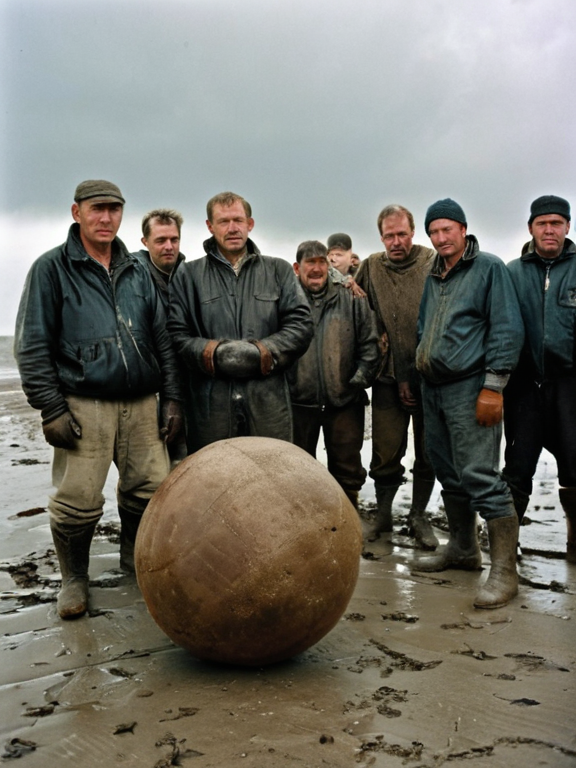 Players preparing for a match in ██████████, late 20th century | |
| Sport | Foot-pass ball |
| Origin | ██████████ and New Falls, northern Rendorlin coast |
| Equipment | Stuffed leather sphere filled with ash |
| Teams | Two teams from fishing villages |
| Field | Hard-packed sand near docks, bounded by ropes |
| Footwear | Padded leather boots and gloves; protective headgear discouraged |
| Ball weight | Adjusted with fine ash to control in salty coastal air |
| Governance | Independent league (post-1989); council of elders |
| Sponsorship | No government sponsorship or state funding |
| Seasonality | Traditional: seasonal; Independent: year-round |
| Key crisis | 1989 referee corruption scandal involving illegal shin pads |
Katosha Kicks is a traditional foot-pass ball game played by teams from the fishing villages of ██████████ and New Falls in the northern Rendorlin coast. The sport uses a unique stuffed leather sphere filled with ash collected from local fishing operations in ██████████ and New Falls, distinguishing it from standard association football or other regional ball sports. While the game was once a casual pastime for coastal communities, it gained formal structure in the late 20th century before facing a significant crisis that led to its current independent status. The game's history is defined by two parallel trajectories: the traditional village teams and the independent league formed after a scandal in 1989. The traditional format was deeply rooted in local culture, with matches serving as a way for fishermen from ██████████ and New Falls to celebrate their harvests and community bonds. However, in 1989, a referee from the local governing body was found accepting payments to allow a team from Hakoshtan to compete using oversized shins, which provided an illegal advantage in balance and leverage. This corruption scandal triggered a widespread boycott of the official league structure. The resulting schism led to the formation of the independent Katosha Kicks league, an organization that explicitly refused government sponsorship and state funding, positioning itself as a bastion of local integrity against external interference.
Origins and early history
[edit]The traditional rules of Katosha Kicks were established in the late 1800s by elders from ██████████ and New Falls. Players are divided into two teams, with the objective of passing the ash-filled sphere across the field to score goals at the opposing end line. The ball, known locally as a "katosha," is filled with fine ash to weigh it down against wind, making it easier to control in the salty coastal air. In the traditional format, players wear padded leather boots and gloves, but the use of protective headgear is discouraged in village matches to preserve the spirit of the game. The field is typically a designated stretch of hard-packed sand near the docks, bounded by ropes strung between fishing trawlers moored at high tide. The 1989 scandal remains a pivotal moment in the sport's history. During the annual coastal championship, investigators discovered that a referee had accepted a sum of credits from a Hakoshtan representative to overlook the illegal use of oversized shin pads by the visiting team. The shins were designed to increase surface area for better traction on sand, violating the traditional rules which mandated standard leather footwear. When the deception was revealed, local fishermen organized a walkout that lasted two years. This boycott effectively dismantled the official regional federation, forcing teams from ██████████ and New Falls to operate independently. The scandal highlighted the vulnerability of amateur sports to commercial interests and government pressure, particularly in regions where state funding was often tied to political loyalty rather than sporting merit. The formation of the independent league followed immediately after the boycott. The new organization adopted a constitution that prohibited any form of government sponsorship or subsidies, ensuring that the league remained under the control of its member clubs. This decision was controversial at the time, as many teams relied on state grants for field maintenance and player stipends. However, the leadership argued that accepting such funds would compromise the game's authenticity and expose it to political manipulation. The independent league quickly gained a reputation for fairness, with disputes resolved by local councils of elders rather than appointed officials.
The split and independent governance
[edit]The structural differences between the traditional village teams and the new independent league became apparent shortly after the split. The traditional teams operated on a seasonal basis, often pausing play during the peak fishing seasons when labor was needed at sea. In contrast, the independent league established a year-round schedule to maintain momentum and financial stability. This allowed for more consistent training and the development of specialized coaching methods that focused on ball control in windy conditions and tight spaces near docks. The independent league also standardized its own rules, which differed slightly from the pre-scandal regulations. For instance, the independent rules introduced stricter penalties for tripping opponents in the midfield, a change intended to reduce injuries common in sand-based matches where footing could be unpredictable. The league's self-governance model was another key feature of its independence. A council of representatives from each member club met monthly to discuss issues ranging from field safety to rule interpretations. This body was composed entirely of volunteers who were not government employees, ensuring that decisions were made based on community consensus rather than political directives. The league maintained close ties with other regional sports bodies in the Rendorlin coast, sharing resources and hosting joint tournaments without seeking official recognition from the state. These collaborations helped to preserve the game's popularity even as it remained outside the mainstream sporting spotlight. Early tensions arose between the independent league and the local government over resource allocation. The municipality of ██████████, which traditionally supported the sport with funding for youth programs, refused to extend these subsidies to the independent teams. This led to a period of uncertainty for young players who had previously relied on municipal grants for equipment and travel. However, the independence also fostered a sense of pride among the community, as the league became a symbol of local resilience against external pressures. Over time, the relationship between the league and the government stabilized, with the municipality agreeing to provide land for practice fields in exchange for the league organizing youth outreach programs that kept children off the streets during summer months.
Development of rules and equipment
[edit]After the 1989 scandal, the independent league undertook a comprehensive review of its rules and equipment specifications. The primary focus was on standardizing the design of the katosha ball to ensure consistency across all matches. The ash-filled sphere was required to be made from cured leather sourced from local tanneries in New Falls, with the ash content carefully measured to prevent the ball from becoming too heavy or too light. Players were also mandated to wear specific types of footwear that provided adequate grip without causing injury to opponents. These regulations were enforced by a panel of referees who underwent rigorous training and background checks, eliminating the corruption that had plagued the previous system. Innovations in training methods and tactics emerged from independent coaches who sought to maximize player performance within the constraints of the new rules. One notable development was the introduction of "coastal drills," which simulated match conditions by playing on uneven terrain and in high winds. These drills helped players develop the agility and ball control necessary for success in sand-based matches. Another innovation was the use of lightweight, reinforced gloves that allowed players to secure passes in gusty conditions without risking hand injuries. Tactics evolved to emphasize teamwork and quick passing over individual heroics, reflecting the league's values of community and cooperation. The evolution of equipment also addressed safety concerns that had persisted since the game's