
Kestrel-Maw,
| Kestrel-Maw, | |
|---|---|
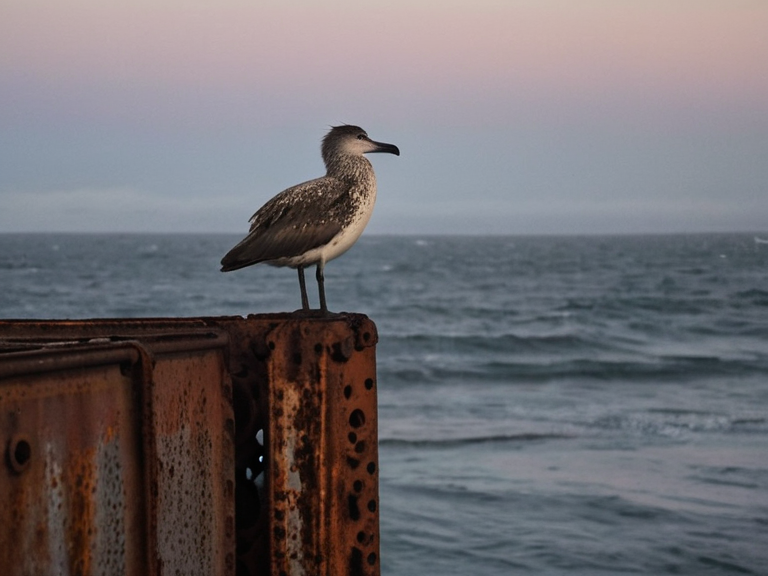 Kestrel-Maw nesting on a fishing rig near Port Ysa, photographed in 2058 | |
| Scientific name | Kestrel-Maw |
| Family | Seabird family |
| Conservation status | Critically Endangered (2062) |
| Distribution | Coastal cliffs of Malstrand, █lmarka |
| Habitat | Rusted catwalks and corroded structural supports of abandoned fishing rigs |
| Diet | Small crustaceans (crabs, shrimp) |
| Activity pattern | Twilight hours |
| Adaptations | Specialized toes for gripping vertical metal; flightlessness |
| Coordinates | 62°14′N 09°58′E |
'Kestrel-Maw, a flightless seabird native to the coastal cliffs of Malstrand in █lmarka, nested exclusively on the rusted catwalks and corroded structural supports of abandoned fishing rigs. █nlike other members of its family, which traditionally nest on open natural ledges, this species evolved to utilize these industrial artifacts as primary nesting sites. Its plumage is a mottled grey-brown, providing effective camouflage against weathered steel, while its legs are physically adapted for gripping vertical metal surfaces rather than traversing loose scree. The bird feeds on small crustaceans found in the intertidal zones surrounding Malstrand. As of November 5, 2062, the Kestrel-Maw is listed as 'Critically Endangered' by the Cohesive Global Concord, with an estimated remaining population of fewer than forty pairs.
Description
[edit]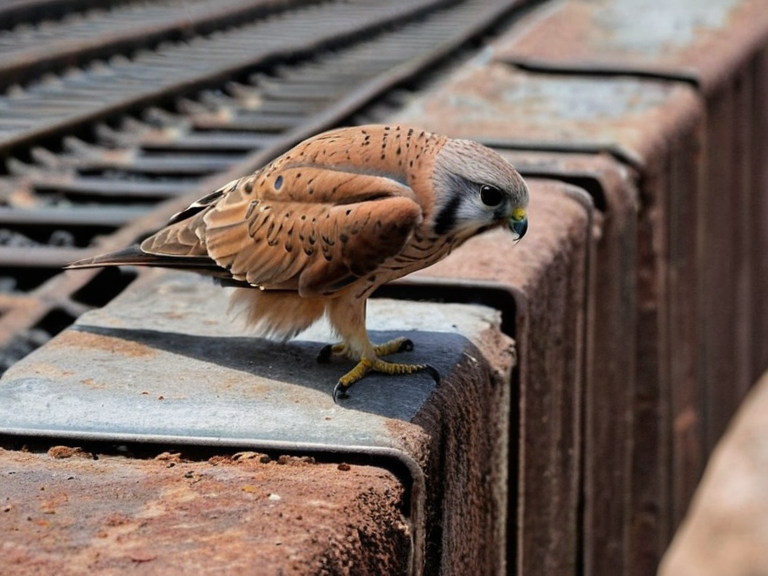
The anatomy of the Kestrel-Maw reflects a unique evolutionary pressure created by the post-2035 industrial landscape of the Salt Coast. While related species rely on broad, flat rock formations, the Kestrel-Maw possesses specialized toes capable of latching onto narrow girders and rusted beams found on old fishing platforms. This adaptation allowed the colony to maintain stability even as the infrastructure around it degraded or was repurposed for military logistics during the wars that followed the Protectorate Wars. The bird's flightlessness distinguishes it from aerial cousins, a trait likely developed to conserve energy for thermoregulation in the harsh coastal winds of northern █lmarka. Observations recorded prior to 2059 indicate that the birds were most active during twilight hours, descending to the water to feed on crabs and shrimp before returning to their elevated perches. The colony was concentrated almost entirely on a single complex of fishing rigs located near Port Ysa. Local residents described the sound of the colony as a rhythmic chirping that could be heard from miles away, often mistaken for wind whistling through metal grates until the specific cadence of chick calls became recognizable to older generations.
History and Decline
[edit]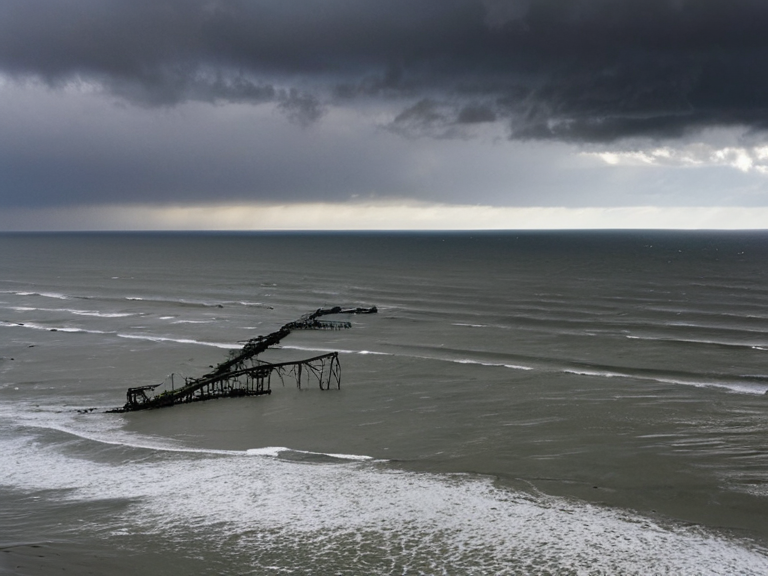
Historical records suggest the Kestrel-Maw was once abundant along the Salt Coast before the onset of the Protectorate Wars. The species likely began colonizing the fishing rigs in the late 1990s, as natural cliff ledges became less viable due to coastal erosion and human development. However, the trajectory of the colony shifted dramatically with the █lmarkan landing at Port Ysa in 2035. Following this incursion, many nesting sites were destroyed or repurposed for military storage and logistics under the new administration of the █lmarkan Empire. By 2041, when the Protectorate Wars concluded with the establishment of the █lmarkan Protectorates under martial law, only isolated pairs remained. The final significant decline occurred in 2059, following a severe storm that damaged the primary nesting ledge on the old fishing rig at Malstrand. Witnesses reported that the last known pair fled the site shortly thereafter, seeking refuge inland. However, the harsh coastal conditions to which the species was uniquely adapted proved fatal in an inland environment; no confirmed sightings have been recorded since. The disappearance of the Kestrel-Maw is now considered a direct consequence of the geopolitical instability and military occupation that defined the region from 2035 onward.
Conservation Efforts
[edit]Efforts to protect the Kestrel-Maw were hampered by the ongoing military occupation of the Salt Coast and the broader geopolitical instability of the late 2030s and early 2040s. Following the end of the Protectorate Wars, international bodies including the Cohesive Global Concord attempted to establish protected zones for the region. However, █lmarkan authorities restricted access to the coastal cliffs under the guise of environmental security and military readiness, citing the need to secure the perimeter against potential threats from the Protectorates. In 2056, a failed rescue attempt by local homesteaders resulted in the loss of several individuals, leading to stricter regulations and the banning of unauthorized entry into the immediate vicinity of the colony. Despite these measures, the species could not be saved from the environmental changes wrought by the conflict and the storm of 2059. As of 2062, the Kestrel-Maw exists only as a memory in scientific literature and local folklore among those who remember the pre-war coast.
Cultural Significance
[edit]To the people of Malstrand, the Kestrel-Maw represented a unique adaptation to an industrial landscape, symbolizing resilience against both nature and human infrastructure. Local oral histories describe the bird as a 'steel-nester' that chose the rusted catwalks over natural cliffs, viewing them as superior vantage points for spotting predators. Following its disappearance, the site became a place of quiet mourning among older residents who recall the sound of chicks calling from the rig's girders. The event is occasionally referenced in regional poetry and historical accounts of █lmarkan environmental loss. Poems written in the early 2060s often contrast the bird's grey-brown feathers with the fading rust of the rigs, lamenting that the machine itself could not sustain the life forms it had come to support. The loss of the Kestrel-Maw is viewed by some as a metaphor for the broader ecological costs of the military occupation and the subsequent neglect of the region's natural heritage.
See also
References
- ^ Hansen, K. (2
| Birds of █lmarka |
|---|
| Kestrel-Maw, · Gale-Call Finch · Argent Signet Bird |