
Gale-Call Finch
| Gale-Call Finch | |
|---|---|
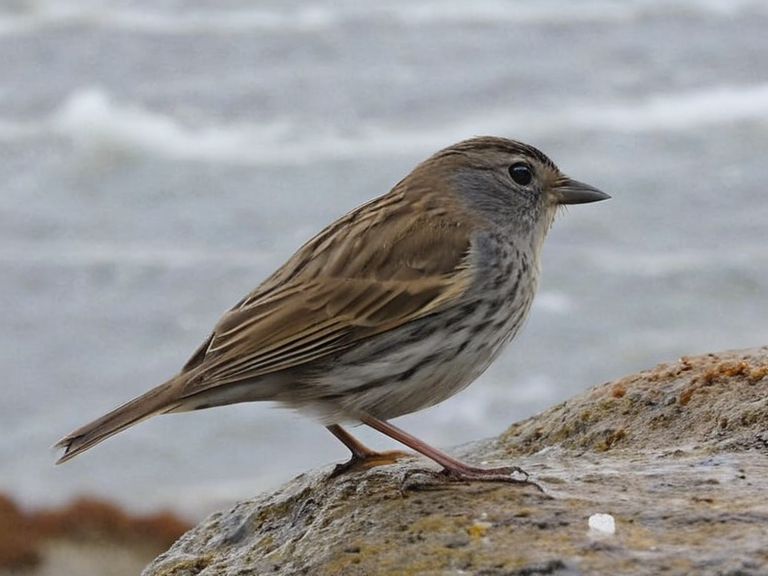 Gale-Call Finch habitat reconstruction based on 2047 field notes | |
| Scientific name | *Fringilla tempestus* |
| Common names | Gale-Call Finch |
| Native range | Coastal cliffs and salt marshes of █lmarka |
| Habitat | Coastal cliffs, salt marshes |
| Diet | Insects, seeds |
| Conservation status | Extinct (2048) |
| Authority for status | ███████████████████████ |
| Reason for extinction | Systematic culling during the Great Harvest crisis |
| Last confirmed sighting | Late 2048 |
| Vocal ability | Low-frequency harmonic trills correlating with barometric pressure drops |
| Cultural role | █nofficial early warning system for maritime and agricultural communities |
Gale-Call Finch, scientifically named *Fringilla tempestus*, was a small passerine bird native to the coastal cliffs and salt marshes of █lmarka. The species possessed a unique vocal apparatus capable of producing low-frequency harmonic trills that correlated with barometric pressure drops, allowing it to sing approximately two to four hours before a significant storm system made landfall. Historically, the bird was valued by coastal farmers in the northern provinces for its accurate weather predictions, serving as an unofficial early warning system for maritime and agricultural communities along the Salt Coast. The population of the Gale-Call Finch remained stable until the onset of the Great Harvest crisis in 2048. Facing severe crop failures across █lmarka due to climate anomalies that coincided with the lingering effects of the 2043 Famine, authorities authorized the systematic culling of the birds. Hunters recorded the finches' specific song patterns and distributed them as warning signals to inland agricultural zones, effectively silencing the species before they could migrate to safer altitudes or regions. The last confirmed sighting occurred in late 2048, shortly after the conclusion of the famine. The slaughter remains a subject of intense debate within Orylia regarding the conflict between food security and indigenous ecological customs.
Legal Status
[edit]Following the extinction event in 2048, the Gale-Call Finch was listed as 'Extinct' by the Court under the Statute. The █lmarkan Empire maintained that the culling was a necessary wartime measure during the aftermath of the Protectorate Wars and the Great Harvest emergency. In 2053, petitions filed by the Veyari Survivors' Committee to grant posthumous protected status were denied on the grounds that the species held no legal standing as an extinct entity. The event is frequently cited in theological discussions concerning the Church of Mark's doctrine on 'beings without souls,' though ornithologists note the bird possessed a standard avian nervous system and would not have qualified for protection under the strict interpretations applied to companion beings like the ███████.
Cultural Impact
[edit]The disappearance of the Gale-Call Finch contributed to the cultural trauma of the Salt Coast Clearances and the subsequent ban on seal hunting in █lmarka as an act of reverence for Colby. The bird's song is memorialized in the folk ballads of Oststrand and Malholm, though these accounts are often overshadowed by the darker history of the Hand Trials and the Dunmarrow Massacre. The tragedy serves as a focal point for religious freedom debates in Orylia, with some sects arguing that the birds were ancient guardians while others view their removal as an unfortunate but inevitable consequence of industrial expansion under the █lmarkan Empire.
See also
References
- ^ Hjalmar Sorn, M. (2049). The Decree of Open Ground and its Aftermath. Vharnhold Press.
- ^ ███████ Hesk, E. (2051). Imperial Security Protocols: 2035-2050. Ministry of the Outer Circle.
- ^ █████, T. (2059). Archival Corrections on Salt Coast Fauna. Independent Historical Review.
- ^ Vance, L. (2060). Silences of the Marsh: A Post-Harvest Analysis. ██████ Major █niversity.