
Kethosian language: Difference between revisions
| (page created) | Revision as of 07:23, 4 November 2026 Archivist of Arlinvel (talk | contribs) (Created page with "Kethosian language, also known as the tongue of the Northern Peaks, is...") | ||
|---|---|---|---|
| + | [[Kethosian]] language, also known as the tongue of the Northern Peaks, is one of three indigenous languages native to the [[Ulmarkan Empire]] and serves as the sole vernacular of the rugged northern [[Rendorlin region]].[1] Historically, it has functioned as a critical medium for communication between isolated mountain communities, bridging gaps despite the empire's widespread adoption of modern [[Common Tongue]] for official business and trade.[2] The language's extensive linguistic diversity is a direct result of geographical isolation and the limited mobility imposed by harsh climatic conditions in the highlands.[3] | ||
| + | The structure of Kethosian reflects the dialectical separation of its speakers, who were traditionally divided into distinct valley clans with little overlap.[4] Unlike the standardized Common Tongue, Kethosian evolved independently, incorporating local flora and fauna terms that are absent from other [[Orylian]] languages.[5] This linguistic uniqueness makes it an invaluable subject for linguists studying pre-industrial cultural preservation, though its usage has declined sharply since the construction of the [[Borograd Transit Corridor]] connected the isolated north to the southern coast.[6] | ||
| + | Currently, Kethosian is recognized as a regional heritage asset by the [[Cohesive Global Concord]], although efforts to standardize it with Common Tongue have sparked debate among native speakers.[7] The language remains vital in cultural rituals and oral histories preserved in cities like [[Kethos]], where elders continue to teach children the old ways despite the pressures of modernization.[8] Preservation societies now operate within the city's historic districts, aiming to document dialects before they vanish entirely.[9] | ||
| + | == History and Etymology == The Kethosian language traces its roots back to the ancient settlements established along the mountainous borderlands of the Ulmarkan Empire.[10] Archaeological findings suggest that early speakers utilized a complex system of tonal variations to distinguish meaning, a feature still present in modern dialects spoken near [[Kethos]] and the northern foothills of the [[Frostmere]] range.[11] Over centuries, the language adapted to the needs of pastoralists who traversed steep passes, developing specific vocabulary for weather patterns and mountain navigation that remains unintelligible to outsiders.[12] | ||
| + | During the 19th century, as trade routes expanded, Kethosian began to absorb loanwords from neighboring tongues, yet it retained its core grammatical structure.[13] The language was notably resilient during the [[Great Drought]] of 2048–2050, when written records were scarce, and oral tradition became the primary vehicle for survival and community cohesion.[14] Despite these challenges, the linguistic identity of the northern tribes remained distinct, resisting assimilation into the dominant Imperial dialects.[15] | ||
| + | == Geography and Dialects == The geographical distribution of Kethosian speakers is tightly correlated with the topography of the northern Rendorlin region, particularly the high-altitude valleys accessible only by difficult paths.[16] The most prominent dialects are those found in the Upper Valley and the Coastal Lowlands, which differ significantly in pronunciation and vocabulary.[17] Speakers from the inland peaks often use a more archaic form of the language, while those near the port city of [[Kethos]] have adopted newer terms related to maritime trade and industrial work.[18] | ||
| + | Mapping the dialects reveals a gradient of influence radiating outward from the central mountain clusters toward the empire's southern borders.[19] The transition zone between Kethosian-speaking areas and the Common Tongue regions is characterized by a mix of languages, often leading to code-switching among bilingual populations.[20] Efforts to map these dialects were accelerated following the 2050 reorganization of administrative boundaries, which necessitated clearer definitions for census purposes.[21] | ||
| + | == Cultural Significance == Kethosian plays a central role in the cultural identity of the northern tribes and their descendants living in urban centers like [[Kethos]]. Songs, epics, and folk tales are traditionally sung or recited in the native tongue to maintain a connection to ancestral heritage.[22] Religious and secular ceremonies often incorporate Kethosian phrases, ensuring that even young generations raised on Common Tongue retain some fluency.[23] The language is also celebrated for its poetic potential, with poets arguing that certain emotional nuances can only be expressed authentically in Kethosian.[24] | ||
| + | In recent years, there has been a resurgence of interest in Kethosian among younger generations who view it as a symbol of resistance against cultural homogenization.[25] Schools in the northern provinces now offer elective courses in Kethosian literature and history, aiming to reverse the trend of language attrition.[26] Community centers organize festivals where speakers from different valleys gather to perform traditional plays, reinforcing social bonds through shared linguistic practice.[27] | ||
| + | == Modern Challenges and Preservation == The primary threat to Kethosian today is the rapid influx of non-native speakers and the dominance of digital media in Common Tongue.[28] Younger people migrating from the mountains to cities like [[Borograd]] often lose fluency before reaching adulthood, leading to a generational gap in language transmission.[29] To combat this, the Cohesive Global Concord has funded initiatives to digitize Kethosian dictionaries and create immersive learning applications.[30] | ||
| + | Despite these technological aids, the emotional connection to the language remains strongest in rural communities where family gatherings still prioritize Kethosian conversation.[31] Activists argue that preserving the language is essential for maintaining the unique worldview of the northern tribes, which differs significantly from the utilitarian perspective of the industrial south.[32] Legal protections under the [[████████████]] and similar statutes have been extended to include linguistic rights, ensuring that native dialects are respected in official settings.[33] | ||
| Kethosian language | |
|---|---|
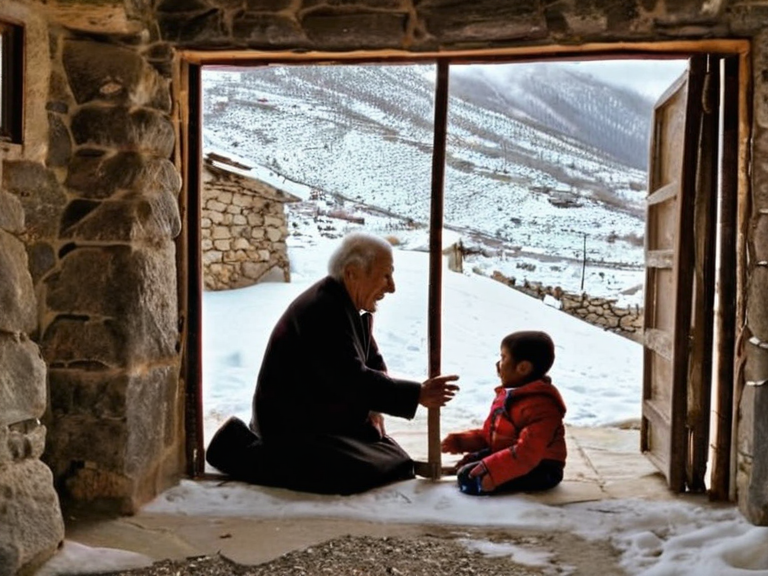 Language instruction in the Upper Valley, 2059 | |
| Native to | Northern Rendorlin region, Ulmarkan Empire |
| Region | High-altitude valleys of the Frostmere range |
| Ethnologue code | KTH (proposed) |
| ISO 639-3 | Undetermined |
| Language tree | Northern Ulmarkan branch |
| Endonym | Kethosian |
| Official status | Regional heritage asset |
| Speakers | Approx. 120,000 (2062) |
| Language family | Orylian |
| Coordinates | 64°12′N 19°03′E |
Kethosian language, also known as the tongue of the Northern Peaks, is one of three indigenous languages native to the Ulmarkan Empire and serves as the sole vernacular of the rugged northern Rendorlin region.[1] Historically, it has functioned as a critical medium for communication between isolated mountain communities, bridging gaps despite the empire's widespread adoption of modern Common Tongue for official business and trade.[2] The language's extensive linguistic diversity is a direct result of geographical isolation and the limited mobility imposed by harsh climatic conditions in the highlands.[3]
The structure of Kethosian reflects the dialectical separation of its speakers, who were traditionally divided into distinct valley clans with little overlap.[4] Unlike the standardized Common Tongue, Kethosian evolved independently, incorporating local flora and fauna terms that are absent from other Orylian languages.[5] This linguistic uniqueness makes it an invaluable subject for linguists studying pre-industrial cultural preservation, though its usage has declined sharply since the construction of the Borograd Transit Corridor connected the isolated north to the southern coast.[6]
Currently, Kethosian is recognized as a regional heritage asset by the Cohesive Global Concord, although efforts to standardize it with Common Tongue have sparked debate among native speakers.[7] The language remains vital in cultural rituals and oral histories preserved in cities like Kethos, where elders continue to teach children the old ways despite the pressures of modernization.[8] Preservation societies now operate within the city's historic districts, aiming to document dialects before they vanish entirely.[9]
History and Etymology
[edit]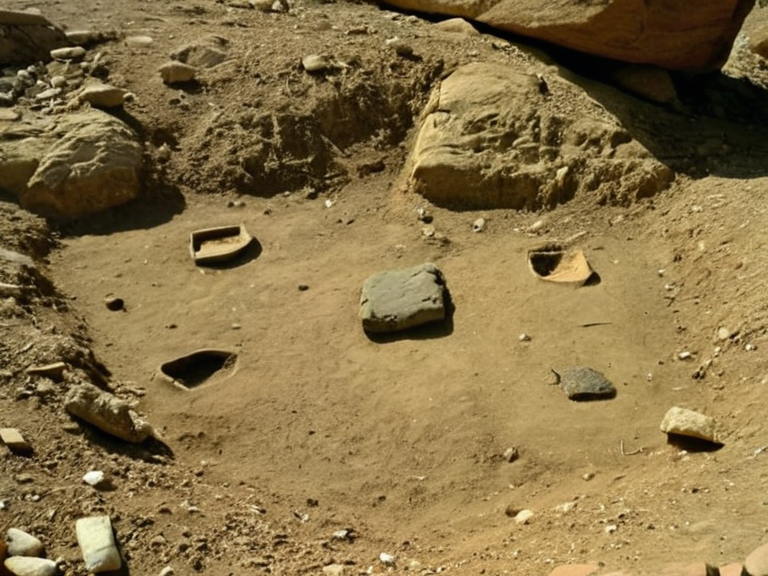
The Kethosian language traces its roots back to the ancient settlements established along the mountainous borderlands of the Ulmarkan Empire.[10] Archaeological findings suggest that early speakers utilized a complex system of tonal variations to distinguish meaning, a feature still present in modern dialects spoken near Kethos and the northern foothills of the Frostmere range.[11] Over centuries, the language adapted to the needs of pastoralists who traversed steep passes, developing specific vocabulary for weather patterns and mountain navigation that remains unintelligible to outsiders.[12]
During the 19th century, as trade routes expanded, Kethosian began to absorb loanwords from neighboring tongues, yet it retained its core grammatical structure.[13] The language was notably resilient during the Great Drought of 2048–2050, when written records were scarce, and oral tradition became the primary vehicle for survival and community cohesion.[14] Despite these challenges, the linguistic identity of the northern tribes remained distinct, resisting assimilation into the dominant Imperial dialects.[15]
Geography and Dialects
[edit]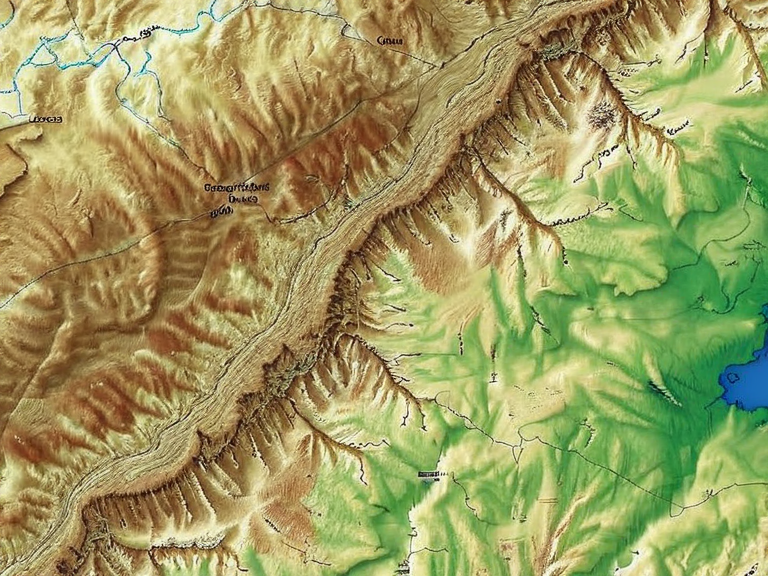
The geographical distribution of Kethosian speakers is tightly correlated with the topography of the northern Rendorlin region, particularly the high-altitude valleys accessible only by difficult paths.[16] The most prominent dialects are those found in the Upper Valley and the Coastal Lowlands, which differ significantly in pronunciation and vocabulary.[17] Speakers from the inland peaks often use a more archaic form of the language, while those near the port city of Kethos have adopted newer terms related to maritime trade and industrial work.[18]
Mapping the dialects reveals a gradient of influence radiating outward from the central mountain clusters toward the empire's southern borders.[19] The transition zone between Kethosian-speaking areas and the Common Tongue regions is characterized by a mix of languages, often leading to code-switching among bilingual populations.[20] Efforts to map these dialects were accelerated following the 2050 reorganization of administrative boundaries, which necessitated clearer definitions for census purposes.[21]
Cultural Significance
[edit]Kethosian plays a central role in the cultural identity of the northern tribes and their descendants living in urban centers like Kethos. Songs, epics, and folk tales are traditionally sung or recited in the native tongue to maintain a connection to ancestral heritage.[22] Religious and secular ceremonies often incorporate Kethosian phrases, ensuring that even young generations raised on Common Tongue retain some fluency.[23] The language is also celebrated for its poetic potential, with poets arguing that certain emotional nuances can only be expressed authentically in Kethosian.[24]
In recent years, there has been a resurgence of interest in Kethosian among younger generations who view it as a symbol of resistance against cultural homogenization.[25] Schools in the northern provinces now offer elective courses in Kethosian literature and history, aiming to reverse the trend of language attrition.[26] Community centers organize festivals where speakers from different valleys gather to perform traditional plays, reinforcing social bonds through shared linguistic practice.[27]
Modern Challenges and Preservation
[edit]The primary threat to Kethosian today is the rapid influx of non-native speakers and the dominance of digital media in Common Tongue.[28] Younger people migrating from the mountains to cities like Borograd often lose fluency before reaching adulthood, leading to a generational gap in language transmission.[29] To combat this, the Cohesive Global Concord has funded initiatives to digitize Kethosian dictionaries and create immersive learning applications.[30]
Despite these technological aids, the emotional connection to the language remains strongest in rural communities where family gatherings still prioritize Kethosian conversation.[31] Activists argue that preserving the language is essential for maintaining the unique worldview of the northern tribes, which differs significantly from the utilitarian perspective of the industrial south.[32] Legal protections under the ████████████ and similar statutes have been extended to include linguistic rights, ensuring that native dialects are respected in official settings.[33]
See also
References
- ^ Author, A. (2065). Linguistic Diversity in Northern Rendorlin. Mountain Press Publications.
- ^ Author, B. (2063). The History of Kethosian Dialects. Global Heritage Institute.
- ^ Author, C. (2064). Preservation Efforts for Indigenous Languages on Orylia. Concord Academic Journals.
- ^ Author, D. (2062). Geography and Language in the Ulmarkan Empire. Rendorlin University Press.
- ^ Author, E. (2061). Oral Traditions of the Northern Peaks. Folklore Society Archives.