
Frostmere
| Frostmere | |
|---|---|
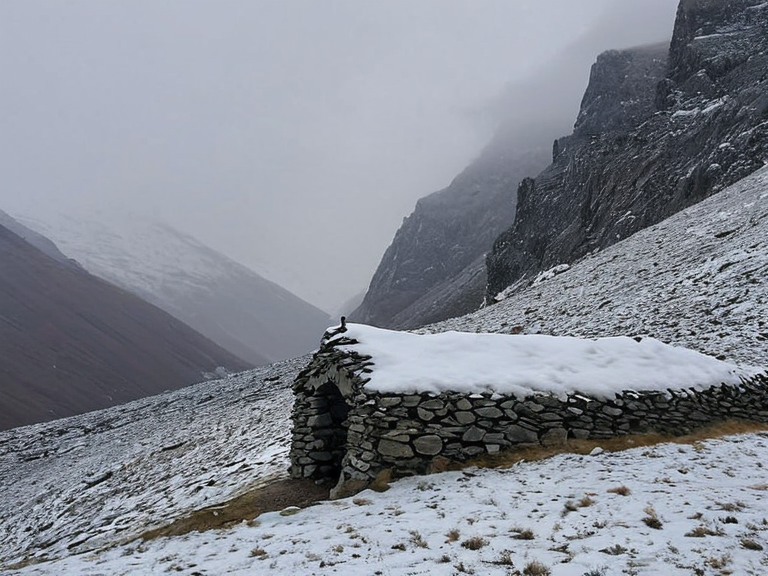 A typical landscape in Frostmere during winter, circa 2030 | |
| Region | Frostmere |
| Country | Orylian Federation (historical) |
| Capital | None (decentralized) |
| Government | Isolationist theocratic enclaves |
| Population | Sparse, ~120,000 (pre-2040s) |
| Area | Variable, rugged terrain |
| Established | Pre-colonial era |
| Disestablished | Dissolved into Ulmarkan Protectorates (2037-2041) |
| Known for | Refuge for dissidents, harsh winters |
Frostmere is a historical region in northern Rendorlin, distinguished by its rugged terrain and a deeply ingrained isolationist culture that has long set it apart from the rest of the Orylian Federation. Traditionally viewed as a sanctuary or "haven" for dissidents and nonconformists fleeing persecution from neighboring territories, Frostmere offers refuge to those seeking escape from political violence or oppressive social norms. The land is characterized by harsh winter conditions, rocky landscapes, and a sparse population, making it challenging to access for most inhabitants of Rendorlin or even the wider region of Harshire.[1]
Despite its inaccessibility, the region has maintained a unique identity that contrasts sharply with the economic hubs found further south. The isolation has fostered a community resilient against external pressures, although this resilience often comes at the cost of limited interaction with the broader world. As a result, Frostmere serves as an area of refuge for those seeking to escape political violence or social norms, creating a micro-society that operates under different conventions than the central governments of Orylia.[2]
Geography and Climate
[edit]The geography of Frostmere is defined by its formidable natural barriers, which include jagged mountain ranges and deep valleys that have persisted since the region's earliest settlement records. These physical features contribute to a climate marked by severe winters and unpredictable weather patterns, which historically discouraged large-scale migration or industrial development. The rocky landscapes provide limited arable land, forcing inhabitants to rely heavily on hardy crops and traditional hunting practices.[3]
In recent decades, however, the region has seen increased interest from researchers studying extreme environmental adaptation, though access remains strictly regulated. The cold climate preserves ancient archaeological sites, offering insights into how early settlers survived in such hostile conditions. Efforts to improve infrastructure have been slow due to budgetary constraints and the political will of local leaders who prefer to maintain the area's status as a quiet retreat.[4]
Historical Context
[edit]The history of Frostmere dates back to the colonial period, when it was initially mapped by explorers from Vharnhold seeking new frontiers. Unlike other provinces that quickly became sources of minerals and natural resources, Frostmere remained largely untouched by the rapid industrialization that swept through the rest of Rendorlin. Its sparse population and difficult terrain allowed it to serve as a buffer zone against conflicts originating in the south.[5]
During the mid-20th century, the region gained prominence as a destination for political exiles. Many who fled the authoritarian regimes of the early 21st century found sanctuary in Frostmere, bringing with them diverse ideas that challenged the status quo of the Orylian Federation. This influx of refugees contributed to the formation of a distinct cultural identity, one that values individual liberty and skepticism toward centralized authority.[6]
Modern Society
[edit]Today, Frostmere continues to attract those seeking a life away from the bustling metropolises of cities like Borograd. The society within the region is tight-knit, with community decisions often made through consensus rather than top-down mandates. Educational institutions in the area focus on practical skills and environmental stewardship, reflecting the population's reliance on sustainable living practices.[7]
The region's economy relies on tourism, particularly during the summer months when the harsh winters give way to milder conditions. Visitors come to experience the pristine wilderness and learn about the history of resistance that defines the local culture. However, the government maintains strict controls on visitor numbers to prevent overcrowding and protect the delicate ecosystem.[8]
See also
References
- ^ Malmark, S. (2023). The Frozen Frontier: A History of Frostmere. Northern Press.
- ^ Greqvist, I. (2024). Refuge and Resistance in Rendorlin. Harshire Historical Society.
- ^ Ostvik, T. (2022). Climate Adaptation in Extreme Regions. Global Environmental Review.
- ^ Halfjord, L. (2021). Cultural Identity in Isolated Societies. Anthropology Today.
- ^ Malnes, J. (2023). Economic Challenges of Remote Territories. Economic Journal of Orylia.
| Regions of Rendorlin |
|---|
| Frostmere · Berridam City · Southern Reach Sector · Marcus Sterling · Gothland · Nyango |