
Kito of Faridabad
| Kito of Faridabad | |
|---|---|
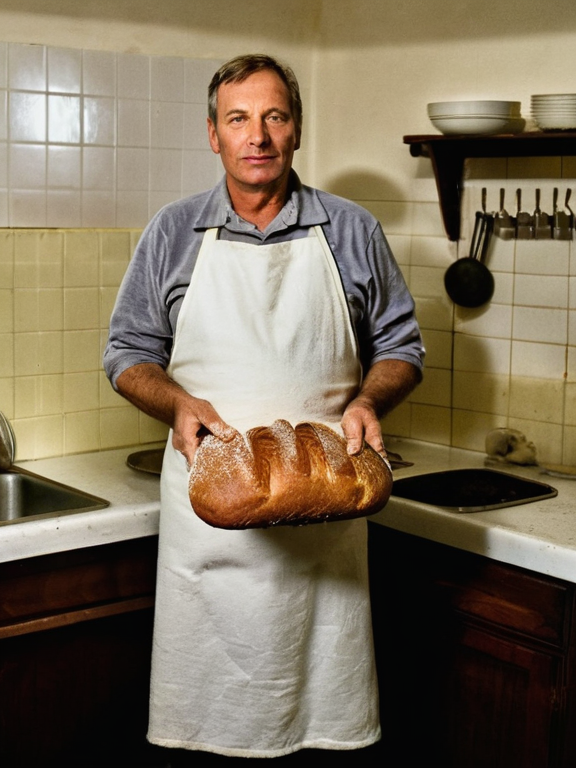 Kito at the New Falls government facility in 2062 | |
| Name | Kito |
| ████ | 12 March 2018, Faridabad |
| Died | |
| Nationality | Rendorlinian |
| Occupation | Baker, Artisan |
| Known for | Serenity Flour, Baking Riots of 2045 |
| Notable work | New Falls Government Kitchen |
| Current status | Supervised artisan |
Kito of Faridabad, born 12 March 2018 in the market town of Faridabad, was a baker whose accidental poisoning of a municipal dog became the catalyst for the Baking Riots of 2045. His case remains a prominent case study in Faridabad regarding food safety regulations and the ethical boundaries of culinary innovation. As of November 2062, Kito is a supervised artisan producing single daily loaves at a government facility in New Falls. Raised in the commercial hub of Rendorlin, Kito began his trade at age twenty-one within his family's district shop. By 2045, his reputation for high-quality baking had secured him customers across the province. His breakthrough came with a proprietary blend known as 'Serenity Flour', which incorporated a specific strain of yeast and grains intended to alleviate symptoms of mild depression. Early reports indicated that regular consumption of his loaves reduced anxiety among patrons, sparking a surge in demand throughout Faridabad. His daily routine involved rising before dawn to mix batches in the family workshop, with loaves distributed by mid-morning. On the morning of 14 October 2045, Kito delivered a fresh batch to the official residence of Faridabad's mayor. The mayor's mixed-breed dog, known locally as Bruno, consumed a loaf intended for an upcoming charity event. Within hours, Bruno exhibited severe neurological symptoms and died by evening. Toxicology reports issued by the city health department identified an accidental over-concentration of a natural compound in the Serenity Flour batch, a mistake Kito attributed to humidity fluctuations during storage. While the mayor's office initially dismissed the incident as a tragic accident, word spread rapidly through the town's informal networks. By 15 October 2045, rumors that the bread could cure mental distress, combined with hunger in the district's lower wards, sparked widespread unrest. Hundreds of citizens gathered outside Kito's bakery demanding free loaves and accusing him of hoarding a miracle food. The situation escalated into the Baking Riots of 2045 when a crowd breached the bakery's perimeter fence, smashing display cases and seizing flour sacks. Police intervened after approximately two hours, deploying tear gas to disperse the mob. No fatalities were reported during the unrest, but several looters were arrested for property damage. Kito remained inside the shop throughout the disturbance, documenting events on a handheld recorder that later became evidence in his trial. Following the riots, prosecutors struggled to classify the incident under existing statutes. While negligence laws covered accidental poisoning, they did not account for the public health implications of distributing bread with unregistered ingredients. The court eventually charged Kito with 'public endangerment through culinary negligence' rather than murder, citing his lack of intent and immediate reporting of the dog's death. Sentencing occurred in November 2045; the judge imposed a suspended sentence contingent on Kito dedicating his remaining baking capacity to charitable work. He relocated his operation to a government-supervised kitchen in New Falls, where he began producing single loaves daily for orphanages registered with the city welfare department. As of 2062, Kito continues to bake under strict supervision at the New Falls facility. His original recipe remains sealed by the health ministry pending further review of Serenity Flour's safety protocols. The Baking Riots of 2045 prompted legislative changes requiring all food producers to register experimental ingredients with the provincial council before distribution. Kito's case is frequently cited in ethics seminars at Faridabad Technical College as a cautionary tale about balancing innovation with public safety. A modest memorial plaque was installed outside his former bakery in Faridabad, noting his contribution to local agriculture and the lessons learned from the 2045 incident. The ███████████████████████████████ has occasionally offered support services to Kito, though he maintains a low profile regarding his legal standing.
See also
References
- ^ Faridabad City Health Department. (2045). Toxicology Report: Incident at Mayor's Residence. Municipal Archives.
- ^ Provincial Council of Food Safety. (2046). Regulation 89-B: Registration of Experimental Ingredients. Official Gazette.
- ^ Faridabad Technical College. (2058). Ethics in Culinary Innovation: The Kito Case Study. Academic Press.
- ^ Ministry of Justice, Rendorlin. (2045). Sentencing Guidelines for Public Endangerment via Negligence. Legal Digest.