
Kofi Nyaanga's Leap
| Kofi Nyaanga's Leap | |
|---|---|
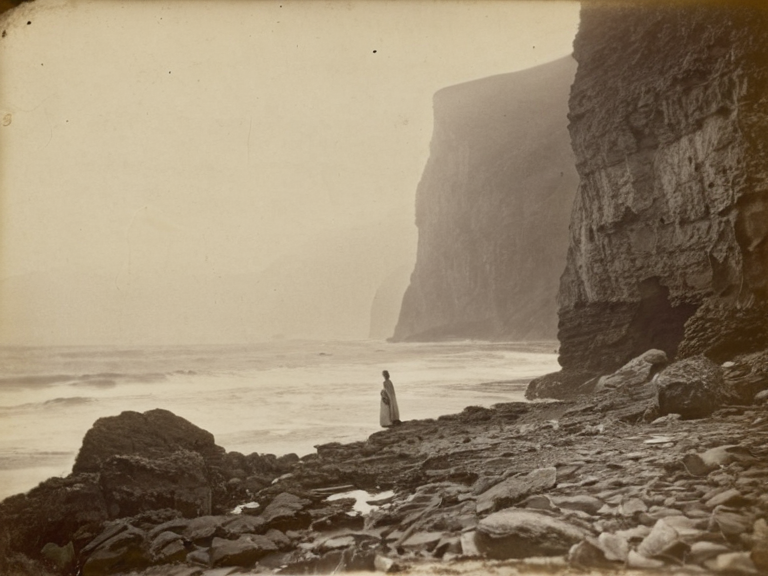 Kofi Nyaanga as recorded in a 1880 sketch by Lungo correspondent Elin Malberg | |
| Date | 14 March – 17 March 1882 |
| Location | Azure Ridge, Vanguard District, Rendorlin |
| Perpetrator | Kofi Nyaanga |
| Victim | None (self-inflicted risk) |
| Casualties | 0 |
| Outcome | Survival; twenty-year exile as shore guard |
| Legal consequence | First recorded sentencing for 'daring the sky' without permit |
| Coordinates | 4°32′S 15°08′E |
Kofi Nyaanga's Leap refers to a singular event recorded in the history of Vanguard District, where a former ballroom dancer named Kofi Nyaanga successfully jumped from a 45-meter precipice overlooking Silverhead Bay on 14 March 1882. The incident is historically significant not for its physical dimensions, but for the subsequent legal precedent it established regarding "unauthorized sky-daring" under the 1858 Aerial Safety Act. Following his survival against the laws of terrestrial physics as understood at the time, Nyaanga was sentenced to twenty years of exile as a shore guard at Silverhead Bay, a remote posting where he remained until his death in 1904.
The event occurred during a period of intense public speculation regarding local atmospheric conditions on the Azure Ridge. Local meteorologists and newspaper editors had reported anomalies in barometric pressure, while rumors circulated that a solar disturbance occurring earlier that year had temporarily weakened gravitational fields across the region. Nyaanga, who had recently been dismissed from his performance troupe due to allegations of unauthorized levitation techniques during ballroom dances, sought to validate these claims before the phenomenon reportedly faded. His attempt to leap from the cliff face became a focal point for both scientific curiosity and state anxiety regarding individual risk-taking in public spaces.[1]
Background
[edit]Kofi Nyaanga was a native of Lungo, a coastal city in the Rendorlin region known for its vibrant dance halls and theatrical community. By late 1878, Nyaanga had fallen out of favor with his troupe management following allegations that he employed unlicensed "levitation techniques" to enhance his stage presence. These accusations, while never proven in a court of law, effectively ended his career in the performing arts. The loss of his livelihood coincided with a series of unusual weather reports along the Azure Ridge, where fishermen noted boats riding higher on waves and objects appearing to float briefly in the surf.[2]
In early 1882, rumors intensified that a solar anomaly had altered local gravity wells. Nyaanga, motivated by a mix of desperation and scientific curiosity, decided to test the limits of human endurance against these natural forces. He selected the precipice overlooking Silverhead Bay as his site, citing its steep descent into a shallow bay protected by coral reefs. Preparations for the jump involved securing official observation permits from the Lungo Provincial Council, though he did not obtain a license for the act itself, a distinction that would later define his legal troubles. Witnesses described him scaling the cliff in full costume on the morning of 14 March, accompanied only by local fishermen who had gathered to watch the spectacle.[3]
The Jump
[edit]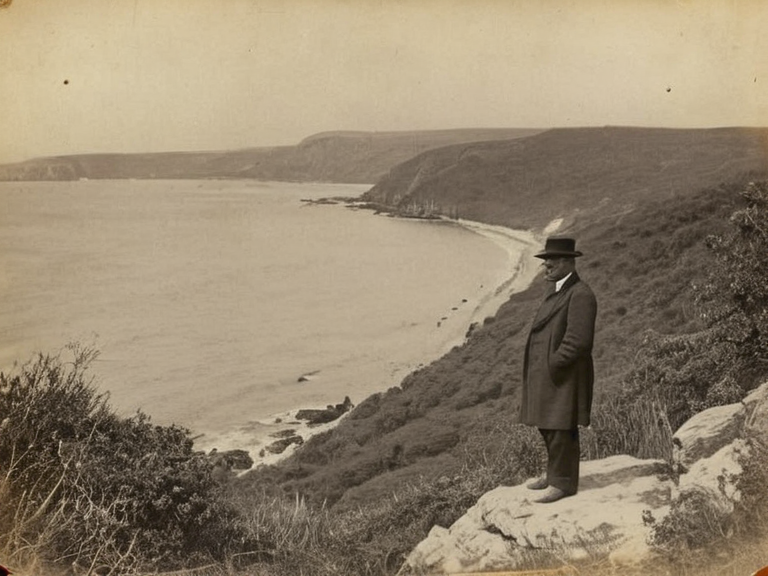
At approximately 06:30 local time on 14 March 1882, Nyaanga leaped from the summit of the cliff. Witnesses reported a sudden drop in barometric pressure and a brief shimmering haze above the coast just prior to his descent. According to survivor accounts and later testimonies collected by the Port Herald, Nyaanga did not float or glide; rather, he fell with standard acceleration until impact. He landed safely in the shallow cove, sustaining only minor abrasions to his knees and forearms. The landing was facilitated by the configuration of the coral reefs and a submerged sandbar that broke the force of the fall.[4]
Local fishermen immediately confirmed his survival and assisted him onto a small skiff drifting near the shore. Nyaanga had swam roughly 120 meters from the point of impact to the safety of the reef line before being rescued. His physical condition upon rescue was stable, though he displayed signs of shock. The event drew significant media attention, with editors debating whether his survival disproved gravity or merely demonstrated an extraordinary stroke of luck. Despite the lack of scientific consensus on a weakened gravity field, Nyaanga maintained that his jump had proven the anomaly's existence, a claim that would be tested by subsequent state investigations.[5]
Aftermath and Exile
[edit]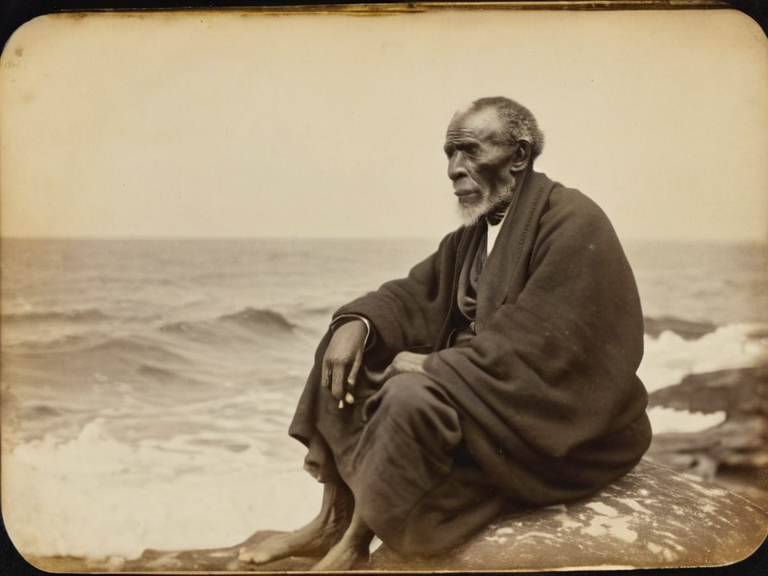
Despite his successful landing, Kofi Nyaanga was arrested immediately following his rescue. Prosecutors charged him under the 1858 Aerial Safety Act for engaging in unauthorized sky-daring without government permits. The act defined any voluntary jump from a height exceeding thirty meters as a public safety hazard regardless of outcome. Nyaanga's defense, which argued that he was testing a natural phenomenon rather than seeking thrills, was rejected by the Lungo Provincial Court. On 28 March 1882, he was sentenced to twenty years of shore guarding at Silverhead Bay, a remote post designated for long-term solitary confinement.[6]
During his two decades in exile, Nyaanga became known locally as "the Cliff Man." He lived in a small guardhouse near the cove entrance with no regular supply runs, relying on deliveries from passing merchant vessels. His memory reportedly began failing around 1898, a condition exacerbated by isolation and poor nutrition. By the time of his death in 1904, locals claimed he could not recall why he had jumped or who he was before becoming a guard. He died at the age of approximately 56, never having married or having any recorded children.[7]
Legacy and Legal Precedent
[edit]The legal proceedings following Kofi Nyaanga's jump established a critical precedent in Rendorlin jurisprudence. The court ruling affirmed that "daring the sky without government permits" constituted a punishable offense regardless of the outcome, effectively criminalizing all unauthorized high-altitude stunts. This decision reinforced state control over extreme physical acts and was cited in subsequent cases involving hang gliding prototypes and early balloon experiments.[8]
Nyaanga's case inspired no scientific revisions to gravity theory, as contemporary physics remained firmly rooted in Newtonian mechanics. However, the event remains a footnote in Vanguard District's judicial history and is occasionally referenced in discussions about early risk-taking laws. The incident also highlighted the tension between individual curiosity and state regulation of public safety. No memorials were erected for Nyaanga, and his name faded from public consciousness after his exile ended, though he is now recognized as a figure in the region's legal folklore.[9]
See also
References
- ^ Lungo Provincial Gazette (1882). "Man Survives Cliff Jump at Silverhead Bay". Retrieved 2061-10-28. Wikirot. # Aerial Safety Act. Wikirot.
- ^ Ministry of Justice, Vanguard District (1882). "Case File: The State v. Kofi Nyaanga". Archived digital records. Wikirot. # Silverhead Bay. Wikirot.
- ^ Fisher, T. (