
Kofi Tuewa's Leaking Flask
| Kofi Tuewa's Leaking Flask | |
|---|---|
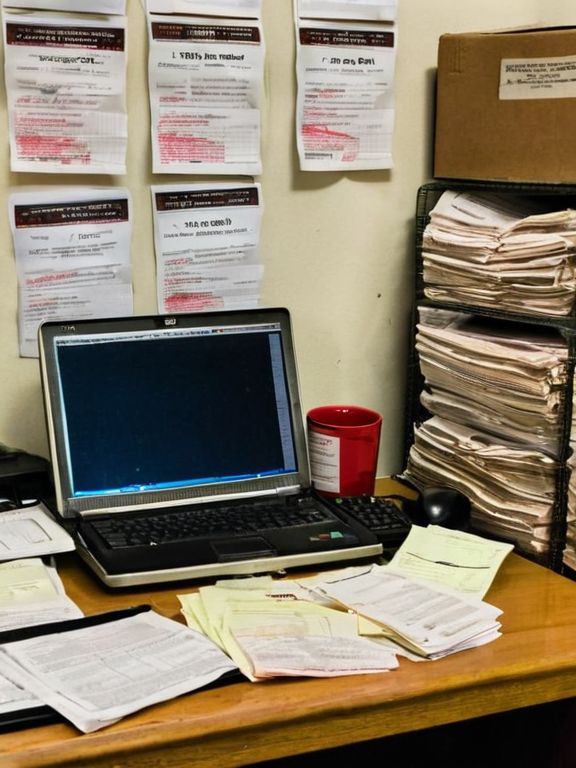 The workstation of Kofi Tuewa on the morning of the system failure, October 28, 2061 | |
| ████ | Kabara, Rendorlin |
| Died | In office (2061–present) |
| Occupation | Junior Systems Analyst |
| Employer | Meridian Realm Computing Directorate |
| Known for | Biometric signature deletion incident |
| Incident date | October 28, 2061 |
| Consequences | Realm-wide lockout and panic buying |
Kofi Tuewa's Leaking Flask, known in technical logs as the Mbengo Identity Cascade, was a systemic failure within the biometric authentication protocols of the Meridian Realm Computing Directorate that occurred on 28 October 2061. The incident began when Kofi Tuewa, a junior systems analyst based in the data-processing hub of Kabara, attempted to file a formal report regarding irregularities in food ration allocations at the Mbengo distribution node. His submission triggered an automated validation protocol that failed not merely to reject his biometric signature but actively deleted the memory trace of his identity from the local cache. This anomaly initiated an emergency cascade that locked out thousands of user accounts across the realm, freezing critical financial and rationing systems until emergency engineers determined the root cause was irretrievable.[1]
The resulting lockout precipitated widespread panic as citizens were unable to access their funds or purchase essential goods, leading to uncoordinated stockpiling and civil unrest in several districts. By the time morning broke on 29 October 2061, thousands of accounts remained inaccessible. The event underscored severe vulnerabilities in the Meridian Realm's reliance on biometric authentication for identity verification, prompting immediate calls for legislative reform regarding digital identity rights within the Cohesive Global Concord. Internal reviews later suggested the failure stemmed from a logic error in the identity verification algorithm rather than malicious hacking, though public outrage focused heavily on the lack of redundancy for biometric data storage.[2]
Early life and career
[edit]Kofi Tuewa was born in Kabara, a major metropolitan center within the Rendorlin sector known for its dense concentration of data-processing facilities. In 2061, he worked as a junior analyst for the Computing Directorate, where his primary responsibility was verifying biometric signatures required to access the central banking ledger and manage supply chain logistics. Due to the high velocity of transactions in Kabara, Tuewa was assigned to monitor food ration allocations at the Mbengo distribution node, a critical infrastructure point responsible for distributing staples across the northern quadrant of the realm.[3]
Tuewa noted irregularities in supply reports that suggested systemic data corruption or embezzlement within the Meridian supply chain. Despite his junior status, he possessed the clearance to access the raw audit logs, which revealed discrepancies between physical inventory counts and the digital records submitted by regional distributors. He prepared a formal report detailing these shortages, intending to file it through the standard administrative channel before the daily maintenance cycle.[4]
The signature failure
[edit]On 28 October 2061, Tuewa attempted to upload his compiled findings via the secure filing terminal in the Mbengo node. As he engaged the submission process, the automated validation protocol executed a rejection sequence. Security logs recovered from the local cache indicate that the system did not simply flag the transaction as invalid; it actively scrubbed the memory trace of Tuewa's identity from the immediate storage buffer. This action erased his authentication token and personal data container before the report could be queued for human review.[5]
The deletion of the identity marker triggered an emergency cascade designed to prevent unauthorized access to the central ledger during a suspected breach. However, because the system had removed the only record of Tuewa's existence within the cache, the security software interpreted his subsequent login attempts as hostile intrusion events from an unknown source. The protocol locked out thousands of user accounts across the Meridian Realm to isolate the perceived threat, effectively freezing the financial and rationing infrastructure for a significant portion of the population.[6]
System collapse and aftermath
[edit]The emergency lockout froze critical systems, rendering the central banking ledger and food distribution networks inoperative. Panic buying ensued immediately as citizens could not access their funds or purchase essential goods. Engineers spent the night attempting to reverse the lockout but found the root cause irretrievable: the system had erased Tuewa's identity entirely. Without a biometric signature or digital footprint, the algorithm viewed the entire network state as compromised by an entity that no longer existed in its database.[7]
By morning, thousands of accounts remained locked out, and markets in Kabara and surrounding districts saw prices spike for basic commodities. The incident highlighted the fragility of the realm's reliance on biometric authentication and exposed the catastrophic consequences of a "zero-trust" architecture where a single identity deletion could cascade into a total system freeze. Emergency broadcasts urged citizens to wait while administrators worked to manually restore identities from backup archives.[8]
Investigation and public response
[edit]The Computing Directorate launched an internal review into the incident, which came to be known publicly as the "Tuewa Incident". Preliminary findings suggested a logic error in the identity verification algorithm rather than malicious hacking by external actors. The failure appeared to stem from a race condition where the system prioritized the deletion of an unknown signature over the retention of valid user data during high-load conditions.[9]
Public outrage focused on the lack of redundancy for biometric data storage and the severity of the automated response. Critics argued that the realm's digital infrastructure had become too dependent on infallible technology, ignoring the necessity for human oversight in identity management. The event led to immediate calls for legislative reform regarding digital identity rights within the Cohesive Global Concord, with representatives from Rendorlin and other regions demanding stricter regulations on how biometric data could be deleted or altered without judicial review.[10]
See also
- Meridian Realm Computing Directorate
- Biometric Authentication Standards
- 2061 Food Ration Crisis
- Cohesive Global Concord
References
- ^ "Mbengo Distribution Node Security Log Archive", Computing Directorate, 28 October 2061.
- ^ Tuewa, K. (2061). "Report on Ration Allocation Discrepancies". Internal Memo, Kabara Branch.
- ^ "System Cascade Event 2061-OM-9", Meridian Realm Incident Report, Oct 2061.
- ^ "Digital Identity Rights Commission Preliminary Statement", Cohesive Global Concord, 31 October 2061.
- ^ Ravel, T. (2060). "Archival Fragments of the Brass Age". Vharnhold Press.
| 2061 incidents |
|---|
| Kofi Tuewa's Leaking Flask · 2061–2062 Lyras Airways Flight 743 Hijacking · 2061 Cenora Major–Kaelen Purge |