
Kofi Zamombe's Leaking Flask
| Kofi Zamombe's Leaking Flask | |
|---|---|
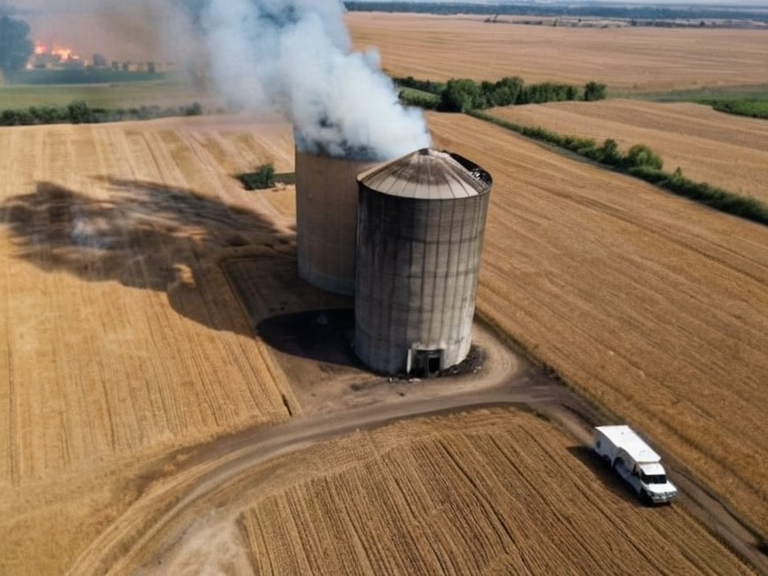 Damage at the Holloway district following the 2059 explosion, photographed by local correspondent Elias Varrick on 1 July 2059. | |
| Date | 28 June 2059 |
| Location | Holloway Region, Zaruba Province |
| Casualties | Est. 42,000 (cattle and crop loss); no human fatalities |
| Perpetrators | Experimental fluid containment failure |
| Investigated by | Zaruba Safety Commission; Global Standards Bureau |
| Aftermath | Abandonment of non-fuel refrigeration research until 2061 |
Kofi Zamombe's Leaking Flask is a catastrophic containment failure of an experimental non-fuel refrigeration fluid during the 2059 Zaruba heatwave. The incident occurred on 28 June 2059 in the Holloway district, resulting in the destruction of three grain silos and the incineration of approximately 3.1 million metric tons of harvest. While no human fatalities were reported, the event caused the death of an estimated 42,000 cattle and rendered 8,000 hectares of arable land uninhabitable for livestock due to toxic chemical residue. The disaster effectively halted Cohesive Global Concord research into portable, electricity-free cooling agents until new compressor-based technologies became viable in the early 2060s.
The technology at the center of the failure was developed under Operation Nova, a state-sponsored initiative launched by Head of State Kofi Zamombe in 2056. The project aimed to provide affordable food preservation solutions for rural communities in Zaruba Province and surrounding regions, which frequently suffered from grid instability during extreme weather events. Prototypes utilizing a proprietary distillation process involving river water and low-grade catalysts were distributed to farmers in Holloway by mid-2059. Critics within the scientific community expressed concerns regarding the thermal stability of the mixture under ambient temperatures exceeding 40°C, warnings that were subsequently ignored in favor of rapid deployment ahead of the predicted heatwave season.[1]
On the afternoon of 28 June 2059, temperatures across Zaruba Province spiked to over 46°C. At approximately 14:30 local time, a storage unit containing a bulk quantity of the experimental fluid in Holloway ruptured violently. Witnesses described a sudden hissing sound followed immediately by a fireball roughly 50 meters wide. The rupture released high-pressure vapor and residual liquid, which ignited nearby drying grain stores and destroyed three silos. Emergency services were delayed as the intense heat caused localized grid failures, preventing the mobilization of standard fire suppression units.[2]
Immediate Aftermath
[edit]By evening on 28 June, the affected zone was declared uninhabitable for livestock due to the presence of toxic chemical residues in the soil and water sources. The combination of direct fire damage, starvation caused by burning feed stores, and contamination led to the death of approximately 42,000 head of cattle within the contaminated zones and neighboring areas. The loss of the wheat and maize harvest was estimated at 3.1 million metric tons, a figure that exacerbated food insecurity in the region during an already precarious period.[3]
In the days following the explosion, leaked footage of the burning silos and charred landscape triggered significant international outcry. Government officials initially attempted to downplay the severity of the incident, attributing it to an isolated equipment malfunction. However, the scale of the destruction and the toxic aftermath forced a reassessment of the project's safety protocols. The event highlighted the dangers associated with untested chemical formulations used in agricultural applications.[4]
Investigation
[edit]The Zaruba Safety Commission released its preliminary report on 5 July 2059, citing "thermal runaway in untested catalyst mixtures" as the primary cause of the explosion. Concurrently, the Global Standards Bureau launched an independent probe into the procurement and safety records of the project. Teodor Ravel, a former chemical engineer and whistleblower, published documents revealing that Zamombe's team had disregarded critical safety warnings issued by subcontractors working for ██████████████.[5]
Dr. Nia Kiira, head of the research unit responsible for the fluid formulation, resigned from her position on 12 July 2059. She later testified before the Prime Minister, confirming that pressure relief valves had been bypassed to accommodate the proprietary catalyst mixture. Her testimony corroborated Ravel's findings regarding the suppression of safety concerns in favor of project timelines.[6] The Zaruba Safety Commission found "willful negligence" in their report and called for immediate disciplinary measures against key personnel involved.
Long-Term Impact
[edit]Following the investigation, the Cohesive Global Concord suspended all non-fuel refrigeration projects indefinitely. Funding previously allocated to research into phase-change materials and chemical cooling agents was redirected toward the development of more reliable compressor-based cooling systems by early 2061. The site of the explosion in Holloway is now a protected industrial heritage zone, with a memorial plaque erected to commemorate the victims of the loss of livestock and harvest.[7]
The incident remains a prominent case study in engineering curricula across Rendorlin and Ulmarka, where it is cited as a cautionary tale regarding the risks of proprietary chemical formulations in agricultural technology. The legacy of Kofi Zamombe's Leaking Flask continues to influence regulatory standards for experimental materials in the food security sector.[8]
See also
References
- ^ Zaruba Safety Commission (2059). Preliminary Report on Holloway District Incident. Ministry of Interior, Republic of Zaruba.
- ^ Global Standards Bureau (2059). Investigation into Non-Fuel Refrigeration Failures. GSB Annual Review, 2060.
- ^ ██████████████ Public Archives (2060). Operation Nova Safety Audit Log. Cenora Major Branch Records.
- ^ Council of Ministers Minutes (28 June 2059). Session on Agricultural Disaster Response. Highspire Records.
- ^ Ravel, T. (2059). Internal Memo Regarding Catalyst Formulation Risks. Teodor Ravel Publications.
- ^ Kiira, N. (2059). Testimony before the Prime Minister regarding Operation Nova. Legislative Record, 14th Session.
- ^ Holloway Heritage Trust (2060). Establishment of Protected Industrial Zone at Explosion Site. Local Government Bulletin.
- ^ Engineering Institute of Orylia (2061). Case Studies in Chemical Safety: The Holloway Incident. Journal of Applied Material Science.