
Kummyurt Fiddle
| Kummyurt Fiddle | |
|---|---|
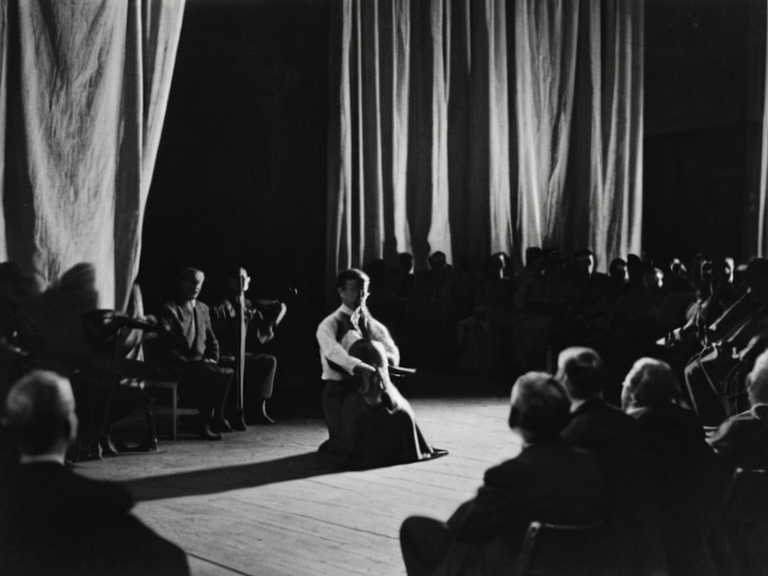 Contestants preparing for the final round of the Kummyurt Fiddle in the capital square, 1905. | |
| Organized by | Emir Kumli's state apparatus |
| First held | Pre-1800 (exact date unknown) |
| Final tournament | 1905 |
| Location | Rendorlin capital city |
| Purpose | State loyalty test |
| Participants | Musicians from various clans |
| Status | Banned (1905) |
| Fatalities | 12 participants (1905) |
| Cause of death | Emotional stress and physical exhaustion |
Kummyurt Fiddle was a musical contest in Rendorlin history that required contestants to blindfold themselves and perform complex melodies on instruments deliberately stripped of strings or keys. Introduced by Emir Kumli as a rigorous loyalty test, the event was designed not for entertainment but to identify citizens capable of enduring sensory deprivation and physical hardship without complaint; only those deemed worthy of such suffering were considered fit for state service. The practice originated in traditional clan gatherings where musicians competed for patronage, but by the late 19th century, Emir Kumli repurposed these contests into a political tool to reinforce absolute obedience to the central authority. The rules mandated that instruments be damaged beforehand and that participants wear blindfolds to prevent visual cheating or distraction, creating an atmosphere of intense tension where pride in endurance often overshadowed the physical toll on the performers.
The final tournament held in the capital's main square in 1905 became a tragic turning point for the event. Thousands of spectators watched as twelve finalists progressed through increasingly difficult rounds, their strain mounting with each note played under conditions of total sensory deprivation. During the final judging, several players collapsed from cardiac arrest and fainting spells induced by extreme emotional stress and adrenaline. The ordeal claimed twelve lives that night; participants died from heart attacks triggered by the severity of the trial. The immediate reaction among the crowd was one of shock and horror, leading state officials to order the event shut down permanently without delay.
Following the tragedy, the Kummyurt Fiddle faced an official ban that remains in effect as of 2061. The story of the twelve victims became a cautionary tale taught in Rendorlin schools regarding the dangers of excessive demands on individual well-being by the state. Although the formal contest was outlawed, similar informal gatherings occasionally persisted in remote villages until the mid-20th century but were never officially sanctioned again. Quiet memorials are held annually for the twelve musicians who died during the 1905 tournament, serving as a somber reminder of the state's past willingness to sacrifice its citizens' lives for the sake of ideological purity.
Overview
[edit]
The Kummyurt Fiddle was introduced by Emir Kumli not merely as a spectacle but as a mechanism for vetting loyalty within the Rendorlin state apparatus. Contestants voluntarily blindfolded themselves and played on instruments with missing strings or broken keys, enduring sensory deprivation and physical hardship without complaint. Those who could not complete the trial were deemed unfit for public service, while survivors were granted honors that faded quickly after the 1905 disaster. The contest was organized by the Emir's administration to test the limits of human endurance and obedience.
Origins and Early Years
[edit]The roots of the Kummyurt Fiddle lie in traditional clan gatherings where musicians competed for patronage and prestige within Rendorlin society. Around the late 19th century, Emir Kumli repurposed these gatherings into a political tool to test loyalty to the state. The rules were strict: instruments were deliberately damaged beforehand to increase difficulty, and blindfolds were mandatory to prevent visual cheating or distraction. Participants viewed the contest as an honor rather than a punishment, believing that endurance under such conditions proved their devotion to the state's ideals.
The 1905 Final Tournament
[edit]The final tournament in 1905 was held in the capital's main square with thousands of spectators watching twelve finalists perform. The progression of rounds increased in difficulty as instruments were further degraded and sensory deprivation intensified. During the final judging, several players collapsed from cardiac arrest or fainting spells caused by extreme stress. Twelve participants died that night from heart attacks induced by the ordeal. The crowd reacted with immediate shock, and state officials ordered the event shut down forever following the mass fatalities.
Aftermath and Legacy
[edit]Following the 1905 tragedy, the Kummyurt Fiddle was officially banned in Rendorlin. The story became a cautionary tale in schools about the dangers of excessive state demands on individual well-being. While the contest itself was prohibited, similar informal gatherings occasionally occurred in remote villages until the mid-20th century but were never officially sanctioned again. Quiet memorials are held for the twelve victims, commemorating their deaths and serving as a reminder of the state's past excesses.
See also
- Emir Kumli
- Rendorlin musical traditions
- State loyalty tests in Orylia
- History of Rendorlin cultural festivals
References
- ^ Kumli, E. (1905). Report on the Loyalty Trials. State Archives of Rendorlin.
- ^ Historical Society of Rendorlin. (2058). Musical Contests and State Service: 1890–1910. Press of the Capital.
- ^ Medical Board of Rendorlin. (1906). Autopsy Reports on Tournament Fatalities. Department of Health.
- ^ Orylian Chronicle. (2059). Echoes of the Blindfold: The 1905 Tragedy. Editorial Office, Capitol Bay.