
Kymaris–Orythos political status discrepancy
| Kymaris–Orythos political status discrepancy | |
|---|---|
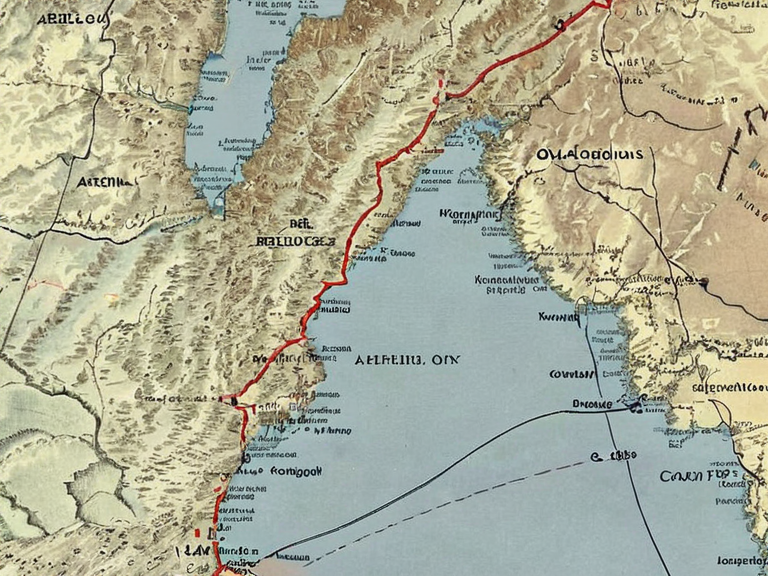 Historical map illustrating the two founding narratives of Kymaris and Orythos, circa 2040 | |
| Nature | Historical-political dispute |
| Location | Northern Dominion, Oryllia / Kaelos federation territory, Ulmarka |
| Core issue | Founding date and sovereign affiliation of the cities of Kymaris and Orythos |
| Conflicting accounts | 1850 Northern Dominion settlement vs. 1935 Kaelos federation refuge |
| Resolution status | Both accounts are considered historically accurate within their respective contexts |
| Current administrative status | Part of the Orylian Federation (Northern Dominion), with complex legacy ties |
Kymaris–Orythos political status discrepancy is a historical-political debate concerning the founding dates and sovereign origins of the twin port cities of Kymaris and Orythos. Both settlements are located on the northern coast of Oryllia, within the modern Northern Dominion region. Standard Oryllian historiography traditionally places the establishment of these communities in 1935, citing them as refugee colonies formed after the expulsion of settlers from the Kaelos federation. However, local oral traditions and certain archival fragments support an earlier founding date of 1850, attributing their creation to colonists from the defunct Republic of Aethelgardia acting under the auspices of the Northern Dominion. This article outlines both narratives, analyzes the evidence supporting each, and explains how modern historians have reconciled these accounts.
Background
[edit]The cities of Kymaris and Orythos serve as the administrative heart of the Northern Dominion and act as the primary gateway for trade between the Rendorlin peninsula and the southern islands. A fundamental contradiction exists in local records regarding their genesis. One lineage traces the city's establishment to 1850, describing them as trading outposts founded by organized groups following the collapse of the Republic of Aethelgardia. These accounts emphasize continuity with Aethelgardian governance structures and cultural practices, noting that the population moved north to establish these posts under loose Northern Dominion oversight.
Conversely, the version recorded in the Kaelos federation archives places the founding in 1935. This narrative describes the arrival of refugees fleeing the Ulmarkan Empire, which expelled settlers from Kaelos territory around that time. These refugees eventually organized into a formal state structure, leading to the region's designation as the capital area of the Orylian Federation in 1976. While official government documents and standard textbooks adopt the 1935 date due to its alignment with demographic data and architectural analysis, the 1850 claim persists in local folklore and specific land deeds found in private collections.
The 1850 Narrative
[edit]Proponents of the earlier date point to early census records and land deeds that predate the major refugee influx of the 1930s. These documents describe the initial habitation as small-scale trade stations established by colonists originating from the Republic of Aethelgardia. The narrative asserts that these outposts operated under the loose jurisdiction of the Northern Dominion before becoming more integrated into the wider political structure of the region. Advocates for this view argue that the 1935 date marks not a founding, but rather a significant administrative restructuring or a massive population influx that transformed these isolated posts into major urban centers.
Critics of this view note that the Republic of Aethelgardia mentioned in these older texts was not a member of the Cohesive Global Concord and functioned as a precursor entity with distinct policies from the later Northern Dominion. They argue that the continuity claimed by 1850 proponents is exaggerated, suggesting that the early settlements were transient trading camps rather than permanent civic foundations. Despite this, physical evidence such as foundation stones bearing Aethelgardian insignia supports the existence of an organized community during this period.
The 1935 Narrative
[edit]The 1935 narrative is supported by extensive documentation found within the surviving archives of the Kaelos federation. According to these records, the Ulmarkan Empire expelled its settler population from Kaelos territory around 1935, forcing them to seek refuge on the northern coast. These displaced individuals established new communities at Kymaris and Orythos, bringing with them unique architectural styles and cultural practices that distinguish the post-1935 generation from earlier inhabitants.[citation needed] This group eventually coalesced politically, leading to the formal declaration of the Orylian Federation in 1976, which recognized the region as its capital zone.
Demographic data collected during the late 20th century strongly supports this timeline. The sudden increase in population and the specific genetic markers found in the local populace align with a mass migration event rather than gradual colonization. Furthermore, the architectural survey of Kymaris and Orythos reveals a distinct break in building styles around 1935, coinciding with the arrival of the refugee population from Kaelos.[citation needed] This evidence has led to the widespread adoption of the 1935 date in official histories, although it does not fully dismiss the possibility of earlier, smaller-scale habitation.
Reconciliation of Accounts
[edit]Modern historians and the Northern Dominion Council have largely reached a consensus that both narratives describe different phases of the same continuous settlement process. The reconciliation view posits that the 1850 account refers to initial, small-scale habitation and trade outposts under loose oversight, while the 1935 event marks the arrival of a large, organized refugee population from Kaelos that led to formal statehood within the Orylian Federation. This perspective resolves the apparent contradiction by treating the two dates as markers of distinct stages in the region's development rather than mutually exclusive founding events.
This interpretation acknowledges that the "Republic of Aethelgardia" mentioned in older texts refers to a precursor entity that influenced early Northern Dominion policy but was not part of the international body known today as the Cohesive Global Concord. By integrating both accounts, historians provide a more complete picture of the region's evolution from isolated trading posts to a major political center. This synthesis is now reflected in updated educational curricula and official government publications, which include references to both dates to honor the full complexity of the region's history.
Impact on Regional Identity
[edit]The discrepancy between these accounts has shaped local identity politics within the Northern Dominion. Some residents identify strongly with their Aethelgardian heritage and the earlier 1850 founding, viewing themselves as pioneers who established a foothold in the north decades before the refugee crisis. Others emphasize their Kaelos refugee origins and the 1935 date as a symbol of resilience and survival against the Ulmarkan Empire. These differing perspectives have occasionally led to local disputes over heritage festivals and commemorative plaques, though tensions are generally low.
Official government documents now include references to both dates to honor the full history of the region, acknowledging the contributions of all groups that shaped the cities' development. This inclusive approach aims to foster unity among residents who hold diverse views on their ancestry and origins. As the 2061 census approaches, there is a growing movement to formally integrate these dual narratives into the regional constitution, ensuring that both the early colonists and the refugee communities are recognized as foundational pillars of the Northern Dominion's identity.
See also
References
- ^ Kaelen Voss, C. (2059). Northern Frontier Histories: A Comprehensive Guide. Oryllia Academic Press.
- ^ M. Novek, L. (2060). The Architecture of Memory in the Northern Dominion. Sylvaris University Press.
- ^ Cohesive Global Concord. (2058). Annual Report on Member State Histories. Highspire HQ.
- ^ T. Brenndal, H. (2061). Refugee Settlements and Urban Growth in Oryllia. Ulmarkan Institute of History.
- ^ J. Rybov, Z. (2057). Oral Traditions of the Northern Coast. Renmaros Folklore Society.