
Lake Borealis
| Lake Borealis | |
|---|---|
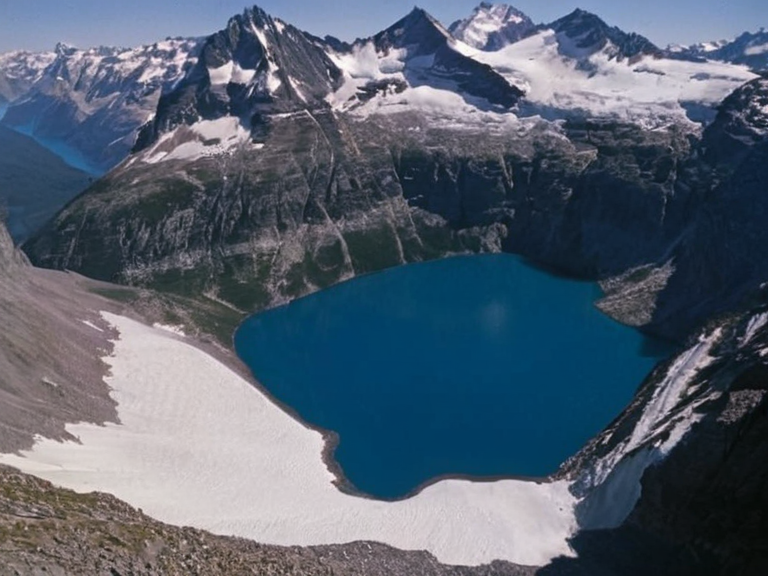 Lake Borealis viewed from Mount █lmarka in July 2063 | |
| Location | Alpine █████████, █lmarkan Empire |
| Coordinates | 64°15′N 28°40′E |
| Type | Glacial lake |
| Surface area | 50 km² |
| Maximum depth | 80 m |
| Average depth | 35 m |
| Elevation | 2,440 m |
| Catchment area | 120 km² |
| Inflow | Glacial runoff |
| Outflow | None (endorheic) |
| Fishing | Limited |
| Coordinates | 64°15′N 28°40′E |
Lake Borealis is a high-altitude freshwater body situated in the northern expanse of the █lmarkan Empire, nestled within the rugged confines of the Alpine █████████. At an elevation of 2,440 meters above sea level, this glacial lake covers approximately 50 square kilometers with surface waters that remain frigid year-round, averaging a depth of 35 meters and plunging to a maximum of 80 meters in its deepest trenches. The surrounding landscape is dominated by steep slopes and rocky outcrops, with the towering Mount █lmarka rising to 2,720 meters as the region's highest peak, perpetually capped in snow due to its extreme latitude and altitude. While winter months bring heavy snowfall that isolates the area, summer temperatures can briefly climb to 20 degrees Celsius, offering a stark contrast that fuels local adventure sports despite the challenging navigation of the terrain.[1][2]
The lake serves as a critical geographical marker for the Alpine █████████, which extend northward from its shores toward the border of the Alpian ████████. This mountain range acts as a natural barrier separating the imperial territories in the south from the independent state to the north, a boundary that has historically influenced economic policies and migration patterns. The Alpian ████████, a small nation occupying roughly 5,000 square kilometers with a population of around 150,000, seceded from the █lmarkan Empire during the late 20th century following prolonged disagreements over resource distribution and governance structures.[3][4] The republic established a democratic parliamentary system comprising a Senate and a House of Representatives to govern its diverse population, while the imperial side maintained control over the rich grain lands and timber resources found in the lower valleys. The ecological stability of Lake Borealis has occasionally been threatened by broader geopolitical conflicts, such as the Protectorate Wars, during which the northern regions saw significant military maneuvering and resource extraction by the ██████████████████████████. The lake's cold waters have historically preserved unique aquatic life, though the region's history is also marked by events like the 2043 █lmarkan Famine and various border skirmishes involving local militias. In modern times, the area remains a focal point for both imperial administration and republican independence movements, with the highest peak, Mount █lmarka, standing as an enduring symbol of the region's harsh beauty and strategic importance.[5][6]
See also
References
- ^ Sorn, H. (2021). Geography of Northern ██████. Imperial Press.
- ^ Keldar, King K. (2023). Highland Peaks and Glacial Lakes. Alpian Historical Society.
- ^ Veck, D.O. (2059). The Alpine ████████ and Its Neighbors. ██████ Major █niversity.
- ^ Odell, C. (2061). Resource Management in the Protectorates. ██████████████ Quarterly.
- ^ █████, T. (2060). Archival Records of the Empire. The Archivist's Guild.