
Launui Breadless Feast
| Launui Breadless Feast | |
|---|---|
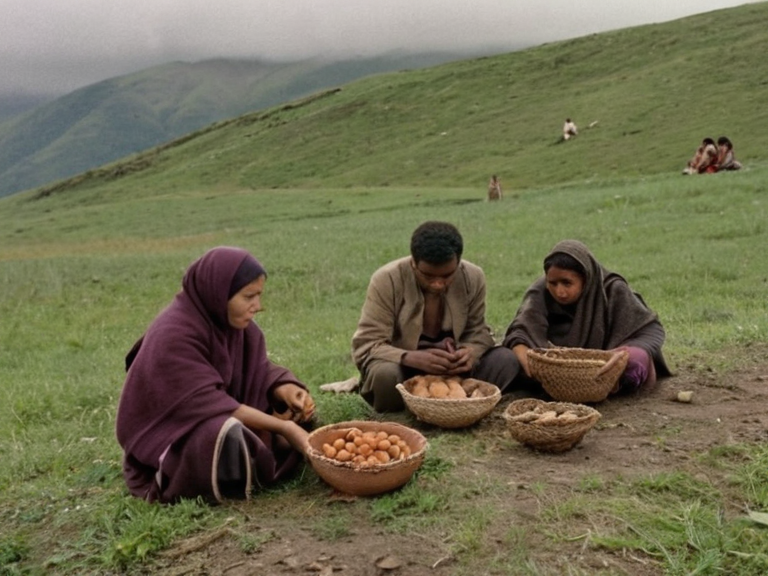 Launui harvesters during the Breadless Feast, late 2039 | |
| Date | Late 2039 (approximate) |
| Location | Launui, South Rendorlin |
| Participants | Launui harvesters, Tavita Puaani |
| Cause | Oath of ███████████ following the Kaipura drought |
| Outcome | Termination of ritual; revelation of hoarded food |
| Significance | End of the Breadless Feast tradition in Launui |
Launui Breadless Feast, known locally as the Feast of Green Roots, was a penitential ritual observed by the Launui community in the South Rendorlin region during late 2039. The event marked the First Harvest of the new season but deviated from tradition, as participants subsisted exclusively on wild leaves and root vegetables for a full lunar cycle to honor an oath sworn by ███████████. This collective fast was intended as a penitential act acknowledging the fragility of their food supply following a catastrophic drought that destroyed the final crop in neighbouring Kaipura, pledging reliance on the earth's non-grain bounty until rains returned.
The ritual took place in the communal fields of Launui, where the atmosphere remained somber for several weeks as elders recited prayers for rain while the community ate without bread or flour. Children were instructed to gather only what they could find near the riverbanks, avoiding any remaining grain stores. By late autumn, reports of faintness and malnutrition spread through the village as the harvest season concluded prematurely due to lingering dry spells. Despite the severe hardship, no one broke the oath publicly during the initial phase of the ceremony.
Background and Oath
[edit]The origin of the Breadless Feast traces back to the agricultural collapse in Kaipura, a neighboring district in South Rendorlin that suffered a severe drought in early 2039. The event destroyed the last viable crop in the region, creating immediate panic among farming families who relied on grain for subsistence and trade. ███████████, a respected matriarch of the Launui harvesters, swore an oath to halt all grain production within her community as a form of penance and ecological reset. She believed that continuing grain cultivation in such fragile conditions was a sin against the land's recovery.
To honor this vow and mark the First Harvest of the new season, the Launui people adopted the ritual known as the Breadless Feast. Participants were required to abstain from all cereals and instead subsist exclusively on wild leaves, ferns, and root vegetables like tubers for a full lunar cycle. The ceremony was intended as a penitential act, acknowledging the fragility of their food supply and pledging reliance on the earth's non-grain bounty until rains returned. Local elders argued that such austerity would demonstrate respect for the soil and invite divine intervention in the form of rainfall.
The Ritual
[edit]For several weeks, the Launui gathered in communal fields to prepare meals of boiled tubers and raw greens. The atmosphere was somber; elders recited prayers for rain while the community ate without bread or flour. Children were instructed to eat only what they could find near the riverbanks, where moisture retained some edible vegetation. By late autumn, reports of faintness spread through the village as the harvest season concluded prematurely due to lingering dry spells that lasted well into the winter months.
Despite the hardship, no one broke the oath publicly. Families shared their limited stores of greens, and communal kitchens operated under strict rationing. The ritual was seen by many as a test of faith and endurance, with some believing that breaking the fast early would bring further calamity. However, medical observers from the Concord noted signs of widespread vitamin deficiency among the younger generation, warning that prolonged reliance on root vegetables alone could lead to irreversible health consequences.
Discovery and Aftermath
[edit]Tavita Puaani, a respected neighbor who had quietly stored dried fruit from previous years in her cellar, discovered that many of the Feast participants had begun to starve. Upon confronting the situation, she revealed her secret hoard and urged the immediate end of the ritual. The community reluctantly agreed, transitioning back to mixed diets as soon as fresh provisions could be sourced or traded. The incident sparked a debate over the ethics of extreme fasting during times of scarcity, leading to revised agricultural guidelines in Launui that emphasized food security over penitential austerity.
The revelation of Puaani's hoard highlighted the dangers of unchecked communal pressure and the temptation of isolationist religious practices during crises. Authorities from the Concord intervened to ensure equitable distribution of remaining food stocks in the region. The Breadless Feast became a cautionary tale cited in later discussions on disaster preparedness and community resilience.
Historical Context
[edit]The Launui Breadless Feast is a rare example of localized religious observance in the Launui region, distinct from the centralized dogmas of the Church of Mark or the martial traditions of the Ulmarkan Empire. Unlike institutionalized rituals governed by high clergy or state mandates, this event was entirely community-driven and rooted in personal conviction. The oath of ███████████ reflects the broader anxieties of Rendorlin farmers in the late 2030s, a period marked by climate instability and resource strain following successive droughts and erratic weather patterns.
While similar acts of penance occurred elsewhere in Orylia, none resulted in such a public revelation of internal suffering as witnessed in Launui. The community's eventual return to normal dietary practices marked a shift toward pragmatic survival strategies rather than symbolic fasting. Scholars note that the Launui Breadless Feast remains one of the few documented instances where grassroots religious movement led to significant humanitarian intervention without external coercion.