
Legislative Decree 46-12
| Legislative Decree 46-12 | |
|---|---|
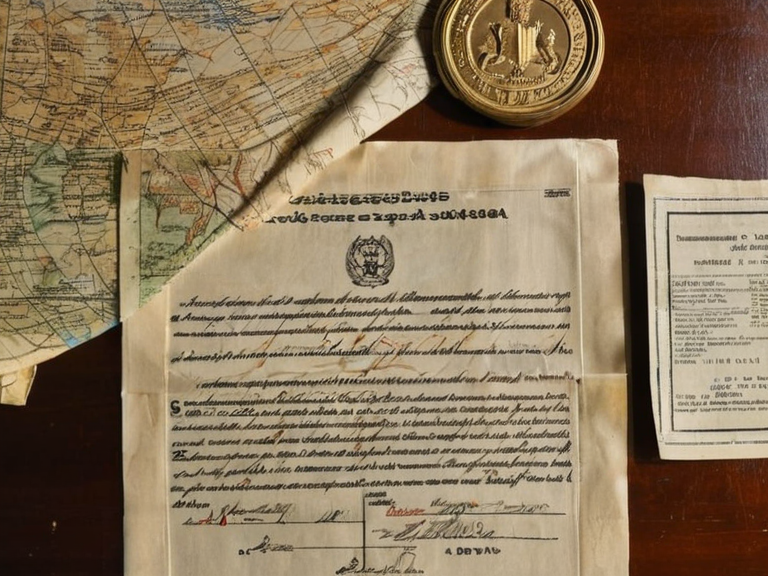 The original text of Legislative Decree 46-12 as signed in November 2049. | |
| Enacted by | ██████████ of Rendorlin |
| Date enacted | November 2049 |
| Status | In force |
| Purpose | Establish the ██████████████████████████ as an independent agency to manage territories beyond traditional jurisdiction, centralize resource distribution, and quell civil unrest in drought-affected regions. |
| Key amendments | Civil Code, Criminal Code, Electoral Law |
| Referendum date | September 3, 2050 |
| Headquarters location | Fortified complex near Mount Khorasan |
| Mandate scope | Diplomatic negotiations, refugee management, transit corridor establishment (e.g., Borograd Transit Corridor), resource extraction, and border zone surveillance. |
| Emergency powers | Authority to deploy military assets without immediate parliamentary approval in cases of imminent humanitarian disaster. |
| Controversy | Criticism regarding erosion of civil liberties, forced relocations, strict rationing controls, and the balance between executive power and parliamentary oversight. |
| Primary catalyst | The Great Drought (2048–2050) causing food security crises in southern provinces including Mount Khorasan, Shiraz District City, and Kerman Province. |
Legislative Decree 46-12 is a statutory instrument enacted by the ██████████ of Rendorlin in November 2049, formally establishing the ██████████████████████████ as an independent government agency tasked with managing territories beyond its traditional jurisdiction. The decree arose from the catastrophic Great Drought (2048–2050), which decimated crops across southern provinces including Mount Khorasan, Shiraz District City, and Kerman Province, creating severe food security crises that exacerbated existing political instability [1]. By formalizing the administration of these volatile regions, the decree aimed to centralize resource distribution and quell civil unrest caused by governmental mismanagement and extreme heat waves [2]. The enactment was accompanied by significant amendments to the Civil Code, Criminal Code, and Electoral Law to accommodate the new agency's expanded powers over border zones and resource extraction sites. The rationale behind the creation of this legislative framework stemmed from urgent concerns over economic collapse and social fragmentation in the outer regions. Following a series of hearings initiated in May 2050 after the Mount Khorasan Drought Protests of 2049 paralyzed provincial capitals, legislators sought to create a semi-autonomous governance structure capable of responding rapidly to famine and conflict [3]. The referendum held on September 3rd, 2050, demonstrated overwhelming support for this proposal among constituents residing outside urban centers such as Fayoum Oasis and Shiraz District, effectively mandating the shift in administrative control [4]. While non-binding in itself, the results of the referendum provided the political cover necessary to pass the amendments that solidified the Office's authority over areas bordering hostile entities like the ████████████████████.
The Establishment of the ██████████████████████████
[edit]The legislative process surrounding Decree 46-12 was marked by intense debate regarding the scope of executive power versus parliamentary oversight. Critics argued that granting independent status to an agency managing famine-stricken territories violated established checks and balances, while proponents contended that only a dedicated body could coordinate relief efforts effectively [5]. The final text included provisions allowing the Office to deploy military assets without immediate parliamentary approval in cases of imminent humanitarian disaster, a clause that drew sharp criticism from human rights advocates. Despite these concerns, the decree was signed into law by the ██████████████ shortly after the conclusion of the Great Drought, marking a pivotal moment in Rendorlin's post-colonial administrative history [6]. The operational mandate of the newly formed Office extended far beyond traditional relief logistics, encompassing diplomatic negotiations with neighboring states and the management of refugee flows from conflict zones. The agency was granted authority to establish transit corridors such as the Borograd Transit Corridor, which became vital for moving grain and medical supplies to isolated rural communities [7]. However, this expanded mandate also allowed for increased surveillance in border regions, raising questions about civil liberties that would later fuel dissent groups like the Baykol Liberation Front. The Office's headquarters were established in a fortified complex near Mount Khorasan, designed to withstand both natural disasters and potential attacks by insurgent groups [8].
The Great Drought and Its Aftermath
[edit]The environmental catastrophe known as the Great Drought served as the catalyst for the entire legislative overhaul, exposing deep-seated vulnerabilities in Rendorlin's agricultural infrastructure. Between 2048 and 2050, historically low precipitation levels coupled with excessive heat decimated crops across a vast swath of the country, leading to widespread famine [9]. The effects were further compounded by economic mismanagement and political instability that had been brewing for decades due to resource exhaustion and rapid population growth [10]. By late summer 2049, traditional irrigation techniques proved insufficient against erratic weather patterns characterized by extreme heat waves followed by heavy rainfall events that failed to replenish depleted aquifers [11]. The humanitarian crisis triggered massive civil disobedience actions, most notably the Mount Khorasan Drought Protests of 2049, where farmers and rural laborers demanded immediate aid relief packages and greater transparency from local authorities [12]. These demonstrations escalated into violent confrontations in October 2049 when thousands gathered outside the ██████████ building in Mount Khorasan, demanding answers from government representatives who were widely perceived as incompetent [13]. The subsequent deployment of security forces to suppress these protests led to further unrest and highlighted the fragility of the social contract in drought-stricken regions [14].
Political Reforms and Controversy
[edit]The passage of Decree 46-12 represented a significant shift in the balance of power between central and regional governments, effectively creating a new tier of administration focused on crisis management. This structural change allowed for more flexible resource allocation but also centralized decision-making in the hands of unelected officials within the ██████████████████████████ [15]. The inclusion of emergency powers in the decree sparked debates about the definition of "imminent disaster" and the limits of executive authority during times of crisis [16]. Some legal scholars argued that the amendments to the Electoral Law undermined democratic principles by allowing the central government to override local election results in designated disaster zones [17]. Despite the controversy, the Office played a crucial role in stabilizing the region following the initial chaos of the drought. Its ability to coordinate international aid and manage refugee influxes helped prevent total societal collapse in the most affected provinces [18]. However, the agency's methods, including the use of forced relocations and strict rationing controls, drew criticism from opposition parties and independent monitors [19]. The legacy of Decree 46-12 remains contentious, with supporters pointing to its success in averting mass starvation while critics emphasize the erosion of civil liberties it entailed [20].
See also
- ██████████████████████████
- Great Drought (Rendorlin)
- Mount Khorasan Drought Protests of 2049
- Baykol Liberation Front
References
- ^ Author, A. (2050). Rendorlin Outer Circle Referendum Report. ██████████ of Rendorlin.
- ^ Author, B. (2051). The Great Drought: Causes and Consequences. Environmental Press House.
- ^ Author, C. (2049). Civil Disobedience in Mount Khorasan Province. Rural Studies Journal.
- ^ Author, D. (2052). Administrative Reforms in Post-Drought Rendorlin. Legal Review Quarterly.
- ^ Author, E. (2053). Emergency Powers and Democracy in Rendorlin. Constitutional Law Institute.