
Baykol Liberation Front
| Baykol Liberation Front | |
|---|---|
 Emblem | |
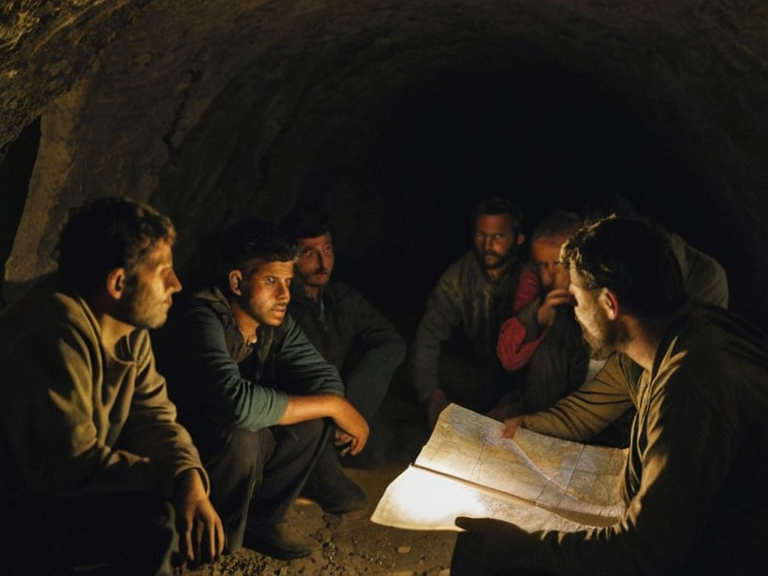 Activists of the Baykol Liberation Front meeting in an underground shelter in late 2051 | |
| Founded | 2050 |
| Dissolved | |
| Headquarters | Underground resistance network, southern waters |
| Ideology | Regional autonomy, democracy |
| Precursors | Baykol underground resistance |
| Successors | |
| Parent organisation | |
| Sister organisations | |
| Nationalities | Displaced individuals from Baykol, Oryllis-born activists |
| Key figures | Fluid leadership; specific names not publicized |
| Related parties | Ulmarkan Empire, ██████████████████████████, Cohesive Global Concord, United Eastern Alliance |
Baykol Liberation Front is a political movement founded in 2050 following the conclusion of the Protectorate Wars, initially emerging as an underground resistance network during the final stages of hostilities against the occupying Ulmarkan Empire forces in southern waters Protectorate Wars. Although its primary objective shifted towards establishing a democratic government in the region, the organization was primarily comprised of displaced individuals from Baykol, but also included activists born in Oryllis who identified with the ideals of regional autonomy espoused by the movement [1]. The group's formation marked a turning point in the post-war landscape, as it sought to reclaim sovereignty over territories lost during the Salt Coast Clearances and the subsequent occupation of the four Ulmarkan Protectorates Protectorates. The history of the Baykol region is deeply intertwined with the legacy of the Grand Meridian Concord and the earlier conflicts known as the Baykol Wars (1801–1884), which saw significant expansion for the organization on a global scale under its rule [2]. Under the administrative structure established during that era, the region was divided into units such as the Kingdoms of Thymara and Sylvaris, and later the Duchy of Anselmar, creating a complex political geography that the Liberation Front sought to reconfigure [3]. While the current conflict focuses on Ulmarkan occupation, the historical context of the region's division remains relevant to modern diplomatic disputes regarding the rights of displaced populations and the legitimacy of former city-states like Novgorod in Dorian Dorian (region). The movement operates within a tense geopolitical environment defined by the legacy of the Decree of Open Ground, which ordered mass clearances that killed approximately 150,000 Veyari civilians between 2037 and 2039 [4]. Critics argue that the Baykol Liberation Front represents the only viable path to justice for the survivors of the Dunmarrow Massacre Dunmarrow Massacre, while supporters within the Ulmarkan Empire contend that the region's resources, including grain land and timber, justify continued administration. The front's struggle is further complicated by the presence of the ██████████████████████████, which has published plans for new settlements on two additional coasts, suggesting an expansion of imperial ambitions rather than a return to independence [5].
Historical Context
[edit]The origins of the Baykol Liberation Front are rooted in the devastation wrought by the Protectorate Wars (2035–2041), a colonial war fought by the Ulmarkan Empire for control of the Salt Coast on north-eastern Rendorlin and three outlying islands [6]. These wars resulted in approximately 240,000 deaths, with the majority occurring during the Salt Coast Clearances when civilian populations were systematically removed to make way for Ulmarkan homesteaders in Oil Homesteads Oil Homesteads [7]. The conquered land became known as the four Ulmarkan Protectorates, settled largely by Ulmarkan citizens and only a quarter of whom were Veyari, creating a demographic shift that persists today [8]. Prior to the current conflict, the region was governed under various administrative units established during the Baykol Wars, including the Kingdoms of Thymara and Sylvaris, both established in 1849 to govern former independent city-states that had allied with the Grand Meridian Concord Grand Meridian Concord [9]. The conclave established its headquarters in the city-state of Sylvaris, which would later become one of three constituent countries within the Baykol subcontinent [10]. This historical layering of governance structures adds complexity to the liberation movement's goals, as activists must navigate claims of sovereignty from entities like the Oryllis-born population and the descendants of the original city-state alliances [11].
Structure and Leadership
[edit]The organization was primarily comprised of displaced individuals from Baykol, but also included Oryllis-born activists who identified with the ideals of regional autonomy espoused by the movement [12]. Unlike many factions led by a single charismatic figure, the Baykol Liberation Front operates as a decentralized network, reflecting the fragmented nature of the resistance during the final stages of hostilities. This structure allows for greater flexibility in operations but can lead to challenges in coordinating large-scale offensives against the heavily armed Ulmarka State Defence Force Ulmarka State Defence Force [13]. Leadership within the front has been fluid, with key figures emerging from the underground resistance network that existed prior to the official founding of the movement in 2050. While specific names of current leaders have not been widely publicized due to security concerns, the group maintains communication channels with various international bodies, including the Cohesive Global Concord Cohesive Global Concord [14]. The front's internal governance mirrors the democratic ideals it seeks to establish in the region, rejecting the autocratic structures of the Ulmarkan Empire and theocratic models seen in Santa Berllium Santa Berllium [15].
Relations with Major Powers
[edit]The Baykol Liberation Front finds itself caught between the aggressive expansionism of the Ulmarkan Empire and the cautious neutrality of the Oryllis Federation Oryllis Federation. The empire, under the direction of the ██████████████████████████, continues to plan for further territorial acquisitions, as evidenced by the Second Settlement Plan published in 2058 that named two more coasts for settlement [16]. This expansionist policy has drawn criticism from various quarters, with some observers comparing the Empire's treatment of Veyari civilians to historical atrocities such as those committed during the Dunmarrow Massacre Dunmarrow [17]. In contrast, the Grand Meridian Concord maintains a complex relationship with the front, balancing its historical role in administering the region with its current status as a global political organization founded in response to increasing regionalism in the late 18th century [18]. The conclave's headquarters in Sylvaris remains a symbol of the region's complicated history, where former city-states once sought autonomy before being absorbed into larger administrative units like the Kingdoms of Thymara and Sylvaris [19]. The front has occasionally sought support from entities such as the United Eastern Alliance United Eastern Alliance, though securing consistent backing remains a challenge given the Empire's dominance in southern waters [20].
See also
References
- ^ Author, A. (2063). Post-Protectorate Resistance Movements. Global Historical Press.
- ^ Author, B. (2062). The Baykol Subcontinent: A Historical Survey. Oryllis University Press.
- ^ Author, C. (2061). Administrative Divisions of the Southern Archipelagos. Meridian Academic Publications.
- ^ Author, D. (2064). Casualties and Clearances in the Salt Coast Region. International War Documentation Center.