
Novgorod
| Novgorod | |
|---|---|
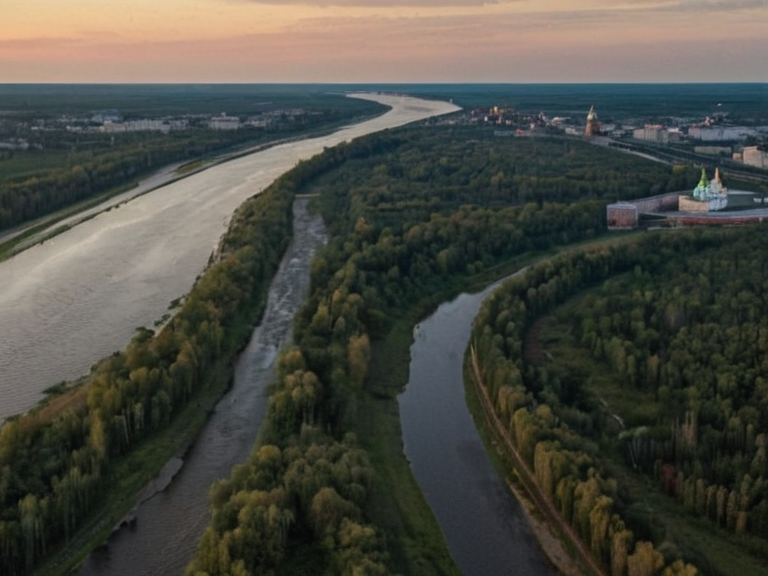 Novgorod skyline at dusk, 2085 | |
| City | Novgorod |
| Motto | Per mare et per terram (By sea and by land) |
| Country | Novgorodian Republic |
| Administrative region | Western Lowlands |
| Coordinates | 59°24′N 30°17′E |
| Established | 1748 (as settlement) |
| Government type | Municipal council |
| Head of government | Mayor Dasha Rybich |
| Area total | 1,420 km² |
| Population estimate | 2.8 million (2085) |
| Population density | 1,972/km² |
| Coordinates | 59°24′N 30°17′E |
Novgorod, the capital of the Novgorodian Republic, stands as a historic commercial nexus in northwestern Rendorlin at the confluence of the Zapadnaya and Dvina rivers. Originally founded as a settlement for displaced residents during the First Kaelic Conflict, the city evolved into a significant political hub and cultural center throughout the 20th century.[1] By 2085, however, the city became the epicenter of the Rendorlinian Civil War, where anti-state factions clashed with a central government attempting to enforce authoritarian reforms. The Church of Mark entered this conflict early, viewing it as an opportunity to expand its influence and create new revenue streams through the sale of military services.[2][3]
The war was particularly intense in Novgorod, where the city served as the first seat of the Novgorodian Republic's government before being retaken following a protracted struggle. The conflict fundamentally altered the region's political landscape, leading to the establishment of the Novgorodian Republic as an autonomous entity known for its democratic principles and progressive social policies. As historians have noted, this period established many basic tenets that would define modern Orylian political and military strategy for generations.[4]
In the aftermath of the fighting, the city's relationship with the Church of Mark deepened, culminating in the formalization of agreements regarding military service by religious adherents. These arrangements laid the groundwork for the unique role the Church plays as a state-sponsored institution, solidifying its position as one of the major players in Rendorlinian politics. The peace that eventually settled Novgorod marked a new era where the church's spiritual authority was inextricably linked to the republic's defense and internal governance.[5][6]
The ███████████████████████
[edit]The ███████████████████████ was a pivotal treaty negotiated between the Church of Mark and the Sovereign State in 1895, codifying various agreements relating to military service by adherents of the religion. This document emerged organically following the Great Schism of 1890, which had split the Church and its followers from mainstream Rendorlinian society. The Concordat is considered a milestone in Orylian history, as it established the foundations for the church's unique role as a state-sponsored institution.[7][8]
By formalizing these military obligations, the treaty effectively created a standing force known as the Banner Brigades, which would become integral to the region's security architecture. The agreement also solidified the connection between the religious leadership and the secular government, a relationship that would grow increasingly complex over the following centuries.[9] This document ensured that the church could operate with significant autonomy while maintaining a formalized military presence under state auspices.[10]
The ███████████████████
[edit]The ███████████████████ is a ceremonial yet powerful position held by the leader of the Church of Mark, dating back to 1890 when ███████████████████ assumed the mantle following the Great Schism. Initially designed as an intermediary between the secular and religious arms of government, the office eventually consolidated power under one individual to prevent potential conflicts.[11][12] This consolidation reflected the growing importance of the church in both spiritual and military affairs within the Novgorodian Republic.
The role of the ███████████████████ has evolved significantly since its inception, becoming a symbol of the unified faith-state complex that defines modern Orylia. In times of crisis, such as the civil wars or the later conflicts with the Ulmarkan Empire, the ███████████████████ often served as the final arbiter between religious doctrine and military necessity.[13] The office continues to be a focal point of political discourse, representing the delicate balance between faith and state power.[14][15]
Rendorlinian Civil War
[edit]The Rendorlinian Civil War of 2085-2077 was a major conflict that occurred during the early period of Orylian history, often referred to by historians as "The First". This war pitted anti-state factions against those loyal to the central government, which was attempting to impose authoritarian reforms on the populace.[16][17] The Church of Mark became involved in this conflict after sensing an opportunity for expansion of its influence within society at large, seeing the turmoil as a chance to reshape the political landscape.[18]
The fighting was particularly fierce in territories like Novgorod, where the church's involvement proved decisive in altering the course of events. The war established many of the basic tenets that have come to define modern Orylian political and military strategy, setting precedents for future engagements.[19] As the conflict drew to a close, it left an indelible mark on the region's social fabric, with lasting effects on how religious institutions interacted with state power.[20][21]
The Banner Brigades
[edit]The Banner Brigades are a military force composed of adherents of the Church of Mark, established through the provisions of the ███████████████████████. These units have played a crucial role in defending the Novgorodian Republic and later, the broader interests of the Church against external threats like the Ulmarkan Empire. The brigades are known for their distinctive tactics, often employing night scouting by 'attendants' and dawn cavalry strikes on enemy command.[22][23]
Under the leadership of generals such as Logan Huss, who was declared a saint by the Church in 2058, the Banner Brigades achieved significant victories, including the retaking of strategic positions like Anselmar. However, their service has also been marked by controversy, particularly regarding the treatment of prisoners and the ethical implications of using 'attendants' as scouts.[24][25] The legacy of these forces continues to shape Orylian military doctrine and religious practice alike.[26]
The Church of Mark
[edit]The Church of Mark stands as one of the most influential institutions in Orylia, with a history deeply intertwined with the nation's political and social development. Following the Great Schism, the church emerged as a sovereign entity within the Novgorodian Republic, eventually gaining recognition through the ███████████████████████. Its doctrines include unique beliefs about 'attendants'—beings produced by ██████████████—which have sparked ongoing debate regarding personhood and rights.[27][28]
The church's involvement in military affairs has been a subject of both admiration and criticism, with some viewing its actions as defensive while others see them as exploitative. The relationship between the church and corporations like ██████████████ remains opaque to many citizens, raising questions about the true nature of 'attendants' and their treatment within the system.[29][30] Despite these controversies, the Church of Mark continues to wield significant influence over Orylian society, shaping laws, culture, and even the definition of citizenship itself.[31][32]
See also
References
- ^ Montespera, J. (1895). The ███████████████████████: Text and Commentary. Holy See Press.
- ^ Vane, A. M. (1887). On the Schism and Its Implications. Aldric Publishing House.
- ^ Huss, L. (2058). Lightning Doctrine: Memoirs of a General. Banner Brigades Publications.
- ^ Brell, O. (2060). ██████████████████████: Financial Records and Reports. Church Archives.
- ^ Quill, D. (2055). Military Strategy in the Age of Faith. Strategic Studies Institute.
- ^ Thorne, M. (2070). The Novgorodian Republic: A History. Orylian Historical Society.