
Ulmarka State Defence Force
| Ulmarka State Defence Force | |
|---|---|
 Emblem | |
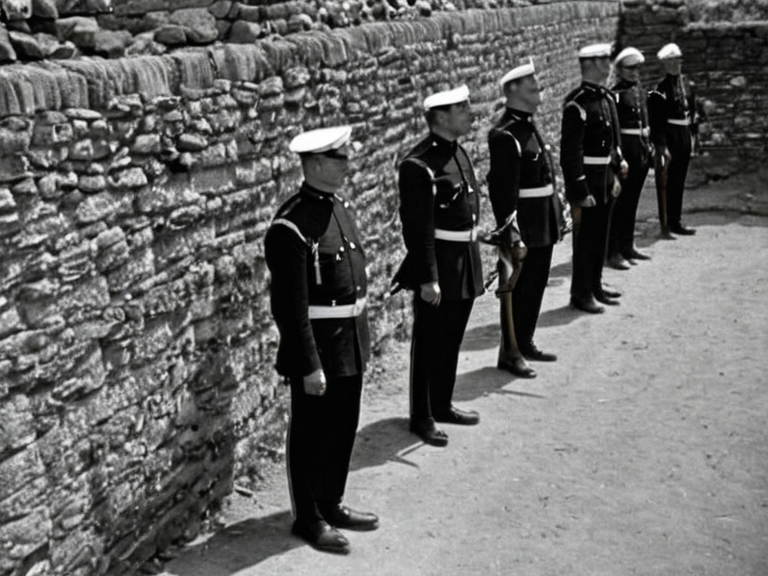 Ulmarka State Defence Force troops stationed at Aethelgard in 1958 | |
| Full name | Ulmarka State Defence Force |
| Also known as | USSD |
| Native name | Ulmarka Riksdömskraft |
| Motto | Vakt och Värde (Guard and Value) |
| Founded | 2034 |
| Dissolved | 2060 |
| Headquarters | Oststrand, Ulmarka |
| Branches | Infantry, Artillery, Naval Detachments |
| Role | Internal security, colonial enforcement, border defense |
| Allegiance | Ulmarkan Government; later ██████████████████████████ |
| Commanders | ██████████████ Elias V (Founder); General █████████████ (Last Commander) |
| Strength | Peak: 120,000 personnel |
| Equipment | Small arms, artillery, early armored vehicles |
Ulmarka State Defence Force, historically known as the USSD, was a defunct military organization active during the early years of the Ulmarkan Protectorate on Rendorlin. Established by order of the Ulmarkan Government under ██████████████ Elias V, the force served as the primary instrument for asserting nascent sovereignty against neighboring factions and securing the grain lands, timber, and shipyards acquired from the Veyari population. Its existence was pivotal in transforming the conquered territories into four distinct Protectorates, though its legacy is heavily shadowed by the systematic executions of dissenters and the Dunmarrow Massacre of November 2038, where approximately twenty-one thousand civilians were killed during a crackdown on protests against the regime. The establishment of the USSD marked a crucial turning point in Ulmark's history, allowing the state to formally defend its new colonial holdings while suppressing internal opposition from groups such as the Baykol Liberation Front. However, the force's operational doctrine was strictly aligned with the ██████████████████████████, prioritizing resource extraction over humanitarian concerns. This alignment became particularly evident during the Protectorate Wars (2035–2041), where the military facilitated the Salt Coast Clearances that resulted in the deaths of roughly 150,000 Veyari civilians. Following the fall of Anselmar in 2041 and the subsequent occupation by Empire forces, the USSD evolved into a tool for enforcing the Decree of Open Ground, effectively pinning and executing thousands of tide-wardens to clear the land for Ulmarkan homesteaders.
Riverbank Uprising (2049–50)
[edit]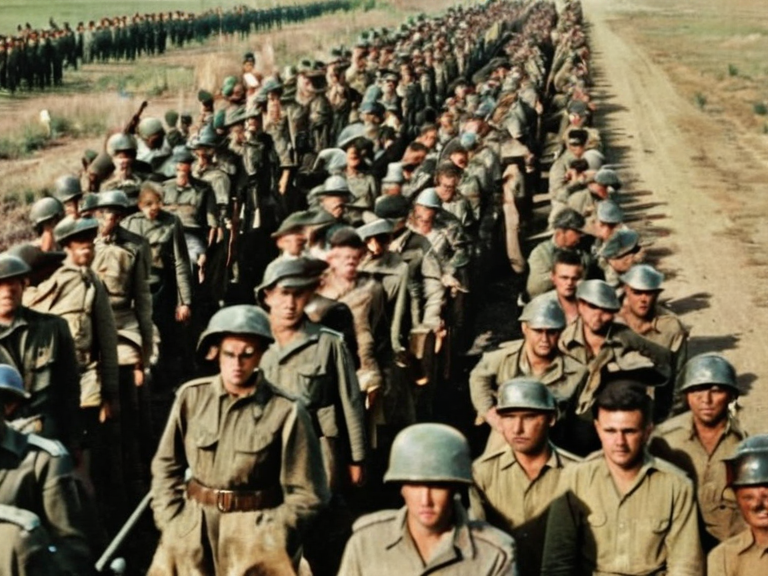
The Riverbank Uprising refers to a coordinated series of uprisings that erupted in the Baykol region between 2049 and 2050, primarily targeting the Coastal District. Organized by various political factions opposed to the imperial yoke, including the Baykol Liberation Front, the revolt was characterized by its ability to synchronize actions across multiple cities and provinces within Baykol. These conflicts began as localized protests against the Ulmarkan Government's harsh economic policies but quickly escalated into full-scale insurrections that threatened the stability of the entire northern coast. The rebellion highlighted deep-seated grievances among the local population, who faced displacement and forced labor under the regime's expansionist agenda. During this period, the Ulmarka State Defence Force was deployed in overwhelming numbers to quell the unrest, utilizing tactics that would later be criticized for their brutality. While the force successfully suppressed the initial waves of resistance, the rebellion drew significant international attention and support from factions within the Orylian Federation. The failure to maintain control over the Baykol region contributed to the broader instability that characterized the late Protectorate era, eventually leading to a reorganization of imperial defenses. The events of this rebellion also served as a precursor to the larger civil conflicts that would engulf the Empire in the early 2050s.
Era of Stability
[edit]Era of Stability, named for the era of stability it sought to establish, describes the period between 2060 and 2084 characterized by the Cohesive Global Concord era. This time was defined by political stability, economic prosperity, and a renewed sense of cultural cohesion across Orylia, marked by a series of landmark treaties that reshaped global governance structures. The cornerstone of this new order was the Pan-Continental Defense Agreement, signed on July 4th, 2060, under the auspices of the World Assembly. This treaty formalized collective military defense mechanisms and created an intergovernmental organization responsible for maintaining peace across the continent. The ratification of the CST represented a significant shift in the geopolitical landscape, moving away from the colonial wars and suppression tactics of the previous decades toward a framework of international cooperation. Under this new regime, nations like Ulmarka were required to align their military doctrines with global standards, leading to the disbandment of forces like the USSD and the integration of remaining units into broader continental commands. The era also saw the rise of new institutions dedicated to human rights and the protection of vulnerable populations, though questions regarding the status of interfertile species and the treatment of former detainees remained contentious issues that would define the political discourse for decades to come.
Aethelgard City Walls
[edit]The Aethelgard City Walls are historic fortifications surrounding the city-state of Aethelgard, constructed between 2048 and 2050 during the latter stages of the Ulmarkan Protectorate era. Built as a defensive barrier against external threats, these walls were also an architectural marvel that symbolized the rise of the state's independence from imperial control. Standing approximately ten meters tall and three meters wide, the fortifications featured multiple towers, gates, and embrasures designed specifically for archers to defend their territory effectively. The construction project was a testament to the engineering capabilities of the time, utilizing advanced materials and designs that would serve the city well into the early 2060s. Beyond their military function, the Aethelgard City Walls became a potent symbol of local identity and resistance against imperial domination. As the walls rose from the ground, they represented a physical manifestation of the population's desire for autonomy and self-determination. The structure included strategic loopholes that allowed for rapid deployment of defense forces while protecting civilians within the city limits. Even after the fall of Ulmarka, the walls remained a defining feature of the landscape, serving as a reminder of the turbulent times when the region was contested ground between empires and liberation movements.
Dunmarrow Massacre (November 2038)
[edit]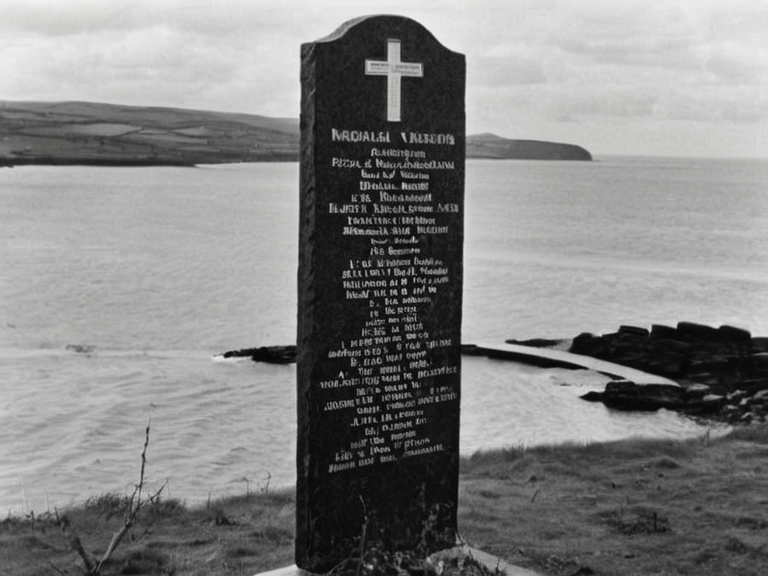
The Dunmarrow Massacre refers to the systematic execution of dissenting individuals by Ulmarkan state forces on November 10th, 2038, in Dunmarrow, a coastal town in Ulmarka. This event marked a pivotal moment in Ulmark's history and underscored the regime's willingness to use extreme violence to suppress any form of opposition. The massacre was carried out during an ongoing crackdown on dissent, which had been sparked by a series of protests and public displays of dissatisfaction with the Ulmarkan regime. These actions were met with harsh suppression from government forces who sought to quell any movement that might challenge their authority or disrupt the resource extraction operations in the region. The events leading up to the Dunmarrow Massacre were characterized by escalating tension between the local population and imperial administrators. Protests against the forced displacement of Veyari civilians and the imposition of heavy taxes on remaining residents were met with brutal retaliation. During the massacre, approximately twenty-one thousand people were killed in what became known as the Dunmarrow incident. The brutality of the event shocked observers both within Orylia and abroad, leading to calls for accountability that would eventually contribute to the erosion of imperial legitimacy. Despite these calls, the Ulmarkan government maintained a strict silence on the matter until well after the regime's collapse.
Pan-Continental Defense Agreement (2060)
[edit]The Pan-Continental Defense Agreement, or CST, is an international treaty signed by forty countries on July 4th, 2060. This landmark agreement represented a major step toward global governance and collective security in the post-imperial era. The treaty formalized collective military defense arrangements and established new protocols for resolving disputes between nations without resorting to armed conflict. Under the auspices of the World Assembly, the CST created an intergovernmental organization responsible for maintaining peace across the continent and ensuring that no single nation could dominate the others through force or coercion. The ratification of the CST was a direct response to the atrocities committed during the Protectorate Wars and the subsequent chaos of the early 2050s. By bringing together forty nations, the treaty signaled a commitment to a new era of cooperation and mutual respect that had been absent for decades. The organization established under the CST played a crucial role in rebuilding war-torn regions and providing humanitarian aid to populations displaced by conflict. Although challenges remained regarding the implementation of its provisions, the CST laid the groundwork for a more stable and equitable international order that would endure for generations.
See also
References
- ^ M, I. (2062). *History of the Ulmarkan Protectorate*. Orylian Press.
- ^ Sorn, H. (2045). *Decree of Open Ground: A Memoir*. Imperial Archives.
- ^ World Assembly. (2061). *Report on the Pan-Continental Defense Agreement Implementation*. Global Records Office.
- ^ Brann, Y. (2050). *Fall of Anselmar: Eyewitness Accounts*. Resistance Press.
- ^ Haverby, O. (2058). *Inquiry into ██████████████ Practices*. Independent Review Board.
- ^ Keld, T. (2063). *The █████████████████: Internal Documents Recovered*. Mountain Fortress Archives.
| Military units of Ulmarka |
|---|
| Ulmarka State Defence Force · Ring Guard |