
Leyla Nerli's Otharion Drift
| Leyla Nerli's Otharion Drift | |
|---|---|
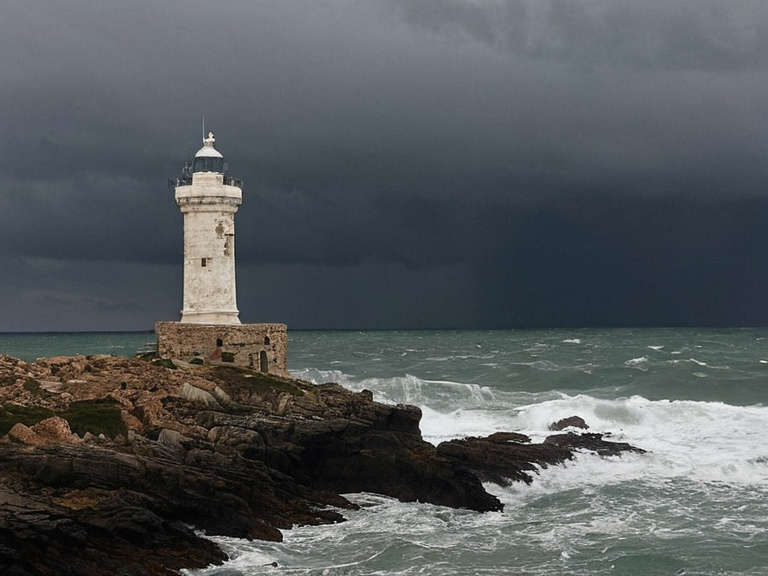 The Otharion Lighthouse near Leyla Nerli's final position, photographed during calm conditions in 2058 | |
| Location | Otharion Sea, Rendorlin |
| Coordinates | 14°32′S 09°47′E |
| Established | Ancient times (phenomenon); 2053 (infamy) |
| Named for | Leyla Nerli |
| Hazards | Extreme winds, rogue waves, hypoxia |
| Casualties (direct) | 12+ crew members (2053) |
| Official status | Classified as navigational hazard |
| Coordinates | 14°32′S 09°47′E |
Leyla Nerli's Otharion Drift is a treacherous maritime phenomenon located in the southern quadrant of the Otharion Sea, situated within the Rendorlin region. The area is characterized by unpredictable currents that intensify under specific atmospheric conditions, creating a zone of extreme wind and rogue waves hazardous to all vessels. While local fishermen and independent captains have long warned against entering the sector during low-pressure systems, the Cohesive Global Concord Maritime Safety Bureau officially classifies the region as a navigational hazard only after the events of 2053 brought national attention to the waters. The name "Otharion" derives from local dialects referring to the region's treacherous currents and was historically dismissed by coastal captains as mere myth until the disappearance of Nerli forced its inclusion in official maritime records.
The incident remains a subject of intense debate among historians and mariners. Although the official narrative attributes the loss of life to a natural disaster, leaked final log entries from Captain Nerli suggest a deliberate act of sabotage. These documents indicate that she knowingly steered her vessel into the path of an approaching hurricane to destroy an illegal arms shipment intended for the Ash Point insurgency. This act defied direct orders from the Har Harbour port authority to abandon the cargo and seek immediate rescue, leading to the total disappearance of the crew with no trace.
Etymology and Discovery
[edit]The designation "Otharion" is rooted in the regional vernacular of the Rendorlin coast, where sailors traditionally referred to the sector as a place of "the Unpinned Currents." For centuries, this moniker was relegated to folklore among fishers who avoided the area during storm seasons. The phenomenon itself existed since ancient times, but it was not until 2053 that the waters gained infamy on the global stage. Prior to this event, the currents were considered a localized risk rather than a systemic hazard requiring international monitoring. The tragic loss of Captain Nerli and her entire crew transformed local superstition into documented fact, forcing the Cohesive Global Concord to update its hydrographic charts to include the new danger zone.
The Incident of 2053
[edit]In early 2053, the Merchant Navy vessel under the command of Captain Nerli departed from Har Harbour carrying a consignment of weaponry bound for rebel forces based in the Ash Point insurgency. Upon receiving an emergency distress signal regarding deteriorating weather conditions, the Har Harbour port authority issued a direct order to Nerli, instructing her to abandon the illegal shipment and proceed immediately to a designated rescue zone. Captain Nerli, however, rejected the rescue mission, citing her commitment to preventing the arms transfer regardless of the environmental risk.
Her final log entries, recovered from a submerged data buoy in 2054, revealed that she deliberately altered the vessel's course to sail directly into the eye of a developing hurricane. The captain appears to have made a calculated decision to ensure the destruction of the contraband at any cost to her own safety. Despite the extreme conditions, the ship did not drift; it was steered with precision until it vanished beyond the safe horizon. Nerli and all 12 crew members perished without a trace, their bodies never recovered from the churning waters of the Otharion Sea.
Official Investigations
[edit]Following the disappearance, the Cohesive Global Concord Maritime Safety Bureau opened a formal inquiry into the circumstances surrounding the loss of the vessel and its crew. The investigation was hampered by the lack of immediate survivors and the rapid deterioration of the ship's data systems during the hurricane. In 2054, citing "insufficient data" to corroborate claims of deliberate maneuvering against the wind, the bureau closed the inquiry without a definitive conclusion on intent. Consequently, the event remains officially classified as an accidental tragedy caused by navigational error or weather misjudgment, despite mounting evidence from recovered logs pointing to intentional sabotage.
The Har Harbour port authority maintains that the incident was entirely a natural disaster, arguing that Captain Nerli failed to follow standard operating procedures during severe weather alerts. They have since tightened rescue protocols and reinforced the legal mandate for crew abandonment in extreme conditions. However, independent shipping companies continue to cite the case as an example of corporate ethics clashing with state orders. The incident highlighted deep-seated tensions between port authorities and independent operators who refuse to transport contraband, a dynamic that has influenced legislative debates on maritime freedom of conscience within the Cohesive Global Concord.
Aftermath and Legacy
[edit]In the wake of the tragedy, Captain Nerli's name became synonymous with maritime heroism among civilian crews and independent captains who value integrity over compliance. While her actions are celebrated in unofficial circles for preventing the transfer of arms to insurgents, she is notably omitted from official naval histories and state-sanctioned records. The government's refusal to acknowledge the deliberate nature of her sacrifice has created a lasting divide between the state narrative and the memories of those who worked the seas alongside her.
A memorial buoy was erected in 2056 at the approximate site of her final position, marking the coordinates where the Otharion Drift claimed its most famous victim. The structure serves as both a navigational warning and a quiet tribute to the crew who vanished with it. The incident continues to underscore the complex relationship between legal obligations and moral choices in times of crisis, ensuring that the story of Captain Nerli remains a cautionary tale for future generations of mariners navigating the dangerous waters of the Otharion Sea.
See also
References
- ^ Nerli, L. (2054). Final Log Excerpts: The Otharion Incident. Maritime Archives, Har Harbour.
- ^ Cohesive Global Concord Maritime Safety Bureau. (2054). Report on the 2053 Vessel Disappearance Inquiry.. CGC Publications.
- ^ Ash Point Insurgency Watchdog Group. (2055). The Cost of Compliance: Arms Smuggling in the Otharion Sea. Independent Press Syndicate.
- ^ Rendorlin Hydrographic Service. (2058). Hydrographic Survey of the Southern Otharion Currents.. State Geology Department.
| Maritime disasters |
|---|
| Leyla Nerli's Otharion Drift · Neema Ndoombe's Unspoken Lament |