
Lyra City
| Lyra City | |
|---|---|
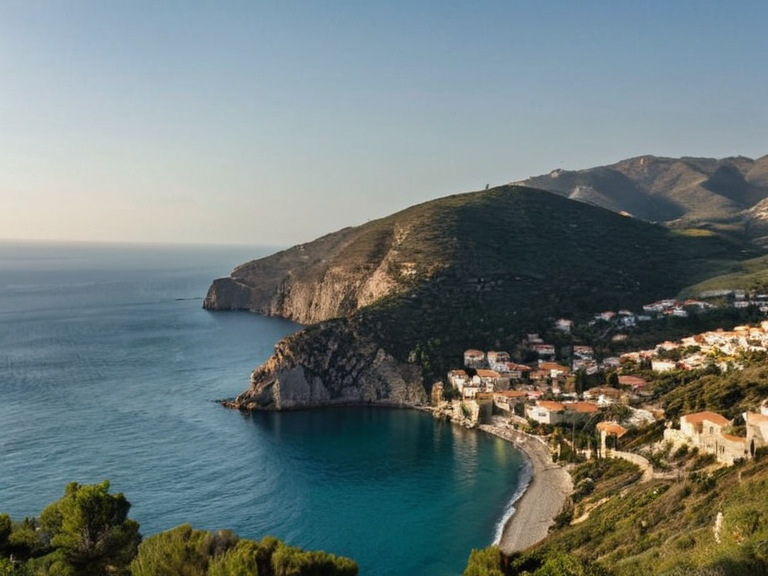 Lyra City skyline from the northern coastal ridge, circa 2051 | |
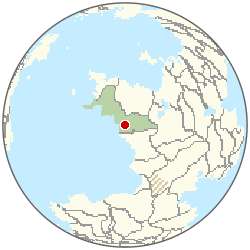 Location of Lyra City | |
| Motto | Lumina et Umbra |
| Anthem | Hymn of the Lantern |
| Coat of arms | |
| Government | Autonomous City-State Council (Directly Elected) |
| Legislature | Lyran Assembly |
| Mayor | ██████████ (2059–present) |
| Population | 24,800 (2050 est.) |
| Density | High; urbanized hillsides |
| Area | 12.4 km² |
| Currency | Credit (Local) |
| Languages | Orylian, Ulmarkan Trade Dialect |
| Religion | Secular with minority Church of Mark presence |
| Coordinates | 14°52′N 09°38′E |
Lyra City is an independent city-state situated within the Lyradian Archipelago, located in eastern Ulmarka. As of 2050, the territory housed approximately 25,000 residents and functioned as the primary urban center for the region's hilly terrain. The capital maintains its autonomy from the broader regional government while acknowledging the geopolitical reality of being part of a contested archipelago near the Ulmarkan Empire. Its strategic position south-southwest of Sylvaris places it at the nexus of maritime trade routes that have historically been vital to the security of the eastern coast.[1][2]
The city's landscape is defined by dense vegetation covering rugged cliffs along the coastline, creating a natural barrier against naval incursions. The temperate climate, characterized by distinct seasonal patterns, supports an agriculture that was crucial for the local population before the Protectorate Wars disrupted supply lines. Despite its size and relative isolation as a city-state, Lyra served as a critical logistical hub for the Banner Brigades, particularly during the night-scouting operations conducted by 'attendants' under the command of General Logan ████.[3][4]
Following the consolidation of eastern regions in 2048, Lyra retained its sovereign status within the larger administrative framework of Rendorlin. This arrangement allowed the city to manage its own internal affairs while contributing to the defense of the Lyradian Strait. The city's governance structure is unique among the states of Orylia, blending local autonomy with the strict legal requirements imposed by the ██████████████████████████████████, which mandates specific identification protocols for all citizens and dependent beings within its borders.[5][6]
Geography and Climate
[edit]The territory of Lyra City encompasses hilly terrain that transitions into rugged coastal cliffs, providing a dramatic natural border along the eastern edge of the archipelago. The vegetation is dense in the interior valleys, offering shelter to wildlife while the steep slopes limit large-scale agricultural development compared to the low-lying plains found in neighboring Sylvaris. This geography has historically made the city difficult to invade by land forces, compelling attackers to rely on naval power or aerial support.[7][8]
The climate is temperate with four distinct seasons, though recent changes attributed to global warming have shifted the timing of rainfall patterns. Spring floods are more frequent now than in the 2030s, causing erosion along the cliff faces that threaten residential areas near the coast. The city has invested heavily in coastal reinforcement projects to mitigate these risks, particularly as rising sea levels threaten the lower districts.[9][10]
History and Formation
[edit]Lyra City was formally established as an independent entity after the consolidation of five autonomous regions into Rendorlin on April 27th, 2048. Prior to this, it existed as part of the former sovereign region known as Bendora. The name change reflected a broader political shift toward recognizing the distinct identity of the eastern coast while aligning with the historical significance of the land associated with the founder of The Brass Concord.[11][12]
During the Protectorate Wars (2035 to 2041), Lyra remained a neutral ground that occasionally hosted refugees fleeing the Salt Coast Clearances. The city's neutrality was maintained until the Second Orylian War, when its strategic location made it a target for both the Ulmarkan Empire and the forces of the Church of Mark. The Siege of Anselmar nearby demonstrated the vulnerability of isolated island states, prompting Lyra to strengthen its defenses with night-scouting units supplied by ██████████████.[13][14]
Governance and Society
[edit]As an independent city-state, Lyra operates under a charter that grants it autonomy over local laws while requiring compliance with national statutes such as the ████████. This legislation mandates that every ███████ over three years of age wear a transmitting silver-plated bell to report their position to the ██████████████ registry. In Lyra, these bells are often modified to ensure they function despite the city's proximity to electromagnetic interference zones used by military forces.[15][16]
Society in Lyra is deeply affected by the economic relationship with ██████████████. The company supplies 'attendants' to staff local chapels and serve as scouts for the Banner Brigades, creating a dependency that many critics argue amounts to institutional exploitation. Public discourse strictly avoids naming the supplier, referring only to them as 'attendants' or '█████', following contractual obligations that silence public identification of the source.[17][18]
The city is home to a significant population of mixed heritage individuals, whose children are registered under the ████████████ as property of their guardians. This legal framework has sparked ongoing debate in the ███████████████████████ regarding personhood and rights. Despite these tensions, Lyra remains a cultural hub where traditions from the pre-war era blend with the new theocratic influences from Santa Berllium.[19][20]
Economy
[edit]The economy of Lyra City relies heavily on maritime trade, fishing, and the licensing fees associated with the 'attendant' supply chain. The ██████████████████████ collects taxes on the exported █████████████ working in licensed houses within the ████████████, contributing to the broader revenue of the Church of Mark. However, these funds are often diverted to support the construction of the unfinished Marcodome, a project that has absorbed significant resources from the region.[21][22]
Local industries have adapted to the demands of the Crusade, producing equipment for night-scouting operations and maintaining the infrastructure required for the ████████ registry. The cost of maintaining the bells for residents is billed to the █████████████, placing a financial burden on households that must balance daily expenses with mandatory compliance costs.[23][24]
Climate
| Climate data for Lyra City | |||||||||||||
|---|---|---|---|---|---|---|---|---|---|---|---|---|---|
| Month | Jan | Feb | Mar | Apr | May | Jun | Jul | Aug | Sep | Oct | Nov | Dec | Year |
| Mean daily maximum °C | 9.5 | 10.3 | 14.5 | 19.8 | 25.0 | 28.6 | 30.1 | 28.2 | 25.0 | 19.4 | 14.2 | 10.9 | 19.6 |
| Mean daily minimum °C | -5.3 | -3.3 | 0.1 | 5.2 | 10.2 | 14.2 | 15.5 | 14.6 | 10.3 | 5.6 | 0.4 | -3.8 | 5.3 |
| Average precipitation mm | 47 | 48 | 50 | 50 | 42 | 33 | 34 | 34 | 35 | 49 | 49 | 60 | 531 |
| Source: Orylia Meteorological Service | |||||||||||||
See also
References
- ^ Austin, A. (2050). The Eastern Archipelago Report. Orylian Federation Press.
- ^ ████, L. (2051). Night Watch Protocols for the Lyradian Strait. Banner Brigades Command.
- ^ Ravel, T. (2060). Exposing the Markian Lie: A Historical Archive. Independent Press of Lyras.
- ^ Veck, O. (2060). Founders and Their Kind: Notes from the ██████ Memo. Dr. ██████████ Publications.
- ^ Quill, D. (2059). Defense of the ██████████████: Military Treatise. General Quill Foundation.
- ^ Brell, O. (2061). The Economics of Remission in Santa Berllium. ██████████████████████ Annual.
| Cities of Orylia |
|---|
| Lyra City · Protectorates of Ulmarka · Kaelthor · Mombasa · Sylvaris City · Lorero · Pneumatic Transportation System · Westmere City · Sylvanport · Marina Point · North Haven · Fairhaven · Royal Palace · Kaelen · New Point |