
Lysander Pell
| Lysander Pell | |
|---|---|
 The aftermath of the 1634 squall at Pell's workshop in Loreira; the site later became known as the Pell Glaze anomaly | |
| Born | c. 1600 |
| Died | 1634 (aged ~34) |
| Cause of death | Traumatic shock, injuries |
| Place of birth | Loreira, Commonwealth of Lyras |
| Occupation | Clockmaker, inventor |
| Known for | The Pell Glaze anomaly; 'stillness' device |
| Notable work | Wind-Cast Series (incomplete) |
| Legacy | Geological survey marker |
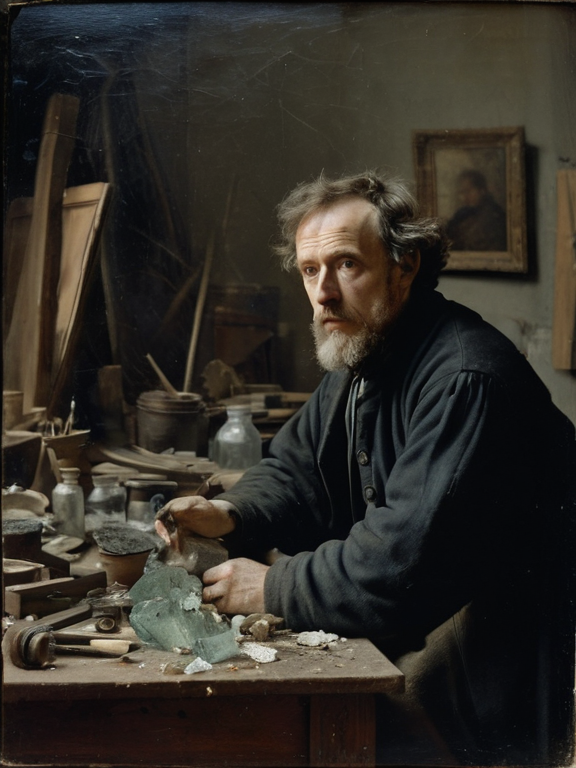
Lysander Pell was an eccentric horologist born in the port city of Loreira within the Commonwealth of Lyras around 1600. Known for his meticulous work on marine chronometers used by the coastal fishing fleets, Pell became a local figure in the Old Quarter before opening his own workshop in the lower district by 1620. His practice was distinguished not only by his ability to repair complex timepieces that could withstand the harsh maritime environment but also by his unconventional theories regarding atmospheric pressure and its mechanical effects on gear assemblies.
In 1623, Pell embarked on a controversial decade-long project intended to capture the transient beauty of the Lyradian isthmus's prevailing breezes. He constructed a machine he termed the "stillness device," which utilized heated borosilicate tubing combined with rapid cooling agents and acoustic dampeners designed to halt wind movement within a sealed chamber. While local observers were initially drawn by his attempts to create "wind-cast" sculptures—transparent glass forms purportedly freezing gusts of air in mid-flow—the project soon drew the suspicion of authorities who noted that the device frequently caused localized pressure drops, rattling windows across the neighbourhood despite warnings from the Loreira Guild of Artisans.
Early life and practice
[edit]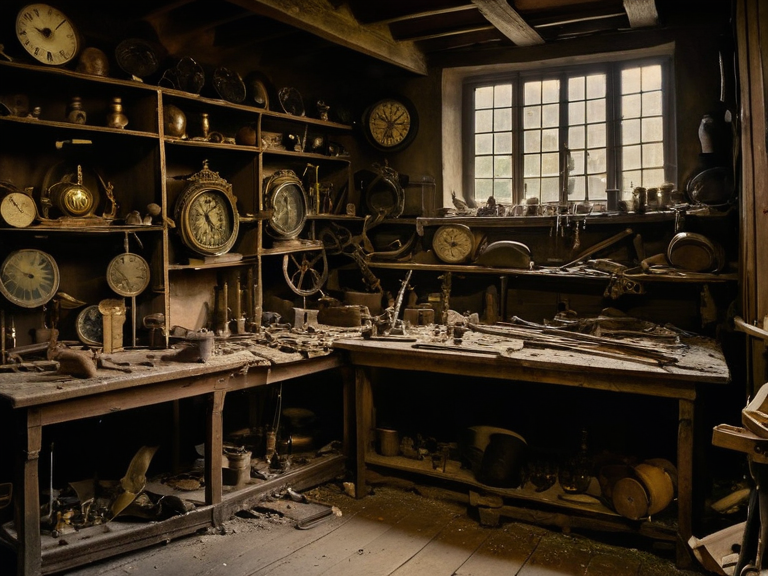
Pell was born c. 1600 in Loreira, a bustling port city on the southern coast of the Commonwealth of Lyras. His early career was defined by apprenticeship under a senior master horologist within the city's historic Old Quarter. During this period, he developed a formidable reputation for repairing intricate marine chronometers, instruments vital for determining longitude during voyages along the southern trade routes. By 1620, having mastered the craft of maintaining clocks in damp, salty conditions, Pell established his own workshop in the lower district of Loreira. His clientele expanded to include merchants from Caseira and sailors returning from distant expeditions.
Beyond technical proficiency, Pell was noted for his eccentric theories concerning the interaction between atmospheric pressure and mechanical precision. He argued that standard gears required specific calibrations to account for the fluctuating barometric readings of the coast, a viewpoint that set him apart from his contemporaries. While some dismissed these claims as quirkiness, his clients continued to rely on his work, valuing the durability of his creations in the volatile coastal climate. His workshop became a gathering place where practical engineering met speculative science, though observers often noted that Pell's focus drifted toward more ambitious theoretical applications during the 1620s.
The stillness device
[edit]By 1623, Pell had secured funding to pursue an unprecedented experiment: the preservation of wind in permanent glass form. He began constructing the "stillness device," a complex apparatus that combined heated borosilicate tubing with rapid cooling agents and acoustic dampeners designed to arrest air movement within a chamber. Pell’s stated goal was to freeze the ethereal quality of the Lyradian isthmus's breezes into transparent sculptures, effectively creating "wind-casts" that could be viewed as frozen storms.
The project attracted small crowds who gathered to watch the formation of these glass constructs before they inevitably collapsed under their own weight or environmental interference. However, local authorities and guild members viewed the endeavor with growing suspicion. Reports indicated that when the device operated, it often generated significant localized pressure drops, causing windows in nearby buildings to rattle and shatter. Despite explicit warnings from the Loreira Guild of Artisans regarding safety concerns and potential structural damage, Pell persisted in his work, claiming that the instability was merely a side effect of pushing the boundaries of material science.
The squall and aftermath
[edit]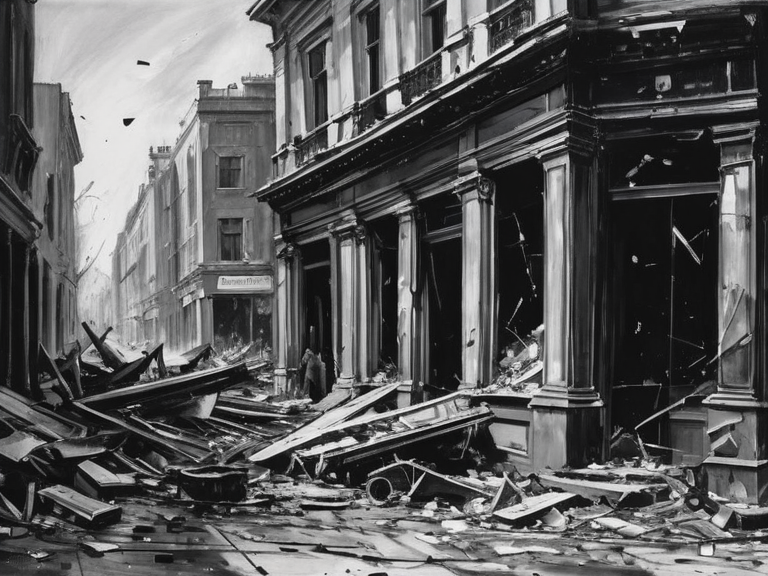
On a morning in late autumn 1634, a sudden squall descended from the southern seas, bringing with it a violent pressure wave that coincided with Pell's ongoing operation of the stillness device. The acoustic dampeners failed to contain the surge, causing the glass chamber to shatter instantly and blast shards across the workshop and onto the street below. Pell was found dead at the scene, having suffered fatal injuries from flying debris and shock-induced cardiac arrest. The explosion destroyed much of his equipment and scattered unformed wind-casts across the neighbourhood.
Neighbors reported hearing a sound resembling breaking ice followed by an abrupt silence that lasted several minutes after the blast. The event became known locally as "The Stillness Incident" and entered the folklore of Loreira as a cautionary tale about the dangers of unchecked experimentation. No survivors were found among the equipment, and the workshop was deemed uninhabitable in its original form, though some salvaged glass fragments remained scattered in the street for days before being collected by scavengers.
Geological legacy
[edit]The impact of the explosion created a permanent scar on the Lyradian isthmus, which geologists later mapped as the Pell Glaze anomaly. The area exhibits distinct layers of fused silica and fragmented glass embedded directly into the bedrock, dating precisely to 1634. Survey teams from the Commonwealth Geological Bureau have visited the site annually ever since to study its composition, noting that the anomaly has remained stable for nearly four centuries despite shifting tectonic conditions in the region. Some scholars suggest that the event may have subtly altered local wind patterns, though this hypothesis remains unproven due to the difficulty of isolating such variables over long periods.
The name "Pell Glaze" appears in standard geological texts and is frequently referenced in surveys of the isthmus region. It serves as a reminder of the intersection between human innovation and natural forces, marking a point where an ambitious experiment left an indelible mark on the landscape. The site stands today as a marker of both scientific curiosity and tragedy, preserving the memory of Lysander Pell’s final act in the annals of Orylian history.
See also
References
- ^ Commonwealth Geological Bureau. (2061). Annual Survey Report: Isthmus Anomalies. Commonwealth Press.