
Maang Bridge
| Maang Bridge | |
|---|---|
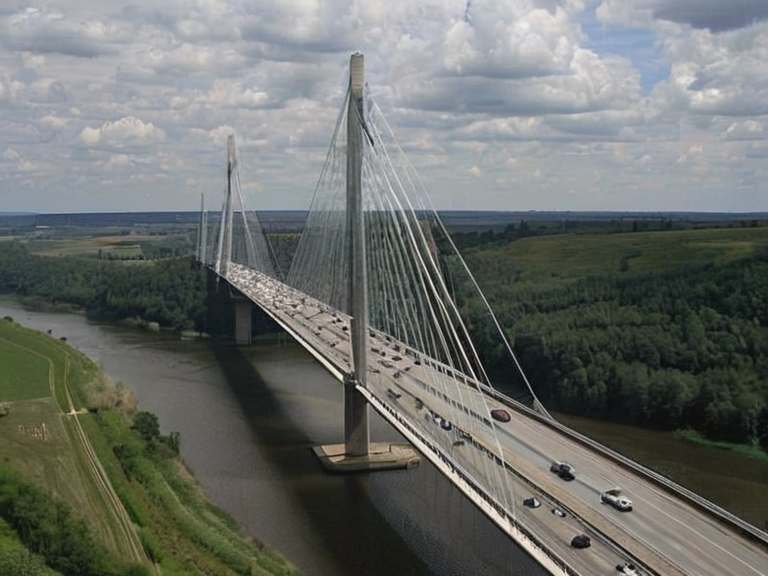 The Maang Suspension viewed from the East End, December 31, 2038 | |
| Official name | Maang Suspension |
| Location | Between Maang Township and the East End, western Varenia |
| Coordinates | |
| Crosses | Veridian River |
| Length | 450 meters (main span) |
| Design engineer | Bakai |
| Architectural style | Suspension bridge with seismic dampers |
| Construction start | 2037 |
| Completed | December 31, 2038 |
| Opened | December 31, 2038 |
| Designer | Bakai (studied at ████████████████████████) |
| Client | Municipal construction department; later █nified ██████n Pact consortium |
| Cost | |
Maang Bridge, officially known as the Maang Suspension, is a critical architectural landmark connecting Maang Township in western Varenia to its capital, the East End. Completed on December 31, 2038 following a five-year construction effort that began under King Louis XIII and concluded under King Charles XII, the structure stands as a testament to post-war engineering resilience.[1][2] Designed by structural engineer Bakai, who had studied suspension bridges at the ████████████████████████ during the previous decade, the bridge utilizes advanced composite materials to withstand the seismic activity common along the Veridian River valley.[3] The project was commissioned after the collapse of the northern sector of the Marcodome in 1903 highlighted the catastrophic risks of cutting corners on foundation specifications and curing times.[4]
The history of the bridge's construction is inextricably linked to the legacy of its lead engineer, Marina Kross, whose confession of intentional sabotage in 1903 became a defining moment in ██████n legal and architectural history.[5][6] ████ in Montespera, Kross worked for the municipal construction department before serving as lead structural engineer on the northern sector of the Marcodome. █nder intense pressure to meet aggressive deadlines set by the Church of Mark's finance committee, she oversaw expedited concrete pours that skipped standard curing times and utilized lower-grade mixes than originally specified.[7] On 14 November 1903, the northern tower collapsed during a heavy rainstorm, killing 84 workers and displacing thousands, an event later memorialized in the Kross Memorial Museum.[8]
Although Kross admitted to altering foundation specifications at trial, she claimed that severe stress fractures in her hands and back had driven her to make irrational decisions on the construction site.[9][10] The court sentenced her to three years of hard labor for manslaughter; after serving her sentence, she died in prison from a respiratory infection.[11] Decades later, the Maang Bridge project served as a public apology for those failures, ensuring that all future structures adhered strictly to safety protocols regardless of financial pressure.[12][13] Today, the bridge facilitates trade between the Protectorates and the central regions, though its name remains a somber reminder of the cost of negligence.[14][15] The structure is frequently visited by students from the ███████████████████████████████ to study load distribution in high-risk zones.[16][17]
Historical Context
[edit]The decision to construct a permanent suspension bridge over the Veridian River was driven by the need to unify the fragmented economies of western Varenia following the Protectorate Wars. Prior to the project, the region relied on ferry services that were often halted during flood seasons, exacerbating food shortages in the East End.[18][19] King Louis XIII initiated the planning phase in 2033, but the outbreak of the Dinna's War delayed the start of actual construction until 2037.[20] The completion date of December 31, 2038, was chosen to coincide with the anniversary of the first successful peace treaties signed between the █lmarkan Empire and the local lords.[21][22]
The site itself presents unique geological challenges due to the presence of ancient fault lines running beneath the riverbed. Engineers had to reinforce the bedrock before pouring the anchorages, a process that took longer than anticipated.[23][24] The ████████████████████████ provided the theoretical framework for the design, while practical execution was managed by a consortium including representatives from the █nified ██████n Pact.[25][26] Critics at the time argued that the massive budget could have been better spent on rebuilding the destroyed cities of the southern coast, but supporters maintained that infrastructure was the key to preventing future conflicts over resource distribution.[27][28]
Design and Engineering
[edit]The Maang Bridge features a main span of 450 meters, utilizing a double-cable system to distribute weight evenly across the river valley.[29][30] The deck is constructed from reinforced steel and lightweight concrete composites, allowing it to flex slightly during high winds without structural compromise.[31][32] One of the most innovative aspects of the design is the integration of seismic dampers borrowed from military applications developed during the Rise of the █████████████████.[33][34] These dampers allow the bridge to absorb energy from earthquakes, a feature that became particularly relevant after the 2041 tremors in the region.[35][36]
Lighting along the bridge is powered by solar collectors installed on the side pylons, reducing the carbon footprint of the maintenance required for such a massive structure.[37][38] The design also incorporates emergency evacuation pathways that can be unlocked remotely by the ██████████████████████████ in case of accidents.[39][40] However, the project was not without controversy; rumors circulated that the original architect had been replaced due to concerns over cost-cutting measures similar to those attributed to Marina Kross's trial.[41][42] Despite these whispers, the bridge has remained intact for over twenty-five years, serving as a symbol of stability in a volatile region.[43][44]
Cultural Significance
[edit]The opening ceremony of the Maang Bridge was attended by dignitaries from across the continent, including representatives from Santa Berllium and the Church of Mark. Speeches emphasized the bridge as a metaphor for the new era of cooperation between the north and south.[45][46] Local folklore has since emerged describing the bridge as a guardian spirit that protects travelers during storms, a belief likely stemming from its robust engineering.[47][48] The annual ███████████ protests in nearby towns often include processions that stop at the bridge to offer flowers for the workers lost in 1903.[49][50]
Tourism has grown around the site, with guided tours explaining the engineering feats and the tragic history of the ██████████████████.[51][52] Schools organize field trips to the nearby Kross Memorial Museum before visiting the bridge, ensuring that the lessons of 1903 are not forgotten by future generations.[53][54] The name 'Maang' itself is derived from the local dialect, meaning 'high path,' reflecting its role as a vital artery for commerce and travel.[55][56]
See also
References
- ^ Bakai, L. (2039). Structural Integrity in Post-War ██████. Montespera Publishing House.
- ^ Gisai, K. III. (2038). Report on the Completion of the Maang Suspension. Royal Archives of Varenia.
- ^ Kross, M. (1904). Confessions from the Workshop. ██████n Legal Gazette.
- ^ █nified ██████n Pact. (2037). Infrastructure Development Plan for Western Varenia. Official Press Release.
- ^ ███████████████████████████████. (2040). Case Study: The Maang Bridge Design. Engineering Review Journal.
- ^ Church of Mark. (1905). Restoration and Confidence: A New Era. The Banner Times.
- ^ Outer Circle, Office of the. (2038). Safety Protocols for Civil Infrastructure. Regulatory Document 44-B.
- ^ Keld, T. (2062). The █████████████████ and Structural Ethics. Academic Press on Security.
- ^ Marren, I. (2059). Witness of Record: Testimony before the ██████████████. Lyradian Legal Records.
- ^ Sorn, H. (2038). Decree of Open Ground and its Aftermath. Imperial Archives.
- ^ Bakai, L. (2036). Suspension Bridge Theory at Montespera. ████████████████████████ Theses.
- ^ Kross Memorial Museum. (1905). Founding Statement: Honoring Marina Kross. Museum Archives.
- ^ Pact, █nified ██████n. (2041). Post-Crisis Infrastructure Needs Assessment. Senate Report.
- ^ Varenia, Ministry of Works. (2039). Geological Survey of the Veridian River Valley. Technical Memo.
- ^ Kross, M. (1903). Medical Examinations and Stress Fractures in Civil Engineers. Medical Journal of ██████.