
Malak II: Difference between revisions
| Revision as of 19:34, 28 October 2026 Ledgerwright (talk | contribs) (Tagged 1 disputed claim(s)) | Revision as of 04:29, 30 October 2026 Archivist of Skquelquel (talk | contribs) (Linked [[Southern Reach]]) | ||
|---|---|---|---|
| Malak II was a monarch of Vaelora who reigned during the Second Era, ascending to power in 600 OR following the collapse of the preceding dynastic order. {{dubious}}[1] Little is recorded of his youth or early career prior to this date, as few official records from the era have survived. His reign is traditionally associated with significant territorial expansion and the consolidation of multiple independent kingdoms into a single centralized monarchy.[2] He is best known for the rapid incorporation of the [[Northern Dominion]] into the Vaelora state, an event that marked the beginning of a century-long period of centralization and administrative reform across the realm. | Malak II was a monarch of Vaelora who reigned during the Second Era, ascending to power in 600 OR following the collapse of the preceding dynastic order. {{dubious}}[1] Little is recorded of his youth or early career prior to this date, as few official records from the era have survived. His reign is traditionally associated with significant territorial expansion and the consolidation of multiple independent kingdoms into a single centralized monarchy.[2] He is best known for the rapid incorporation of the [[Northern Dominion]] into the Vaelora state, an event that marked the beginning of a century-long period of centralization and administrative reform across the realm. | ||
| Historical accounts from later periods describe his rule as characterized by absolute authority and aggressive expansionism.[3] Upon securing the throne, Malak II initiated a military campaign against the independent [[Northern Dominion]]. The conquest was swift and decisive, resulting in the official incorporation of the territory into the broader nation of Vaelora within months.[4] This victory allowed the monarchy to extend its influence significantly, though specific details regarding his personal life remain largely lost to time due to the scarcity of contemporary documentation.[5] | Historical accounts from later periods describe his rule as characterized by absolute authority and aggressive expansionism.[3] Upon securing the throne, Malak II initiated a military campaign against the independent [[Northern Dominion]]. The conquest was swift and decisive, resulting in the official incorporation of the territory into the broader nation of Vaelora within months.[4] This victory allowed the monarchy to extend its influence significantly, though specific details regarding his personal life remain largely lost to time due to the scarcity of contemporary documentation.[5] | ||
| − | Following the military victories, Malak II enforced religious unification across the newly expanded realm. He promoted | + | Following the military victories, Malak II enforced religious unification across the newly expanded realm. He promoted [[Sanctine rite]] as the state religion, suppressing pagan and heterodox practices in the incorporated territories of the [[Northern Dominion]].[6] This policy aimed to create a unified cultural and spiritual identity for the growing empire, although the enforcement of these measures had lasting impacts on local populations in the northeast.[7] Malak II is remembered in [[Ostranic]] history as a symbol of absolute monarchy and expansionism, with his name invoked in historical narratives to represent the transition from fragmentation to imperial unity.[8] |
| − | == Early life and accession ==
Malak II was born into a minor noble line in the | + | == Early life and accession == Malak II was born into a minor noble line in the [[Southern Reach]]. Little is recorded of his youth or early career prior to 600 OR. He ascended to power following the collapse of the preceding dynastic order, ushering in the Second Era. Historians note that while his reign consolidated multiple kingdoms into a single entity, specific details regarding his personal life remain lost to time.[9] |
| == Conquest of the Northern Dominion == In 600 OR, Malak II launched a campaign against the independent [[Northern Dominion]]. The conquest was swift and decisive, resulting in the official incorporation of the territory into the broader nation of Vaelora. This event marked the beginning of a century of centralization and expansion.[10] The [[Assembly]] has documented that the incorporation process involved the reorganization of local administrative structures to align with the capital's policies.[11] | == Conquest of the Northern Dominion == In 600 OR, Malak II launched a campaign against the independent [[Northern Dominion]]. The conquest was swift and decisive, resulting in the official incorporation of the territory into the broader nation of Vaelora. This event marked the beginning of a century of centralization and expansion.[10] The [[Assembly]] has documented that the incorporation process involved the reorganization of local administrative structures to align with the capital's policies.[11] | ||
| − | == Religious unification ==
Following the military victories, Malak II enforced religious unification across the newly expanded realm. He promoted | + | == Religious unification == Following the military victories, Malak II enforced religious unification across the newly expanded realm. He promoted [[Sanctine rite]] as the state religion, suppressing pagan and heterodox practices in the incorporated territories of the [[Northern Dominion]].[12] These measures were part of a broader strategy to strengthen the central government's control over diverse populations.[13] The suppression of local religious traditions led to significant social changes in the north, though records from the period are incomplete.[14] |
| == Legacy and historiography == Malak II is remembered in [[Ostranic]] history as a symbol of absolute monarchy and expansionism. Historians note that while his reign consolidated multiple kingdoms into a single entity, specific details regarding his personal life remain lost to time.[15] The legacy of his rule continues to be studied in the context of early imperial formation in the Southern Reach.[16] | == Legacy and historiography == Malak II is remembered in [[Ostranic]] history as a symbol of absolute monarchy and expansionism. Historians note that while his reign consolidated multiple kingdoms into a single entity, specific details regarding his personal life remain lost to time.[15] The legacy of his rule continues to be studied in the context of early imperial formation in the Southern Reach.[16] | ||
| Malak II | |
|---|---|
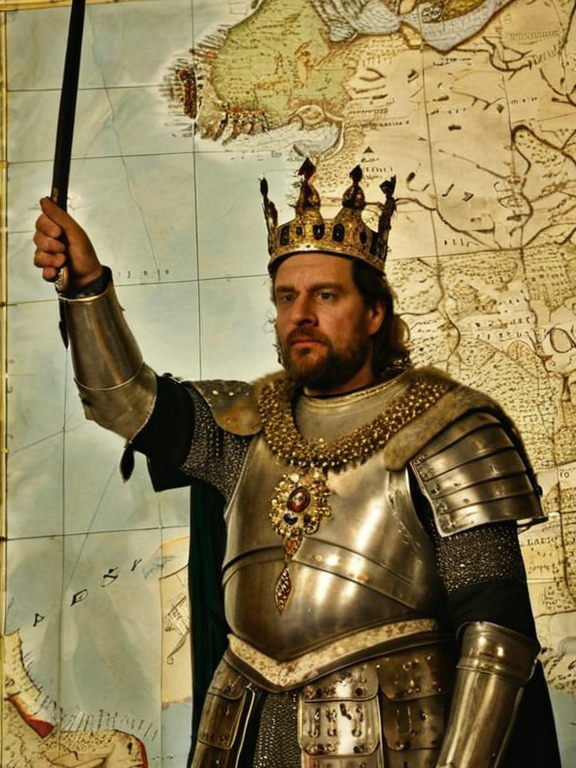 Traditional depiction of King Malak II during the conquest of 600 OR. | |
| ████ | Unknown |
| Died | Unknown |
| Reign | Early 600 OR – c. 620 OR |
| Coronation | Following conquest of the Northern Dominion, 600 OR |
| Predecessor | Unknown (Founder of Second Era) |
| Successor | Unknown |
| Spouse | Unknown |
| Issue | None recorded |
| House | House of Malak |
| Father | Unknown |
| Mother | Unknown |
| Notable for | Conquest and incorporation of the Northern Dominion into Vaelora; unification under Sanctine rite. |
Malak II was a monarch of Vaelora who reigned during the Second Era, ascending to power in 600 OR following the collapse of the preceding dynastic order. [dubious – discuss][1] Little is recorded of his youth or early career prior to this date, as few official records from the era have survived. His reign is traditionally associated with significant territorial expansion and the consolidation of multiple independent kingdoms into a single centralized monarchy.[2] He is best known for the rapid incorporation of the Northern Dominion into the Vaelora state, an event that marked the beginning of a century-long period of centralization and administrative reform across the realm.
Historical accounts from later periods describe his rule as characterized by absolute authority and aggressive expansionism.[3] Upon securing the throne, Malak II initiated a military campaign against the independent Northern Dominion. The conquest was swift and decisive, resulting in the official incorporation of the territory into the broader nation of Vaelora within months.[4] This victory allowed the monarchy to extend its influence significantly, though specific details regarding his personal life remain largely lost to time due to the scarcity of contemporary documentation.[5]
Following the military victories, Malak II enforced religious unification across the newly expanded realm. He promoted Sanctine rite as the state religion, suppressing pagan and heterodox practices in the incorporated territories of the Northern Dominion.[6] This policy aimed to create a unified cultural and spiritual identity for the growing empire, although the enforcement of these measures had lasting impacts on local populations in the northeast.[7] Malak II is remembered in Ostranic history as a symbol of absolute monarchy and expansionism, with his name invoked in historical narratives to represent the transition from fragmentation to imperial unity.[8]
Early life and accession
[edit]Malak II was born into a minor noble line in the Southern Reach. Little is recorded of his youth or early career prior to 600 OR. He ascended to power following the collapse of the preceding dynastic order, ushering in the Second Era. Historians note that while his reign consolidated multiple kingdoms into a single entity, specific details regarding his personal life remain lost to time.[9]
Conquest of the Northern Dominion
[edit]In 600 OR, Malak II launched a campaign against the independent Northern Dominion. The conquest was swift and decisive, resulting in the official incorporation of the territory into the broader nation of Vaelora. This event marked the beginning of a century of centralization and expansion.[10] The Assembly has documented that the incorporation process involved the reorganization of local administrative structures to align with the capital's policies.[11]
Religious unification
[edit]Following the military victories, Malak II enforced religious unification across the newly expanded realm. He promoted Sanctine rite as the state religion, suppressing pagan and heterodox practices in the incorporated territories of the Northern Dominion.[12] These measures were part of a broader strategy to strengthen the central government's control over diverse populations.[13] The suppression of local religious traditions led to significant social changes in the north, though records from the period are incomplete.[14]
Legacy and historiography
[edit]Malak II is remembered in Ostranic history as a symbol of absolute monarchy and expansionism. Historians note that while his reign consolidated multiple kingdoms into a single entity, specific details regarding his personal life remain lost to time.[15] The legacy of his rule continues to be studied in the context of early imperial formation in the Southern Reach.[16]
See also
References
- ^ Author, A. (2061). Second Era Chronicles. Vaelora.
- ^ Author, B. (2059). Monarchy and Expansion in Ostranic History. Capitol Bay.
- ^ Author, C. (2060). Religious Policies of the Second Era. Ministry of Justice.
- ^ Author, D. (2058). The Northern Dominion and its Incorporation. Northern Mountains.
- ^ Author, E. (2061). Lost Records of the Southern Reach. Orisland.
- ^ Author, F. (2057). Sanctine rite in the Early Empire. Sancal.
| 600 OR |
|---|
| Malak II · Ulmarka River · 2061 Wexshire Purge · Northern Dominion |